Living in Japan for almost 10 years, I have had my fair share of illnesses and clinic visits. As a foreigner, it can be truly nerve-wracking to go to a clinic by yourself, especially if you have limited knowledge of the Japanese language. That’s why I always try to see an English-speaking doctor. When you’re not feeling well, you want to understand the cause of your symptoms and have your treatment explained clearly.
One thing to keep in mind, though, is that even if you visit an English-speaking doctor, some of the staff at the clinic may still speak to you in Japanese. So, it’s helpful to know at least a little of the language. If that’s not possible, you can ask a Japanese friend or acquaintance to accompany you.
My Past Clinic Experiences
I still remember my first visit to a hospital in Japan. It all started with a pounding headache—the worst I had ever experienced. Since I had no history of migraines, I immediately became concerned about what might be causing it. My mom had a brain tumor—something that made me more anxious and left me wondering whether I had one, too.
The next day, I went to NTT Medical Center in Tokyo, where I consulted a neurologist. He asked me to undergo a CT scan, and thankfully, the results came back negative. He prescribed some medication, and the pain eventually went away.
At the same time, I was also experiencing an earache. For that, I visited an ENT clinic in Shinagawa called Nishiya Clinic and was diagnosed with an ear infection. All of these happened during my first year in Japan, which made me feel quite depressed. Luckily, after that first year, I didn’t get sick again. I mean, I still got the occasional cold, but nothing too serious—not until recently, when I had what I initially thought was a regular sore throat.
Not an Ordinary Sore Throat
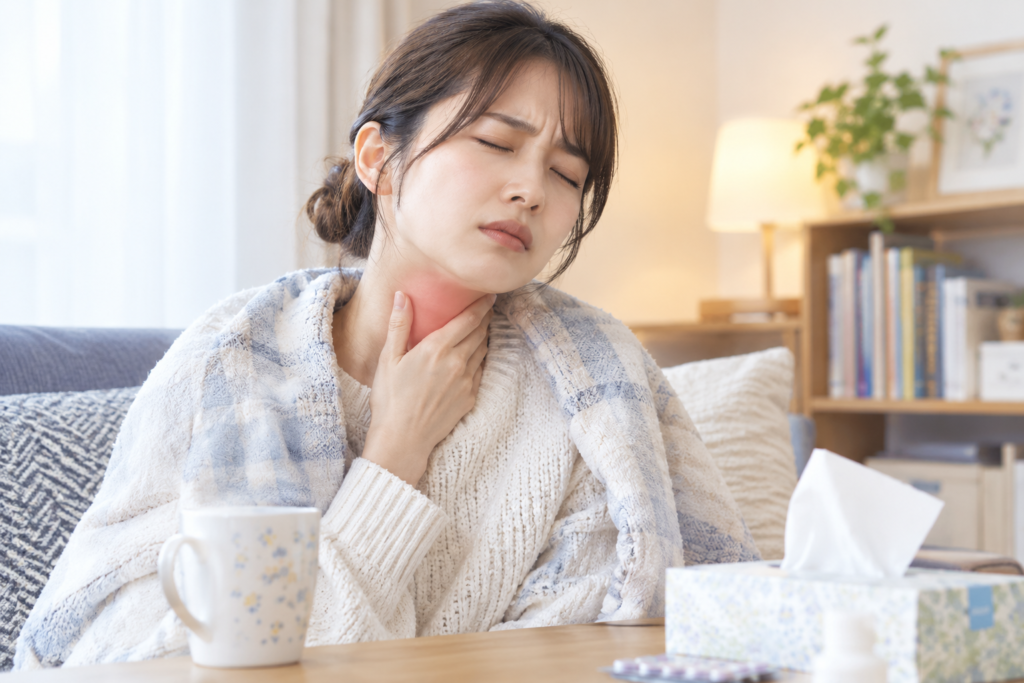
My throat has always been sensitive. I’ve known this for a long time, perhaps because I use my voice a lot as a teacher. Whenever I consume something too sweet, spicy, or cold, I often wake up the next day with an irritated throat. Despite this, my stubborn self still indulges in sweets.
One Monday, I had curry and a Frappuccino for lunch, and the next day, I found myself with a sore throat. I usually don’t take medication for minor illnesses. Instead, I rely on ginger tea and lozenges. But as the days went by, I began to feel a lump in my throat and eventually had difficulty swallowing even liquids. I still didn’t go to the doctor until I developed a headache so severe that I couldn’t fall asleep.
I was really worried, so I decided to search for an English-speaking ENT doctor. I was surprised to discover that there was one near my place. I felt relieved that I didn’t have to travel all the way to Tokyo.
The clinic is called Chiba Newtown Ekimae Otorhinolaryngology Clinic, and it is conveniently located just a four-minute walk from Chiba Newtown-Chuo Station. The clinic is on the second floor of Apollo Plant Mall, which is primarily a medical floor. In addition to the ENT clinic, there are five other clinics specializing in dermatology, ophthalmology, orthopedics, pediatrics, and internal medicine. There are also two pharmacies and a supermarket inside the mall, making it convenient for patients to pick up their prescriptions or do some grocery shopping afterward.
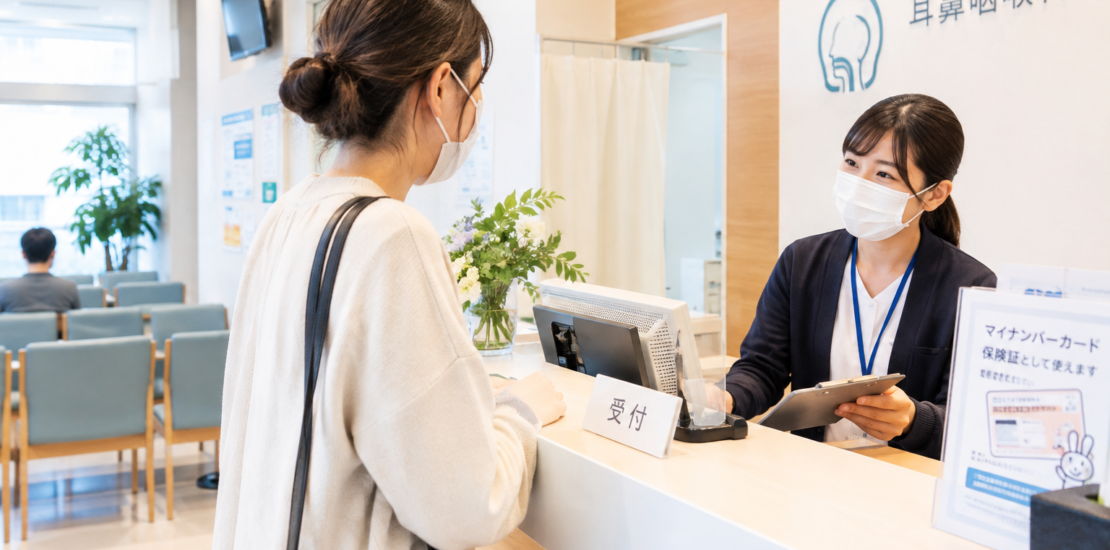
On the day of my appointment, the clinic was quite packed, but the staff were accommodating nonetheless. First, I was asked to place my My Number Card in the card reader for verification. Then, the staff handed me a number and told me to proceed to the waiting area.
After some time, a nurse took my temperature and told me that I had a low-grade fever. To be safe, they gave me a rapid antigen test for COVID-19 and influenza. Both tests turned out negative.
Next, the doctor inserted a scope through my nose to examine my throat. He found that my right tonsil was severely inflamed and told me that I needed to receive intravenous antibiotics. I was brought to a separate room for the IV treatment. After about an hour, the doctor told me that I needed to return the following day so that another doctor—the clinic director—could check whether I had responded to the IV treatment. I then went back to the waiting room to receive my prescription.
The following day, I was seen by the clinic director, who was very kind and compassionate. He explained everything in detail, including my blood test result and the medications he had prescribed. He examined my throat and informed me that the swelling had subsided, although I still needed to finish my course of medication. Hearing the results put my mind at ease. I received six types of medication, including antibiotics, probiotics, and a painkiller. After 10 days of treatment, I felt much better.
Going through the whole experience on my own was not easy, but finding this clinic made a huge difference. For the first time, I felt comfortable and reassured while seeking medical care in Japan.
What to Bring to a Clinic
Here are a few things you need to bring when you visit a clinic in Japan:
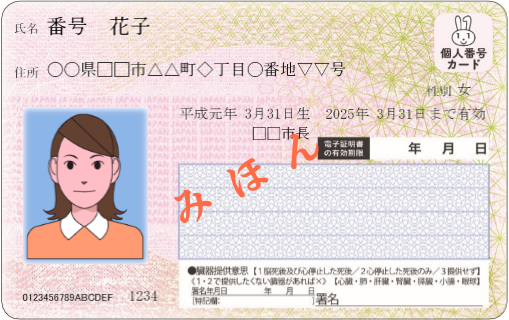
- My Number Card (Myna-Hokensho) — This is one of the essential things you should not forget. Once your health insurance information is registered to your My Number Card, it can be used for medical visits. With Japan’s public health insurance, you generally pay 30% of the covered medical costs.
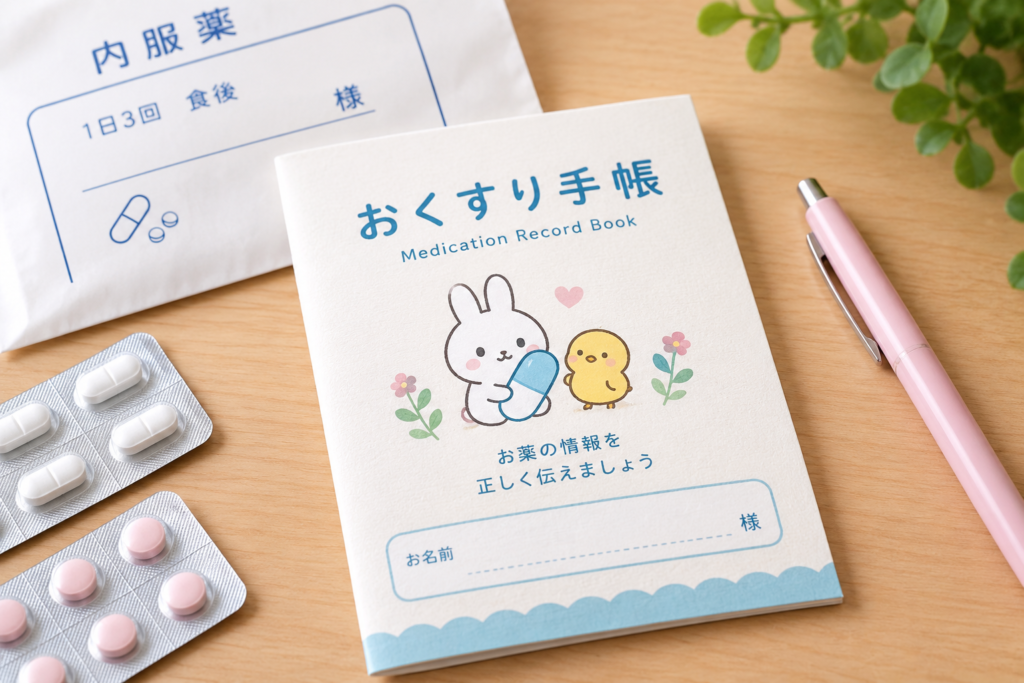
- Medication Record Book (Okusuri Techō) — Whenever you pick up your prescription, the pharmacist prints your medication details on a sticker paper and sticks it in your record book. You can ask the staff for a record book, if you don’t have one.
- Residence Card (Zairyū Card) or Passport — It’s a good idea to have identification with you for verification purposes.
- Patient ID Card (Shinsatsuken) — When you visit a clinic for the first time, the staff will register you in the system and issue you a patient ID card. You can use this card for future visits to the same clinic.
- Face Mask — Many medical clinics in Japan still ask patients to wear a mask inside the premises, so it’s a good idea to bring one with you.
- Socks — Some clinics require patients to remove their outdoor shoes at the entrance and change into slippers. Wearing socks can be more comfortable and hygienic in this situation.
Stay tuned for more exciting content like this! Follow us on our social media platforms and check out our blog regularly to stay updated on the latest news, trends, and insider stories from Japan. Don’t miss out on future updates—sign up for our newsletter for exclusive content delivered straight to your inbox!