In Japan, the built-in heaters in houses and apartments are usually insufficient to keep rooms comfortably warm in winter. An electric mist does a lot to help, but the Japanese also mobilize their traditional solution: The kotatsu.
Winter preparation in Japan means getting cold feet — and cold floors. Different from Korea, where heated ”ondol” floors are a feature of every traditional (and many newer) building, traditional Japanese floors were either wood or tatami mats — and not heated.
A tatami mat is actually pretty good insulation, since it is made from a five-centimeter layer of straw enclosed in a layer of reeds. But even on the most well-laid tatami floor there will be gaps between the mats.
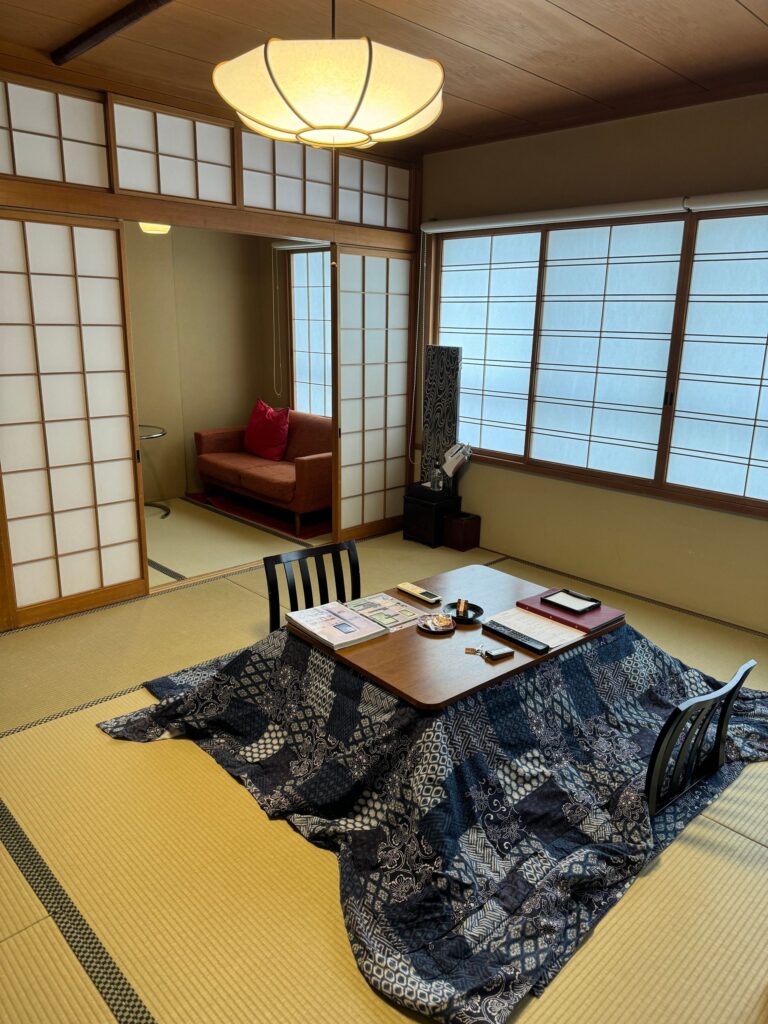
The traditional kotatsu keeps the heat under the table.
In old Japan, when tatami mats were the norm and you would sit on your shins the traditional way, rooms must have been quite cold. For the upper body, a coat with unwoven silk fluff would help, but legs were another matter. Trousers were not a part of the traditional Japanese dress, and silk socks are cold in winter.
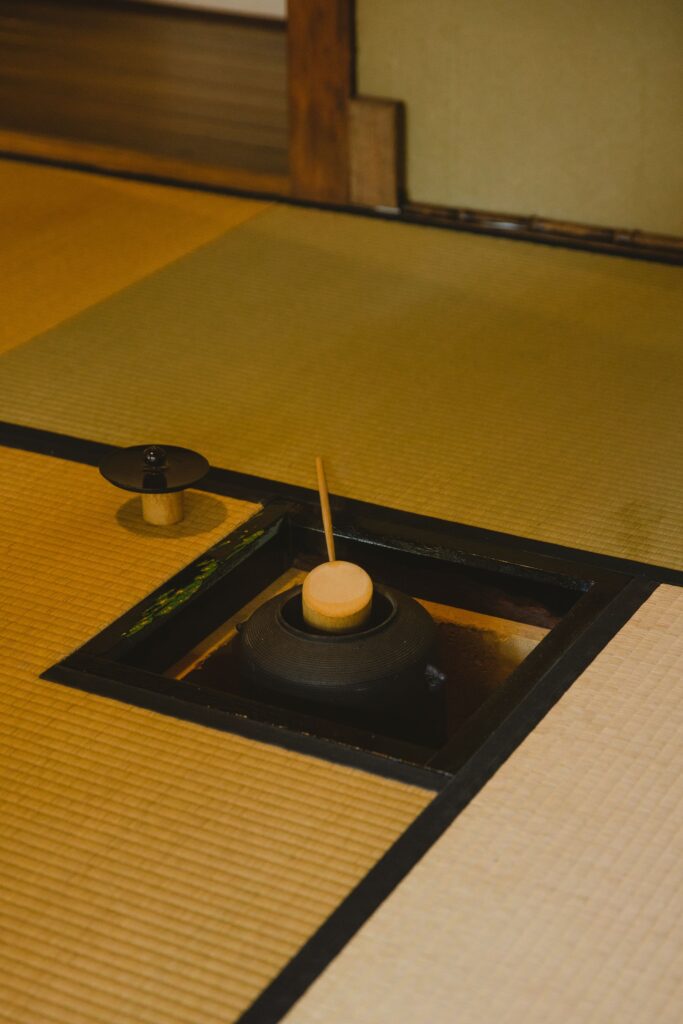
The remedy was beautifully simple: Put a fire in your lap. Before you start getting horrific images of burning samurai, the fire was not on their laps, but in a small brassiere on the underside of the table. Most houses, at least from the 19th century onward, had a small pit in the floor that could be opened by removing half a tatami mat and sitting with your legs downward.
In summer, you remove the blanket, and the kotatsu becomes an ordinary table.
The kotatsu table also had a blanket or quilted cover to keep the heat in, so that you could curl up in the heat. Children could do their homework; grown-ups enjoyed a glass of sake. Peeling mikan, known in the West as clementines, and eating them together is still a favorite family activity.
Nowadays, kotatsu are electric, but until the 19th century they were a major fire hazard, and responsible for several of the horrific fires that devastated Edo (as Tokyo was known then).
Since there was no electricity, the heat from the kotatsu would come from a small pan full of glowing coals affixed to the underside of the table. Coals were lit in the kitchen and had to be carried to the room with the kotatsu, causing risk of spilling and dropping glowing coals.
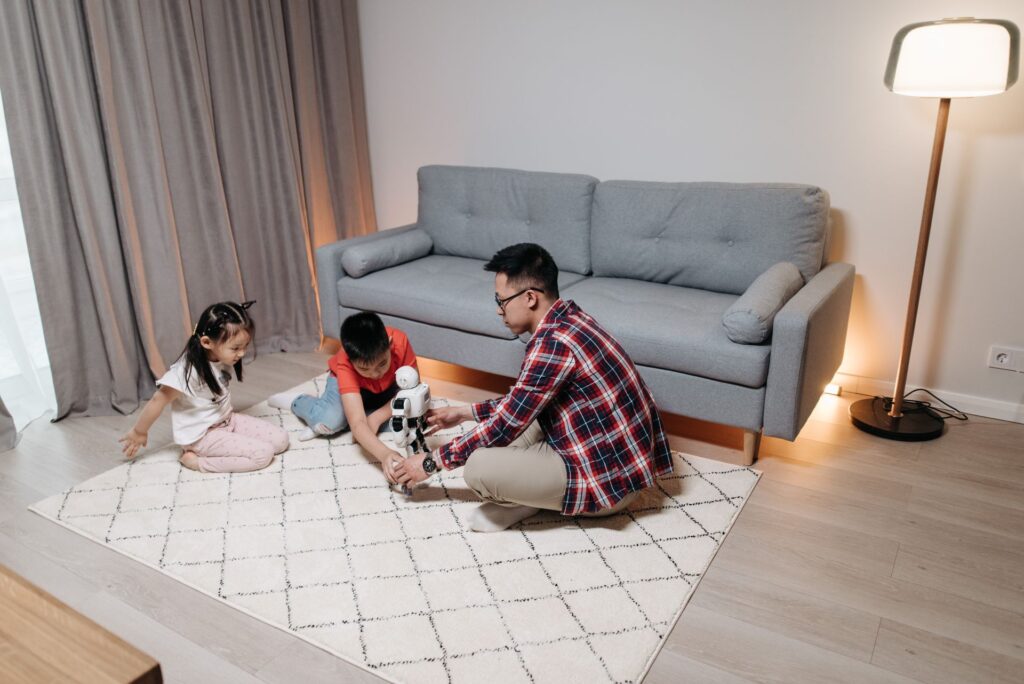
A heated mat gives you more space to play.
A wooden floor is better insulation than tatami mats (mostly because there are no gaps between the boards to let the cold air through), but only if there is nothing to move the heat out of the building, like a concrete floor. If the wooden floor is laid on top of concrete (or worse, directly on the floor beams with nothing underneath), it will be cool in summer, but ice cold in winter. Unless you have a heated floor, which is often accomplished by putting pipes under the floor and running hot water through them. Heated, of course, by the gas heater, which makes the floor heating extremely uneconomical in a world of raging gas prices. But extremely comfortable.
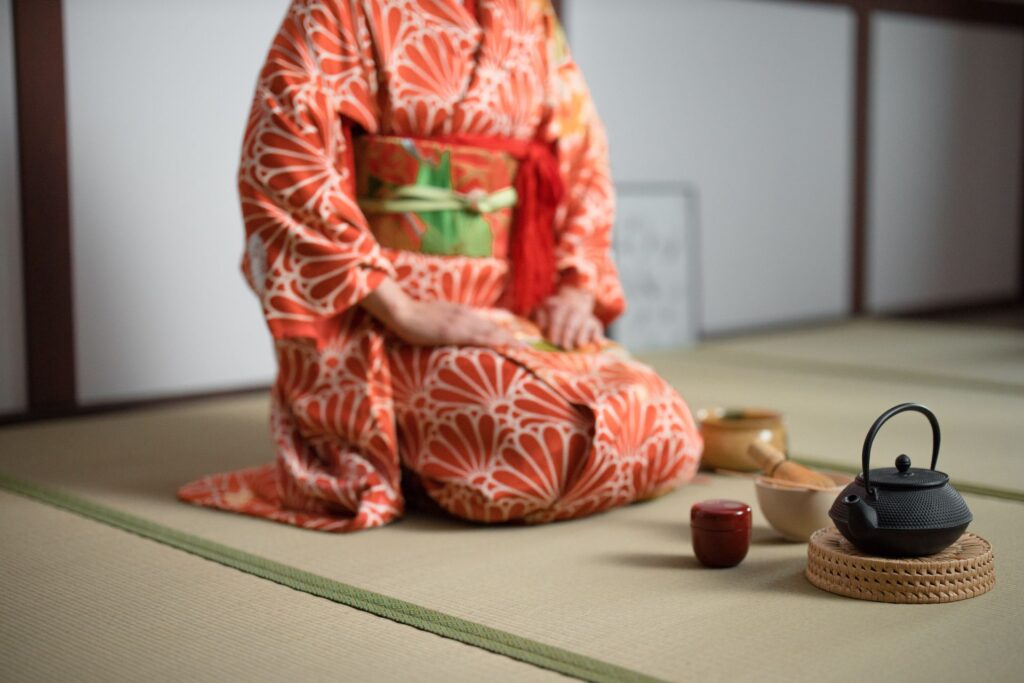
In traditional Japanese homes you live on the tatami floor.
The alternative way of heating your floor, especially since so few new houses and apartment complexes have gas heating, is to use electricity. Very few places have built-in electric floor heating, however, so this usually comes as a loose mat.
The electric mats in Japan are usually 3 to 5 square meters, and made to be spread out on the floor. Since there is usually no large furniture in a Japanese home (apart from the storage cabinets and the home altar), you can spread the mat on the tatami floor and plug it in.
Silver Felt Between Mat
Usually, however, you do not spread the mat directly on the floor. Most people put a felt mat under it, usually with an aluminized side (that you put directly under the mat). This reflects the heat back into the room, instead of letting it seep out through the cold floor.
The mat gets nice and toasty, warming up the area closest to itself, but it is easy to make the mistake of believing that it can actually heat the room. It does not. The heating coils are not powerful enough, and the air does not circulate enough. If it were powerful enough to heat the room, you would not be able to walk on it. This is why people get dedicated heaters, which, if combined with a fan, can heat up the room quickly, especially if used in places where the air conditioner (which is used in reverse in winter) can not reach. The combination is superb to heat the room — but it does not heat the floors.
Modern Heating Electronics
That is the job of the electric mat, but it does its job a little too well, and manufacturers frequently warn about sleeping on it. If it is turned up too high, you might get burned in your sleep. Modern electric mats have sensors and microprocessors to maximize comfort, making the fiddly setting of 1950s technology a thing of the past.
The electric mat is perfect for low-grade comfort heat, but it does not shut in the heat around your cold legs and feet. For that you need a kotatsu.
The blanket around the rim of the kotatsu table keeps the warm air enclosed and stops it from blowing away. And you do not necessarily have to hunker down on the floor either. There are models that let you sit on a chair with the kotatsu blanket around your legs (and those of the kotatsu table). The only problem with that is that the distance from your feet to the kotatsu heater under the table becomes quite long.
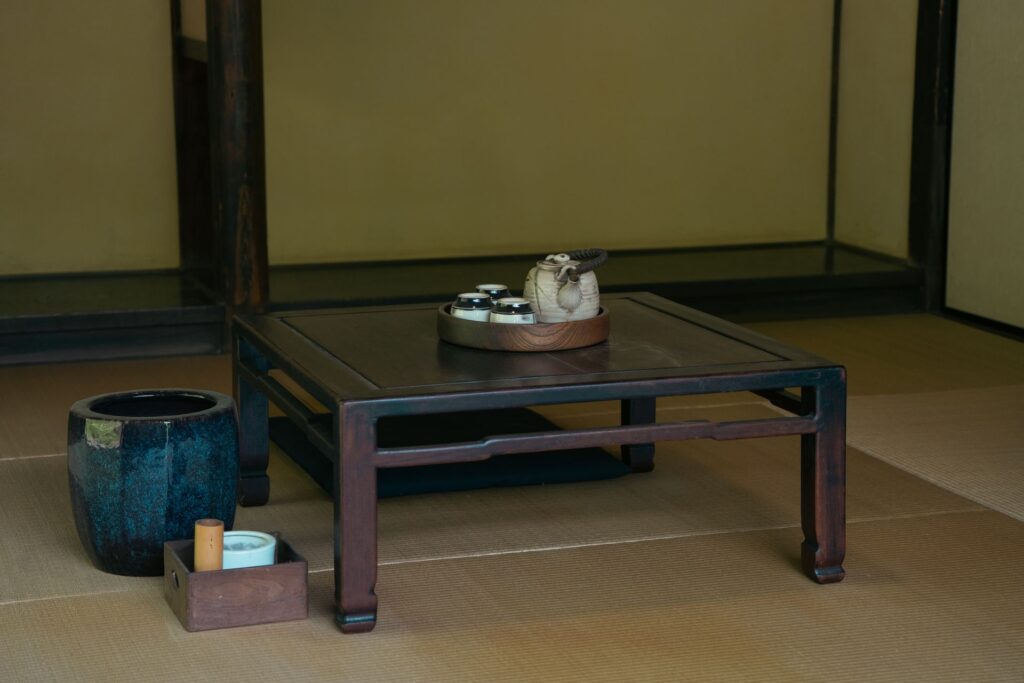
The old Japanese homes had an urn for water in the tatami floor.
The kotatsu has another advantage over the electric mat: It is easy to stow away. The blanket around the sides of the kotatsu table fits in a plastic box, and can stay there until next winter. The electric mat takes a lot more space, even if you fold it up and put it away next to Doraemon in the nando. In most modern holes, there is ample space to put it away.
Of course, you already thought of the obvious solution: Put the tall kotatsu table on top of the electric mat. You capture the heat, and it originates where it is needed most: At floor level, next to your cold feet.
So, in the battle between the electric mat and the kotatsu, which is the winner? There is one simple answer: Both together. Maximizing the comfort of your Japanese winter home.
Stay tuned for more exciting content like this! Follow us on our social media platforms and check out our blog regularly to stay updated on the latest news, trends, and insider stories from Japan. Don’t miss out on future updates—sign up for our newsletter for exclusive content delivered straight to your inbox!
Wisterian Watertree
Wisterian Watertree has been living in Tokyo and other Japanese cities for
the past 20 years, helping visitors get the best of Japan. He is the author of two
books, ”Take Your Toddlers To Tokyo” and ”Driving In Japan”, with more on the
way. You can read more on his website Japan Top 10, https://japan-top-10.com.