When winter comes, Japanese apartments become cold traps. Keeping the heater on all day can be costly. But there are easier and time-tested ways to keep the heat inside.
Very few houses in Japan are built for winter. Even in the snow country, where winter is long and really cold, houses often have single panes of glass, and the insulation is nothing to write home about. But there are simple ways by which you can make a Japanese home much more comfortable. Even in winter.
Winterization in time
“Winterization” is a real word in Japan, and from mid-October hardware stores and drugstores — and 100-yen stores — fill up with goods that are intended to make living more comfortable during the cold season.
The windows in Japanese apartments are one of their weak points in winter.
Which actually does not last that long in most of Japan. In the Tokyo area, temperatures start creeping down towards ten degrees centigrade in the middle of November, and the cold remains until mid-March. How cold is hard to say. There are occasional years with cold spells below zero for extended periods of time, years with snow that stays on the ground, and years completely without. But generally, if temperatures would go below minus ten centigrade in the Tokyo area, it would be regarded as a natural disaster.
When the temperatures start going down, you can tell which parts of an apartment are leaking the most heat to the outside. And that is the second place to do winterization. Because the first part is yourself.
Dress in warm socks
Dressing in warm clothes, with warm socks, drastically increases the tolerance for cold spells. Uniqlo and most other clothing stores have lines of heat-retaining underwear that make the wearer much more tolerant of low temperatures, and even for those who want to be “hikikomori” — never leave the apartment — there is warm room wear. It may look like fuzzy pajamas, but if you do not intend to go out, who cares?
When you are warmly dressed you may even want to open the curtains.
Warmly dressed, with much higher tolerance to the cold, it is time to make sure the apartment does not.
Start with the worst cold traps: The windows. Unless you live in a really old house, the walls will be flush with the floors and ceilings, and the biggest gaps toward the outside will be the windows. Japanese windows in apartment buildings are usually an aluminum frame with a single piece of glass in it. Modern buildings often have two-glass windows, which makes most of the problems described here go away.
Misadjusted window frames
Usually, the window frames with the glass slide sideways to make the opening. It does not take them many years to be misadjusted and start letting in the cold air from the outside.
In the 100-yen-stores, or in the drugstores or hardware stores, you can buy a sealing strip that will cover the gap. Different kinds depend on how you want to mount it in the window. Whichever you choose, make sure there is no air gap between the frame, glass, and room. That will stop the cold air from coming in, which is the same as the heat going out. And you are not going to open the window during winter anyway.
Winter can be really cold in Tokyo, especially if you do nothing about the windows.
Whatever type you choose, there are two additional considerations. The first is to make sure you can remove the sealing strip as easily as you put it in. Cut a small piece and test so you are not removing the paint at the same time.
Seal the aluminum too
The second consideration is to put a sealing strip on the aluminum frame itself. Aluminum is a great conductor — of heat as well. So essentially, if you can insulate the frame, you have removed another source of cold seepage.
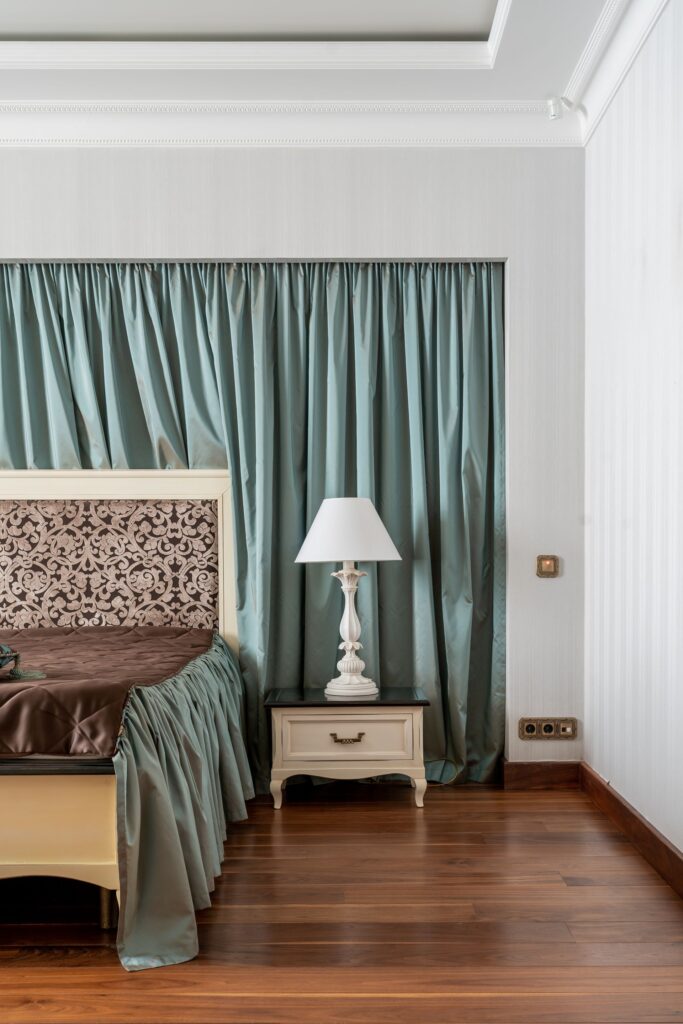
Warm curtains are the key to a cozy bedroom in winter.
Next, it is time for the window itself. The pane of glass itself is probably cold to the touch. A single pane of glass does not have any insulation effect, but a double glass pane will have a layer of air between the two panes of glass, insulating the inside pane from the outside pane and making sure the cold does not pass through. Triple-glazed windows have a vacuum between two of the panes, making it even more insulating.
Making an air gap
But with a single pane of glass, there is no air gap. So make one.
Huh? How do you do that?
It is actually easy. In the same places where you bought the sealing strip, you can buy a film with air channels that you can stick to the window surface. It creates a layer of air between the room and the pane of glass, making it much less cold. While it does obscure the view to the outside, this is not as bad as you may think. Just make sure when putting on the film that there are no air bubbles behind it.
There is one more thing you can do to make sure the heat does not leak out from the room, and that is to put in an additional layer of insulation. It will not be in the window itself — it will be hanging inside it.
To do this, you need a curtain rail that supports two layers of curtains. Three would be even better, but that is quite uncommon in Japanese apartments.
Replace the curtains
What you need to do when the cold season comes is to replace your curtains. Replace the lace curtain with an aluminized sheet, like the silvery rescue blankets (if you have spares, you could even use one of those). Just make sure it covers the length of the window.
Then, replace your ordinary curtains with a thick curtain made from heavy cloth (the heavier the better). This will act as an insulation layer, trapping air between itself and the silvery inner curtain, bringing the heat back into the room and not letting it escape.
If this seems complicated to set up. Do not worry. It is quite easy. And if you still find it a hurdle, Nitori has heavy curtains with an aluminized inside. Just hang them and go.
Stay tuned for more exciting content like this! Follow us on our social media platforms and check out our blog regularly to stay updated on the latest news, trends, and insider stories from Japan. Don’t miss out on future updates—sign up for our newsletter for exclusive content delivered straight to your inbox!
Wisterian Watertree
Wisterian Watertree has been living in Tokyo and other Japanese cities for
the past 20 years, helping visitors get the best of Japan. He is the author of two
books, ”Take Your Toddlers To Tokyo” and ”Driving In Japan”, with more on the
way. You can read more on his website Japan Top 10, https://japan-top-10.com.