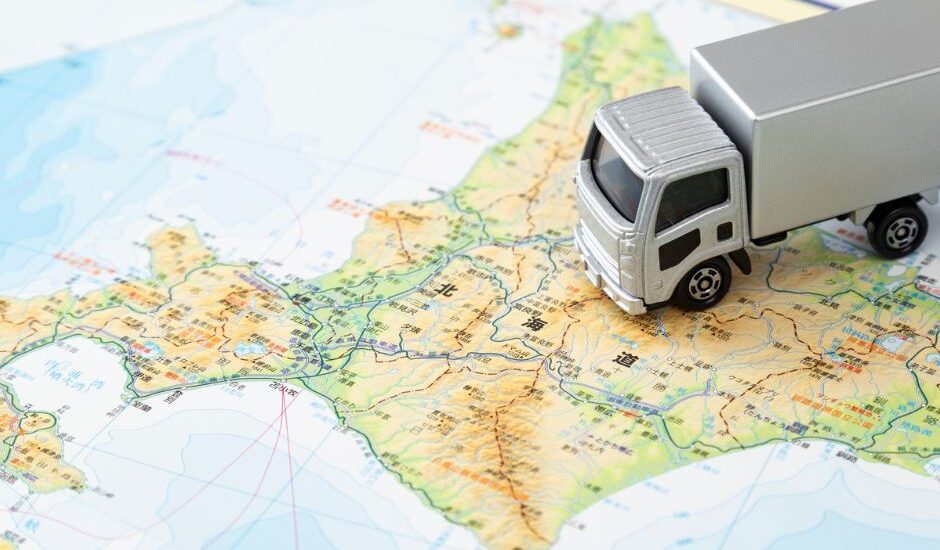
Moving in Japan?
It may look simple until you actually start doing it. You find a new place and sign the contract. You choose a moving date and think the hard part is over.
Then suddenly you’re surrounded by cardboard boxes, garbage rules, utility forms, address changes, city office procedures, internet cancellation fees, oversized trash appointments, and one mysterious drawer full of cables you haven’t touched since 2019.
Japan is very organized, but that doesn’t always mean moving is easy. It just means there’s usually a correct procedure for everything. And if you don’t follow the correct process, the problem will patiently wait for you later.
For foreign residents, moving can be especially stressful because it’s not just about packing. You also need to handle your residence card address, ward or city office paperwork, utilities, internet, mail forwarding, rental inspections, garbage disposal, and sometimes school, work, bank, insurance, or visa-related address updates.
The good news is that moving becomes much easier when you treat it like a timeline, not one giant panic event. Here’s a practical moving preparation guide for Japan.
6–8 Weeks Before Moving: Decide the Big Things First
The first stage is not packing. It’s decision-making. Before you touch a cardboard box, confirm the basics: your moving date, contract start date, old apartment move-out date, and whether there’s any overlap between the two homes. Overlap costs more, but it can make moving much easier. Moving out of one apartment and into another on the same day is possible, but it’s also how people end up stressed and feeling overwhelmed.
If you’re renting, check your current lease carefully. Most apartments require advance notice before moving out, often one or two months. If you miss the deadline, you may have to pay extra rent even after you leave. Don’t assume the rule. Read the contract or ask the management company.
Look for contract terms such as 解約予告, which means cancellation notice, 退去日, which means move-out date, 原状回復, which refers to restoring the property to its original condition, 敷金, which means security deposit, クリーニング費用, which means cleaning fee, and 違約金, which means penalty fee.
This is also the time to confirm your new apartment’s move-in rules. Some buildings restrict moving hours, elevator use, truck parking, or weekend moves. If the building has management staff, ask whether you need to reserve the elevator or notify them before bringing large furniture.
A simple question to ask is: 入居日の引っ越しについて、何かルールや事前連絡は必要ですか。 This means, “Are there any rules or required advance notices for moving in?” This one question can prevent a lot of future troubles.
Get Moving Company Quotes Early
Moving companies in Japan can get expensive, especially during busy periods. Spring is the biggest moving season because of school, job transfers, and new fiscal year changes. But even outside peak season, weekends and holidays can fill up quickly.
For a normal local move in Japan, a single person with fewer items may pay around ¥30,000–¥60,000, while a single person with more furniture can easily land closer to ¥50,000–¥80,000. Couples often fall somewhere around ¥70,000–¥140,000, and families can range from about ¥90,000–¥220,000 for a local move, depending on distance, timing, stairs, elevators, packing service, and how much furniture is involved. Long-distance moves cost much more, with single-person moves often starting around ¥60,000–¥120,000 and family moves sometimes reaching ¥150,000–¥380,000 or more.
Recent 2026 moving-cost data also shows how much timing matters: average prices are much higher in March and April, while late summer and autumn can be cheaper. In one 2026 dataset, August averages were around ¥31,531 for single-person moves, ¥40,721 for two-person households, and ¥53,658 for three-person households, though real quotes can be higher if the move is large, urgent, or during a busy weekend.
That is why quotes matter. Two companies can price the same move very differently, and the cheapest date is not always the date you first wanted. Major companies include Sakai, Art, Yamato, and other local movers, but smaller companies may also be cheaper depending on your area and how much you own.
When requesting quotes, be ready to explain your current address, new address, preferred moving date, building type, elevator access, truck parking situation, large furniture, appliances, and whether you need packing, disposal, or air conditioner removal and installation services.
If your Japanese is limited, use photos. Take pictures of large furniture, appliances, closets, entrances, stairways, elevators, and anything that looks difficult to move. Measurements also help, especially for refrigerators, washing machines, sofas, beds, and desks.
Do not only choose the cheapest company. Check what is included. Some movers include boxes, while others charge extra. Some can collect used boxes after the move, but some do not. Some handle washing machine connection, while others treat it as an add-on. Stairs, narrow roads, long carrying distances, difficult parking, and large appliances may also affect the final price.
Moving day is not the day you want to discover that “basic moving service” does not mean what you thought it meant.
If you have a valid driver’s license and can rent a car, you can opt to rent a minivan and do the transferring yourself. This is way more hands-on, but it works best if you don’t have large furniture and want to save on moving costs.

Start Decluttering Before You Pack
Moving in Japan punishes people who keep too much stuff. Apartments are smaller, storage is limited, and garbage disposal is more structured than in many countries. You can’t just throw everything onto the curb the night before moving and hope the city understands your emotional situation.
Start decluttering early. Go through clothes, shoes, papers, kitchen items, skincare, old electronics, books, hobby supplies, broken umbrellas, expired food, and mystery cables. Be honest and convinced that if you didn’t use it in your current apartment, you most likely won’t in the new one.
For items in good condition, consider selling or giving them away. Options include Mercari, Jimoty, recycling shops, local community groups, or friends. For appliances and furniture, check whether the buyer can collect them. Delivery can become more trouble than the item is worth.
For broken or unwanted items, check your local garbage rules. Japan’s disposal system depends on the city or ward. What counts as burnable, non-burnable, plastic, recyclable, or oversized garbage can vary. Don’t rely only on what worked in your previous city. This is especially important if you’re moving between wards or prefectures. The rules may change completely.
Oversized Garbage Needs Planning
Oversized garbage, or sodai gomi, is one of the most important moving tasks to handle early. Large items like furniture, futons, shelves, tables, chairs, suitcases, and certain appliances may need advance reservation. In many areas, you need to apply online or by phone, buy disposal tickets at a kombini, attach them to the item, and place the item outside on the assigned collection date. You can’t just decide to throw them away the night before.
During moving season, sodai gomi appointments can fill quickly. Some wards may require one or two weeks of lead time, sometimes more. If you leave this task too late, you may end up moving unwanted furniture to the new apartment.
Also, not everything can be thrown away as normal oversized garbage. Japan has special recycling rules for certain appliances, including ACs, TVs, refrigerators, freezers, washing machines, and clothes dryers. These may require pickup through a retailer, designated collection point, or recycling service.
Computers, batteries, spray cans, gas canisters, and small electronics may also have special disposal rules. Moving is not an excuse to accidentally create a dangerous garbage situation. A practical way to stay organized is to decide early whether each large item will be moved, sold, donated, recycled, or thrown away. Do this before requesting final mover quotes, because the amount of furniture and appliances can affect the price.
Four Weeks Before Moving: Start the Admin List
About a month before moving, start listing every place that has your address. This is boring, but it matters. Your address may be registered with your city or ward office, immigration-related residence records, My Number card, health insurance, pension, bank accounts, credit cards, mobile phone plans, internet, electricity, gas and water providers, online shopping accounts, subscriptions, delivery services, insurance companies, as well as your employer, school, daycare, gym, clinic, pet registration, driver’s license, car registration, and parking contracts.
Don’t try to update everything in one day. Make a simple address-change note and work through it gradually. For foreign residents, the most important official address update is your residence record. If you move within Japan, you need to complete the municipal procedures correctly. Your residence card address is usually updated through the city or ward office.
If you are moving to a different city, ward, town, or village, you generally need to submit a moving-out notification at your old municipality and a moving-in notification at your new one. If you are moving within the same municipality, you usually submit a change-of-address notification after the move. The exact counter and required documents can vary, so check your local office website before going.
Handle City Office and Address Procedures Early
If you have a My Number card, check whether you can use Mynaportal for part of the moving process. In many cases, moving-out procedures can be started online, which may save you a trip to your old city or ward office. However, this does not usually mean the whole process is finished online. After moving, you still need to visit the new municipal office to complete the moving-in procedure and update your address records.
When you go to the municipal office, bring the important documents with you: your residence card, My Number card if you have one, moving-out certificate if applicable, passport if needed, and documents for family members who are moving with you. If your household has several foreign residents, do not assume one person can update everything without everyone’s cards.
For foreign residents, the address update is important because it is connected to your residence record and residence card information. In general, you should complete the required moving procedures within 14 days after moving. Do not leave this until the last minute, because missing documents, long lines, holidays, or work schedules can easily turn one city office visit into two. Another article you may read if you would like to know more.
Arrange Utilities Before Moving Day
Utilities should be arranged before moving day, not after, when you’re already standing in the new apartment wondering why nothing works. You usually need to stop electricity, gas, water, and internet at the old address and start them at the new one. Electricity and water can often be handled online or by phone, depending on the provider and area.
Gas needs more attention because city gas usually requires a staff visit to open the gas line safely. If you want hot water and cooking gas on move-in day, book the appointment early.
Internet can be the most annoying utility because installation may require building approval, construction, or a technician visit. Some apartments already have building internet, while others require you to arrange your own line. If you work from home, study online, or rely heavily on video calls, ask the management company what lines are available before moving. Do not assume internet will work on day one. In Japan, that assumption has betrayed many people.
Two Weeks Before Moving: Pack the Things You Don’t Use Daily
With two weeks left, packing should become serious. Start with things you do not use daily: out-of-season clothes, books, documents, decorations, extra dishes, hobby supplies, spare bedding, and storage items. Leave daily clothes, toiletries, chargers, basic kitchen tools, work or school items, and medicine for later.
Label boxes clearly with both the contents and the room. “Kitchen — plates and bowls” is more useful than “stuff.” “Bedroom — winter clothes” is better than “clothes.” Future you will not remember what past you meant.
Pack one “first night” box separately. This should have the things you need immediately, such as toilet paper, towels, soap, toothbrush, chargers, basic medicine, pajamas, clean underwear, one change of clothes, trash bags, scissors or a cutter, cleaning wipes, simple dishes or disposable items, snacks, and pet supplies if needed.
Also prepare a separate valuables bag that stays with you, not the movers. Keep your passport, residence card, My Number card, cash cards, bank books, personal seal, cash, keys, contracts, medicine, laptop, and anything irreplaceable in that bag. Do not pack your residence card in a random box. That is how a normal moving day turns into a scavenger hunt.
Protect Your Old Apartment Deposit
If you are renting, move-out condition matters. Japan has the concept of restoring the property to its original condition, but normal wear and tear should be treated differently from tenant-caused damage. In real life, disputes can still happen, especially around stains, scratches, mold, smoking, pet damage, broken fixtures, and cleaning fees
Before moving out, clean properly, but do not destroy yourself trying to make the apartment look new. Focus on the areas that are commonly checked, such as the kitchen, bathroom, toilet, floors, walls, air conditioner, balcony, drains, range hood, entryway, and closets.
Take photos before you leave. Take photos after cleaning. Take photos of existing damage, especially if it was there when you moved in, and you have move-in records. If the management company gives you a move-in or move-out condition form, keep a copy.
If you caused damage, be honest with yourself. If the damage is normal wear, do not immediately accept unfair charges without asking for an explanation. Also, do not leave items behind unless the landlord agreed. Abandoned furniture or trash can result in disposal fees.
A Week Before Moving to Moving Day: Confirm and Simplify
The week before moving is confirmation week. Confirm the moving company date, arrival time, truck parking, payment method, and what they will or will not handle. Confirm electricity, gas, water, internet, old apartment key return time, move-out inspection, new apartment key pickup time, elevator rules, oversized garbage pickup, and pet arrangements if you have pets.
This is also the week to reduce the amount of food you need to move. Use up the fridge and freezer, throw away expired items, and avoid buying bulky groceries. If you have a washing machine or refrigerator, ask the moving company whether you need to drain, unplug, or defrost anything before moving day.
The day before moving, keep things simple. Finish final packing, do laundry early, empty trash according to local rules, charge your phone and power bank, prepare cash if needed, and keep your valuables bag separate. Moving while exhausted makes every small issue feel like a crisis, so sleep if possible. Of course, many people do not sleep properly before moving. This is normal but do try anyway.
On moving day, your job is to prevent mistakes, and not micromanage every box, unless you’re doing the transfer yourself. Guide the movers on which box is which. Before leaving the old apartment, check closets, balcony, washing machine area, bathroom, toilet, kitchen cabinets, under the sink, shoe cabinet, mailbox, bicycle parking, storage spaces, behind doors, curtain rails, air conditioner remotes, and light fixtures if they belong to you.
At the new place, direct boxes by room. Do not tell movers to put everything in one pile unless you enjoy suffering later. Before unpacking everything, check whether the electricity, water, gas, hot water, toilet, intercom, air conditioner, lights, stove, washing machine area, and internet or router setup are okay.
Before furniture covers everything, photograph the new apartment. Take pictures of floors, walls, ceilings, doors, windows, balcony, kitchen, bathroom, toilet, closets, air conditioner, stove, intercom, lights, screens, and any existing scratches, stains, dents, cracks, or mold. If there is a move-in condition checklist, complete it carefully and submit it by the deadline.
After Moving: Finish the Paperwork and Settle In
After moving, do the official procedures first. Visit the new municipal office within the required period, update your residence card address through the proper process, and handle My Number, health insurance, pension, school, childcare, seal registration, or pet registration matters if they apply to you.
Set up Japan Post mail forwarding from your old address to your new one. This service can redirect mail for one year, but it is only a safety net. It does not update your address with banks, credit cards, insurance companies, phone providers, schools, clinics, delivery services, or online shopping accounts. Every forwarded envelope should be treated as a reminder to update that sender.
Unpack by function, not by emotion. Set up the bathroom, toilet, sleeping area, basic kitchen, chargers, work or school items, medicine, trash bags, and daily clothes first. Then handle laundry, food storage, cleaning supplies, documents, internet, and work setup. Books, decorations, seasonal items, hobby supplies, and storage boxes can wait.
Also, break down cardboard quickly. Japanese homes are not big enough for a cardboard mountain, and cardboard can hold moisture or attract pests in humid months. If your moving company collects used boxes, schedule collection. If not, follow your local recycling rules.
Moving in Japan is not only about putting things in boxes. It is a full administrative event with furniture, paperwork, garbage rules, utilities, address registration, mail forwarding, deposits, inspections, and at least one moment where you ask yourself why you own so many random things. The best way to make it manageable is to start early and follow a timeline.
A move does not have to be perfect. Something will probably still go wrong. Maybe the internet takes longer than expected. Maybe the curtains do not fit. Maybe you forget which box has the frying pan. That is normal. But with preparation, you can avoid the expensive and stressful mistakes. Your future self, standing in the new apartment surrounded by boxes, will be grateful.
If you want to learn more about how to get rid of your furniture, check this out.
Stay tuned for more exciting content like this! Follow us on our social media platforms and check out our blog regularly to stay updated on the latest news, trends, and insider stories from Japan. Don’t miss out on future updates—sign up for our newsletter for exclusive content delivered straight to your inbox!