Summer… Japanese summers don’t ease you in. One week you’re complaining about the rainy season, and the next you’re standing in front of your air conditioner’s remote control, quietly computing how much pushing a button is going to cost you. The heat is intense, the humidity is relentless, and for most people living in Japan, air conditioning from July to September is not a luxury – it’s a health necessity.
The problem is that the AC is also the single biggest reason your summer electricity bill jumps. Many newcomers get a genuine shock when their first August bill arrives, sometimes 30% to 50% higher than May’s bill. The good news is that summer cooling costs are predictable once you understand how they work. With a few numbers, a few habits, and a realistic monthly budget, you can stay comfortable all summer without dreading the notice from your power company.
Here’s what your cooling costs actually look like and how to plan for them.
What a Summer Electricity Bill Looks Like in Japan
Before you can budget, you need a baseline. According to Japan Living Guide, a single person in Japan typically pays somewhere around ¥5,000 to ¥6,000 per month for electricity in milder months, while families pay around ¥10,000 or more. Electricity rates vary by region and provider, but the national average works out to roughly ¥35 to ¥36 per kilowatt-hour, including taxes, based on figures compiled by E-Housing.
In summer, those numbers climb. For a single-person household running the AC regularly, expect around ¥6,000 to ¥8,000 per month. For families cooling a living room plus bedrooms, ¥14,000 to ¥19,000 is not unusual in August.
How much of that is the air conditioner itself? Quite a lot. It’s estimated that a small bedroom unit running eight hours a day adds roughly ¥2,500 to ¥4,000 per month, while a larger living room unit used daily can add up to ¥8,000. If you want to get granular, Panasonic’s own guidance puts the cost of one hour of AC operation at anywhere from ¥3 to ¥21, depending on the unit, the settings, and how hard it has to work. A typical 2.8kW model cooling at 24°C costs around ¥11 per hour.
That range is the key insight of this whole article: the same air conditioner can cost you three times more or three times less depending on how you use it. That’s where your budget control lives.
The 2026 Summer Subsidy: Free Money on Your Bill
Before we get to the saving strategies, here’s something working in your favor this year. The Japanese government restarted its electricity and gas subsidy program from July through September 2026, in response to elevated energy prices. Your electricity is discounted by ¥3.5 per kilowatt-hour in July and September, and ¥4.5 per kilowatt-hour in August, the peak month. City gas gets a similar discount. For an average household, that works out to roughly ¥5,000 in total relief over the three months, as reported by The Mainichi.
The best part: you don’t need to apply for anything. The discount is applied automatically by your utility provider and appears directly on your bill. Just don’t let it lull you into a cooling spree. The subsidy softens the summer spike, but it doesn’t erase it, and it ends in September.
How to Keep Your Cooling Costs Under Control
Here are a couple of practical ways to keep your electricity bill at manageable levels during summer.
1. Set it to 27°–28°C and leave it alone
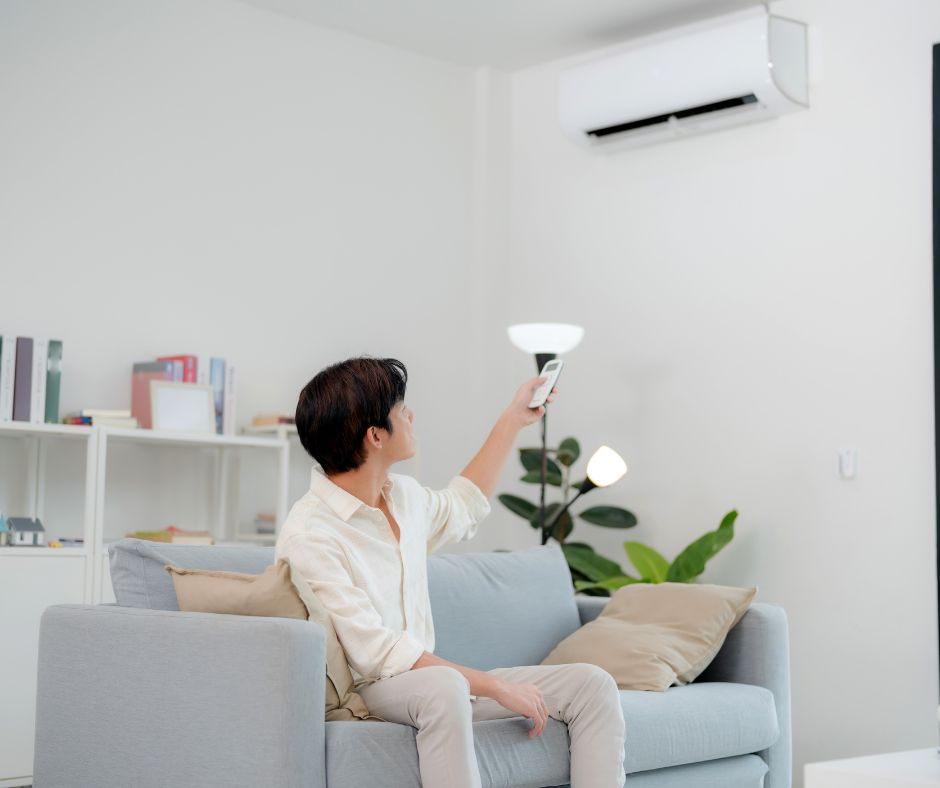
Japan’s widely recommended summer setting is 27°– 28°C, and there’s real money behind that number. Each degree you raise the set temperature cuts your AC’s energy consumption by roughly 10%, according to this energy-saving guidance from Kyushu Electric Power. Cooling your room to 24°C instead of 27°C can genuinely add thousands of yen to your monthly bill.
If 28°C sounds unbearable, remember that in Japan’s humidity, the number on the remote matters less than the moisture in the air. I’ve personally tried turning down the temperature to 20°C during a really hot day, and the room ended up more humid than usual. You can really feel the moisture dampening the room, compared to a more tolerable setting when the AC was around 26°C. Many units have a dry mode (除湿 or joshitsu) that removes humidity, and a room at 28°C with low humidity often feels more comfortable than a damp lower temperature.
Equally important: resist the urge to switch the AC on and off throughout the day. Air conditioners draw the most power when they first start up, working hard to bring the room temperature down, then settle into a much lower consumption once the room is stable. If you’re stepping out for 30 minutes, leaving it running at a moderate setting is usually cheaper than letting the room reheat and restart. For short errands, leaving the AC on is recommended.
2. Clean the filter
This is the least glamorous tip on this list, and possibly the most cost-effective. A dust-clogged filter forces your air conditioner to work harder to move the same amount of air, which means more electricity for less cooling. It’s recommended to clean the filter once every two weeks during heavy-use seasons. The process takes ten minutes: open the panel, slide out the filters, vacuum off any dust or rinse them in the shower, let them dry, and slide them back in.
3. Pair the AC with a fan
A circulator fan or an ordinary electric fan costs almost nothing to run, often less than ¥1 per hour, and it makes your AC dramatically more effective. Cold air sinks and pools near the floor; a fan pushes it around the room so the AC’s sensor doesn’t keep calling for more cooling. Point the fan away from you, toward the ceiling or across the room, and you can comfortably set the AC a degree or two higher. Fans are cheap and very accessible for purchase in Japan. Nitori, Yamada Denki, Don Quijote, Amazon JP, and even some 100-yen shops (small USB desk versions), will have you covered. If you buy one thing for your summer budget, make it a circulator.
4. Stop the heat before it gets in
Your AC isn’t just fighting the outside temperature. It’s fighting the sunlight streaming through your windows and turning your apartment into a greenhouse. Great if you have indoor plants in need of sunlight; otherwise, it’s best to block that heat at the window. This is far cheaper than removing the heat with electricity afterward.
The traditional Japanese solution is the sudare (すだれ), a bamboo or reed screen hung outside the window or on the balcony that blocks sunlight before it hits the glass. They cost a few hundred yen at home centers and work remarkably well. Indoors, thick or thermal-insulated curtains help too. Keep them closed on sun-facing windows during the day, especially if you’re out at work, and your apartment will start the evening several degrees cooler.
Another local trick worth trying is uchimizu (打ち水), the old custom of sprinkling water on balconies and pavement in the early morning or evening. The evaporation cools the surrounding air slightly. It won’t replace your AC, but it’s practically free, and it makes your balcony bearable.
5. Check your plan and your provider
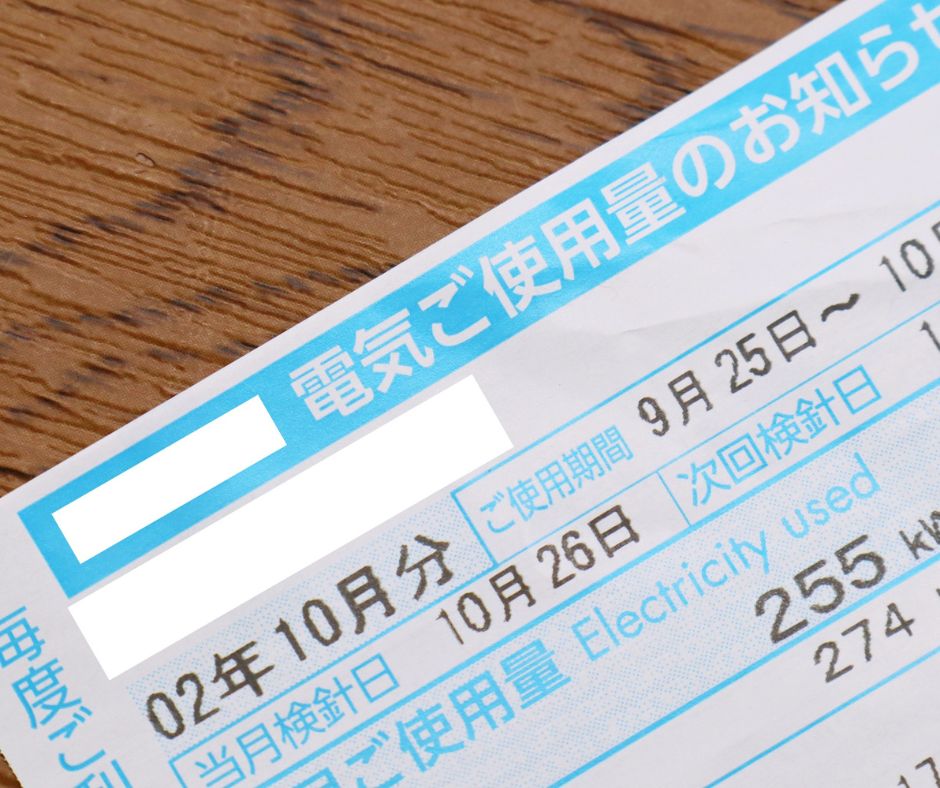
Since Japan liberalized its retail electricity market, you’re not stuck with the default regional utility. Comparison sites like Enechange let you compare plans based on your actual usage, and switching is paperwork-light: no construction, no visit, usually just an online form and your customer number from a recent bill.
Two things to check even if you don’t switch. First, your contract amperage: many plans charge a base fee tied to your contracted ampere level, and if you’re a single person on a 40A contract, dropping to a 30A contract can trim the fixed portion of every bill. Second, time-of-use plans: if you’re out all day and cool your apartment mainly at night, a plan with cheaper nighttime rates might fit your life better.
6. Use the free cooling around you
Here’s a budgeting strategy locals have perfected: don’t cool your apartment when the city will cool you for free. Japan has designated some 23,000 public cooling shelters (クーリングシェルター) nationwide, which are facilities that open to the public when heatstroke alerts are issued. Tokyo alone has around 1,800 of them, plus nearly 2,000 additional “cool share spots” you can use on any hot day, alert or not. Tokyo publishes a cooling shelter map each summer so you can find ones near you, and your local ward office website will list them too.
Beyond the official spots, libraries, shopping malls, and cafes are time-honored summer refuges. Spending your Saturday afternoon in an air-conditioned library instead of your apartment costs you nothing and saves six hours of AC use. One important caveat: this is a savings strategy, not a substitute for cooling your home. Heatstroke kills people indoors in Japan every summer, disproportionately those who avoided using their AC to save money. Never skip cooling on dangerously hot days to protect your budget.
A Realistic Monthly Cooling Budget
Putting it all together, here’s what a sensible plan for July through September looks like. If you live alone in a 1K or 1DK, budget ¥7,000 to ¥9,000 per month for electricity, knowing that careful habits and the subsidy can bring the real figure lower. For a couple or family in a larger apartment cooling multiple rooms, plan for ¥12,000 to ¥15,000 in August, with July and September running somewhat lighter.
Treat August as your peak month and expect it. The two billing periods covering the month of August will be the highest of the year, often even higher than the winter heating months. If you set aside an extra ¥3,000 to ¥5,000 per summer month in advance, the bill becomes a line item instead of a surprise.
What Not to Do This Summer
- Don’t set the AC to 20°C hoping it will cool the room faster. It won’t. It will just keep running longer and cost more.
- Don’t switch the AC on and off every time you leave the room for a short time.
- Don’t run the AC all season with a filter you’ve never looked at.
- Don’t leave curtains open on sun-facing windows while you’re out.
- And above all, don’t endure dangerous heat to save money. A few thousand yen is never worth a trip to the hospital.
Cooling costs in Japan are one of those recurring expenses that feel out of your control until you understand them, and then suddenly they’re not. The rate per hour, the temperature setting, the filter, the curtains, the subsidy quietly shaving yen off every kilowatt-hour: each one is a small lever, and together they can easily cut off a chunk of your summer bills. Set your budget, build the habits, and then go and enjoy the season. There’s a natsu matsuri happening almost every weekend!
Stay tuned for more exciting content like this! Follow us on our social media platforms and check out our blog regularly to stay updated on the latest news, trends, and insider stories from Japan. Don’t miss out on future updates. Sign up for our newsletter for exclusive content delivered straight to your inbox!