Edogawa-ku: The Tokyo Ward Famous for its Vegetables
The shogun named its signature vegetable. Today, you can find it incorporated in a multitude of dishes, including curries – and dorayaki desserts. But the present-day Edogawa-ku is better known for its extensive water parks and fireworks festival – although if you go there, you will find plenty of restaurants specializing in the local produce.
Edogawa-ku, located in the easternmost part of Tokyo, is a district defined by its close relationship with water, its rich agricultural heritage, and its commitment to traditional craftsmanship. The district offers a unique blend of urban living and pastoral charm, making it a distinctive area within the Tokyo metropolis.
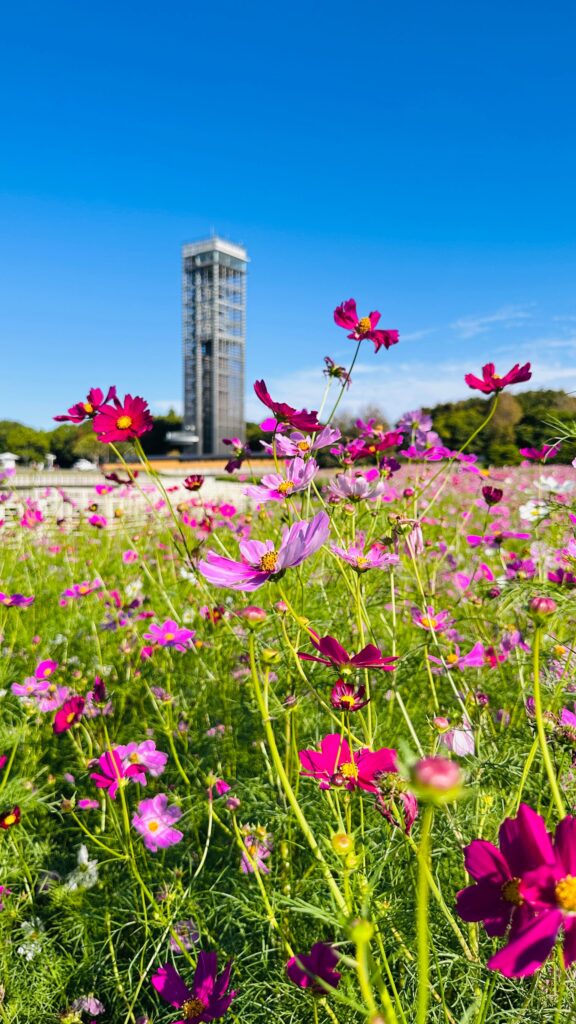
The Kasai Rinkai Park is one of the most visited in Edogawa-ku.
Edogawa differs markedly from central Tokyo districts such as Shinjuku or Shibuya. Rather than skyscrapers and nightlife, you will find rivers, cycling paths, extensive public parks, sports facilities, bird sanctuaries, and quiet residential communities. Edogawa-ku has a distinct suburban atmosphere thanks to its combination of historic agricultural traditions, modern waterfront redevelopment, and abundant green space. And yet, it is less than 20 minutes from central Tokyo by train.
Vegetables for Edo
The ward is particularly known for its extensive network of shinsui (“waterside”) parks, designed to restore rivers and canals as public recreational spaces, pioneered in the area and turned into a model for similar development elsewhere.
During the Edo period (1603–1868), villages in the area supplied vegetables, fish, and flowers to the markets of Edo, then probably the biggest city in the world. The fertile alluvial soils created by repeated flooding of the rivers floating into Tokyo Bay made the district especially suitable for agriculture, which also made it famous.
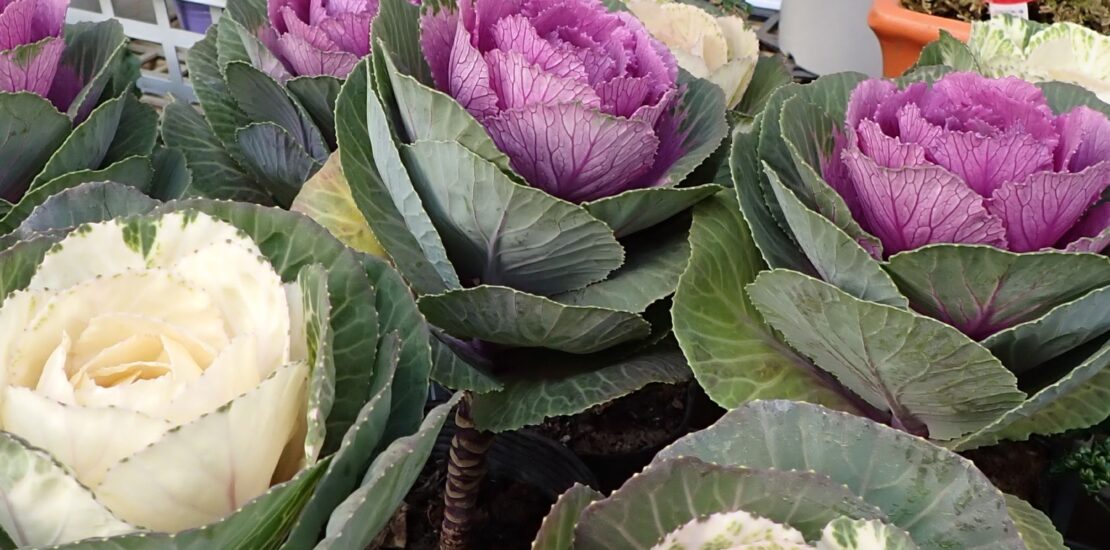
Komatsuna dishes in Edogawa-ku feature the signature vegetable of the area.
This was because of ”Komatsuna” (Japanese mustard spinach), which originated in the district. Legend has it that the eighth shogun, Tokugawa Yoshimune, visited the Katori Shrine in the old Komatsugawa village in 1719 and was served a clear soup containing the greens. Finding them delicious and learning that the plant lacked a name, he reportedly named it “komatsuna” after the locality. While historians regard the story as traditional rather than definitively documented, it remains the accepted origin of the vegetable’s name and forms an important part of Edogawa’s identity.
Following Tokyo’s rapid post-war expansion, the farmland gradually gave way to residential development, while major parks and recreational facilities were created along the waterfront and the many rivers and canals leading into it.
Waterside parks galore
Edogawa’s extensive network of waterside parks — including Ichinoe Sakaigawa, Komatsugawa Sakaigawa, Shin-Sakongawa, and Shin-Nagasimagawa — reflects the ward’s long-term policy of integrating flood control, recreation, and ecological restoration. Many include canoe facilities, walking trails, playgrounds, and seasonal water play areas.
Kasai Rinkai Park is the ward’s best-known destination. Covering a vast reclaimed coastal area on Tokyo Bay, it combines lawns, bird habitats, beaches, cycling routes, and observation areas. The landmark Diamond and Flower Ferris Wheel offers panoramic views across Tokyo Bay, while the adjacent aquarium is among Japan’s leading marine institutions. The park is also an important stop for migratory birds, and a major destination for bird watchers in season.
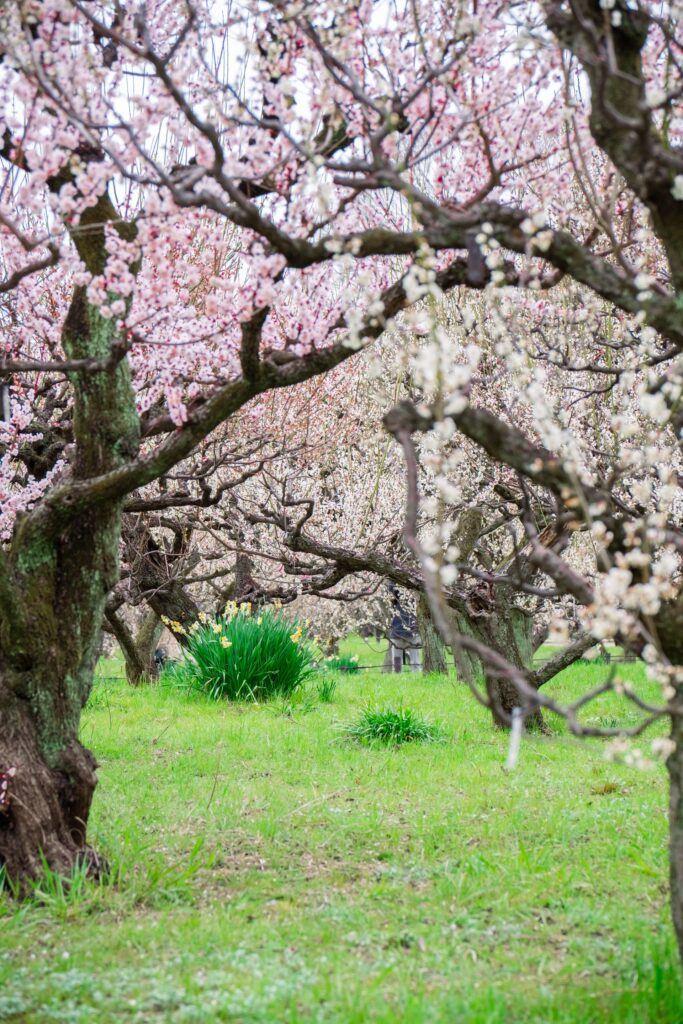
The Komatsugawa Senbonzakura Park features more than 1000 cherry trees.
Gyosen Park combines a traditional Japanese garden, ponds, walking paths, and the Edogawa ward’s Natural Zoo, which houses red pandas, capybaras, penguins, and other small animals (although it is not primarily a petting zoo). The park is especially popular with families, partly because admission is free.
Furukawa Shinsui Park is widely recognised as Japan’s first shinsui park. Opened by transforming a former drainage canal into an attractive water landscape, it became the model for many similar projects throughout Edogawa-ku and all of Japan.
Ghibli book original
Komatsugawa Senbonzakura features roughly one thousand cherry trees (the name even translates as “1,000 cherry trees”) planted along the riverbanks. During spring, it becomes one of eastern Tokyo’s most celebrated cherry blossom viewing locations.
But the ward is also home to several cultural points of interest. The Magic Literature Museum (Edogawa City Eiko Kadono Children’s Literature Museum) opened in 2023 at Nagisa Park; this museum celebrates the works of Eiko Kadono, who has historical ties to the district. Her best-known work is probably ”Kiki’s Delivery Service”, immortalized as an animated film by Hayao Miyazaki of Studio Ghibli.
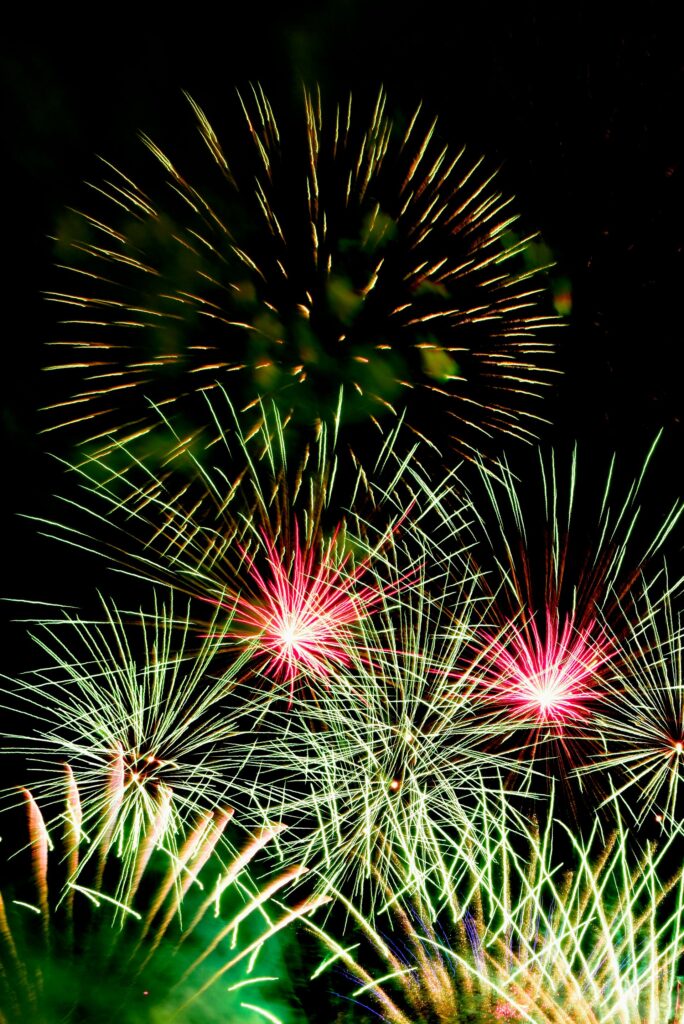
The annual fireworks festival is a major Edogawa event.
The ward is also the scene of the Edogawa Fireworks Festival, an annual summer tradition that draws massive crowds to the seaside parks. It is one of the largest fireworks festivals in all of Japan, with approximately 14,000 fireworks launched over the Edogawa River.
As in many other former rural parts of Tokyo, craftsmen have found the cheap land allows them space for their studios while retaining the connection to the city. The district is home to many traditional artisans specializing in Edo cut glass (Edo kiriko), Edo wind chimes (Edo furin), and Edo kumiko woodwork.
Major goldfish producer
Edogawa Ward is also one of Japan’s three major production centers for goldfish (kingyo). Goldfish farming moved to Edogawa in the early 20th century, particularly after the Great Kanto Earthquake of 1923, to take advantage of the area’s high-quality water and abundant land.
The culinary scene in Edogawa is heavily influenced by its signature crop, Komatsuna. The ward continues to be Tokyo’s leading producer, and local growers attribute the vegetable’s sweetness partly to mineral-rich soils influenced by Tokyo Bay and the several rivers running out into it through the ward. In other parts of Japan, the vegetable has a sharp edge to its taste, somewhat like the mustard leaves that give it its English name. Here, the taste is a different story.
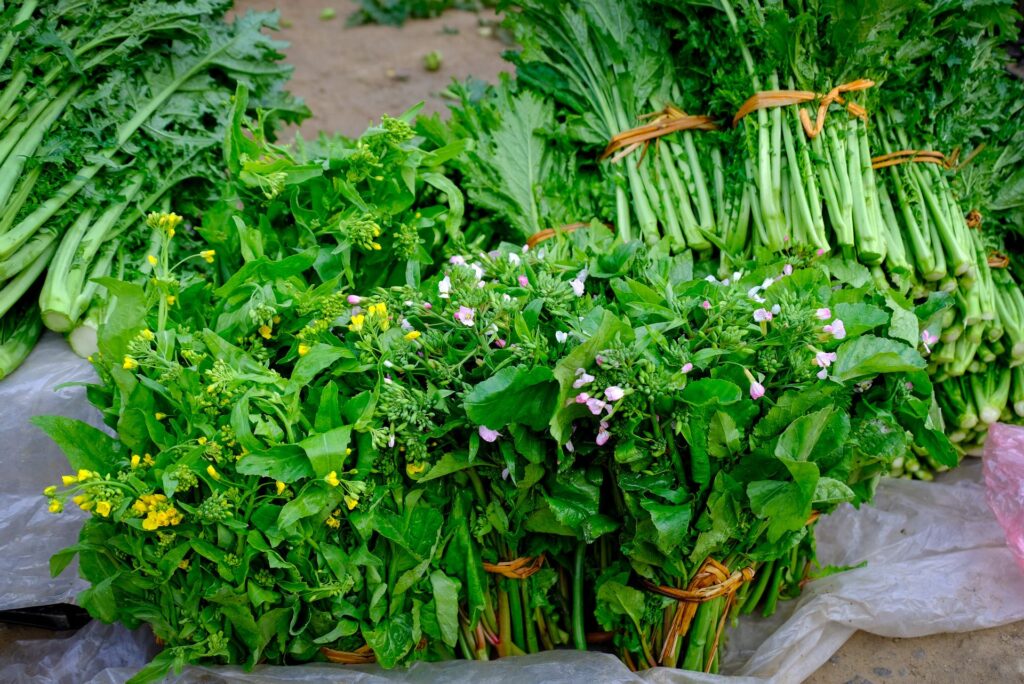
Komatsuna and other vegetables are sold fresh in roadside stands.
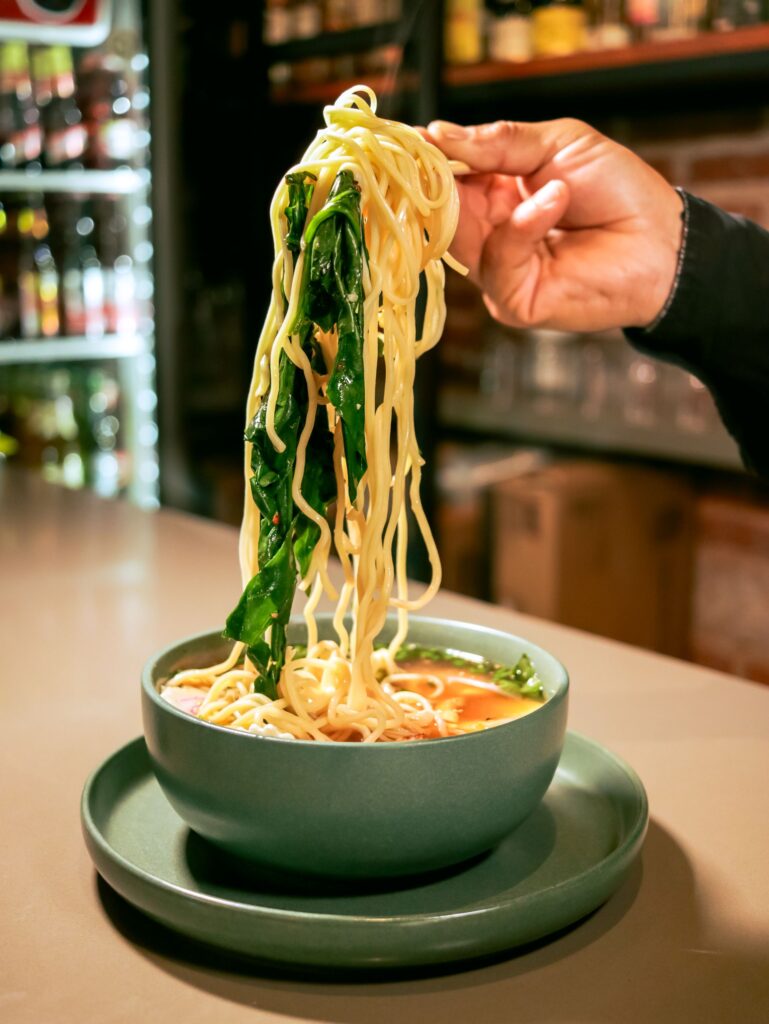
Freshly harvested bundles of komatsuna are traditionally sold with their roots intact as a mark of local production. Many local restaurants incorporate komatsuna into soups, pasta, tempura, curry, and seasonal as well as novel Japanese dishes. This includes “Salad Komatsuna” (using a mild variety for raw consumption), Komatsuna noodles (soba and udon), and even desserts like “Komatsuna Dorayaki”.
Direct vegetable sales
Although highly urbanized, Edogawa still maintains numerous direct-sales stands where locally grown vegetables are sold. Seasonal produce includes komatsuna as well as other vegetables, including tomatoes, spinach, and leafy greens — reflecting the ward’s continuing agricultural heritage.
Access to fresh vegetables, harvested the same day, if not the same hour, lends a unique freshness to the restaurants of the district.
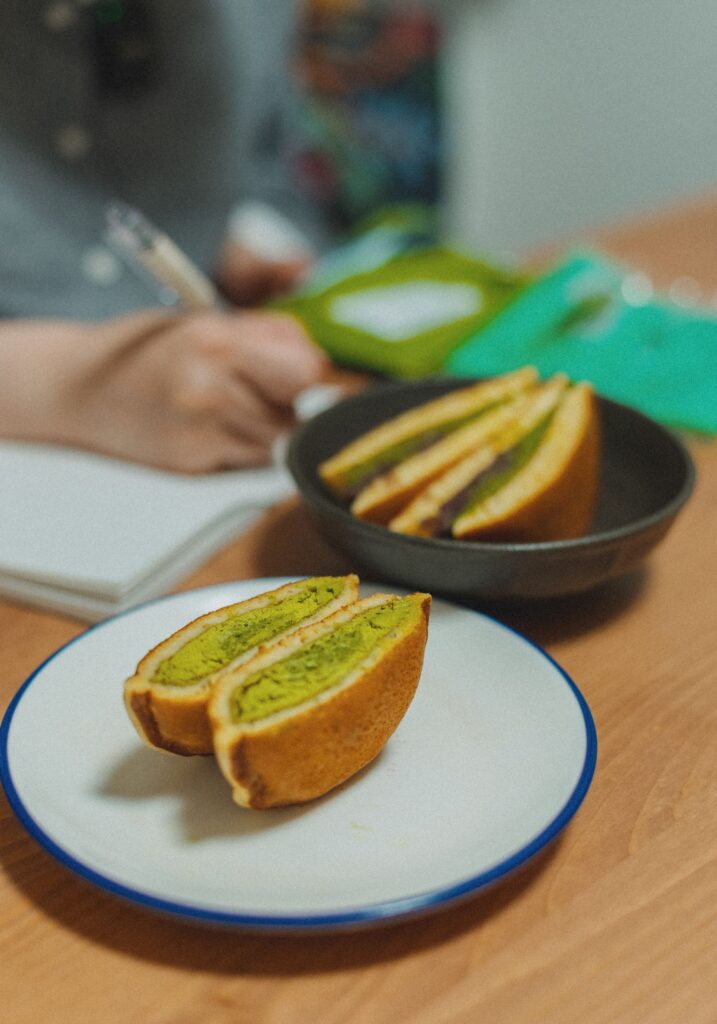
Dorayaki with komatsuna filling is an Edogawa delicacy.
To sample a unique dessert, visit Chuza Sakurahonpo (Shinozaki), a long-standing traditional Japanese confectionery shop famous for its dorayaki (two small pancake-like sponge cakes with a sweet filling), including the unique Komatsuna-flavored version. And yes, dorayaki is the favorite food of Doraemon.
Patisserie Le Amaretto (in Minami-Kasai) is also known for its local-themed sweets, including pastries named after the Kasai area, making them popular choices for souvenirs. And to find a variety of local produce, try Shinozaki Bunka Plaza, a complex that often highlights local specialty products, including items like Komatsuna curry, rice crackers, and traditional crafts.
Stay tuned for more exciting content like this! Follow us on our social media platforms and check out our blog regularly to stay updated on the latest news, trends, and insider stories from Japan. Don’t miss out on future updates—sign up for our newsletter for exclusive content delivered straight to your inbox!
Wisterian Watertree
Wisterian Watertree has been living in Tokyo and other Japanese cities for
the past 20 years, helping visitors get the best of Japan. He is the author of two
books, ”Take Your Toddlers To Tokyo” and ”Driving In Japan”, with more on the
way. You can read more on his website Japan Top 10, https://japan-top-10.com.