Discover Saitama beyond Tokyo with historic Kawagoe, Omiya’s Hikawa Shrine, Tokorozawa aviation history, Nagatoro Gorge, local festivals, and easy day trips.

Discover Saitama beyond Tokyo with historic Kawagoe, Omiya’s Hikawa Shrine, Tokorozawa aviation history, Nagatoro Gorge, local festivals, and easy day trips.
If Tokyo is performance, Saitama is process. This prefecture, part of the ancient Kanto heartland, may go unnoticed as even locals have a hard time saying where Saitama begins and Tokyo ends. It sits directly north of the capital, absorbing commuters, history, logistics, and daily life without asking for credit.
For many visitors, Saitama exists only as a name on a train line, something you pass through on the way somewhere else. That reputation is undeserved. Within an hour of central Tokyo, Saitama contains some of the Kantō region’s most revealing historical towns, landscapes, and living traditions. It simply doesn’t advertise them loudly.
Saitama’s appeal lies in continuity. While Tokyo reinvented itself repeatedly, Saitama evolved more slowly, preserving layers of premodern Japan alongside postwar suburbia. Japanese regional histories often describe Saitama as Tokyo no ura-gawa—Tokyo’s reverse side—not hidden, but facing a different direction.
Historically, most of what is now Saitama belonged to Musashi Province, one of the largest and most economically important provinces in eastern Japan. Japanese historical records emphasize Musashi’s role as an agricultural and river-transport backbone supporting Edo. The Tone, Arakawa, and Iruma river systems shaped settlement, trade, and flood control long before modern railways existed.
Unlike port regions or mountain provinces, Saitama’s power came from proximity. It supplied rice, vegetables, timber, and labor to Edo while remaining administratively and culturally distinct. That pattern persists today: Saitama feeds Tokyo’s workforce while maintaining its own internal rhythms.
The prefecture itself was formally established in the Meiji period, but its identity remains tied to market towns, post stations, and castle settlements rather than grand capitals.
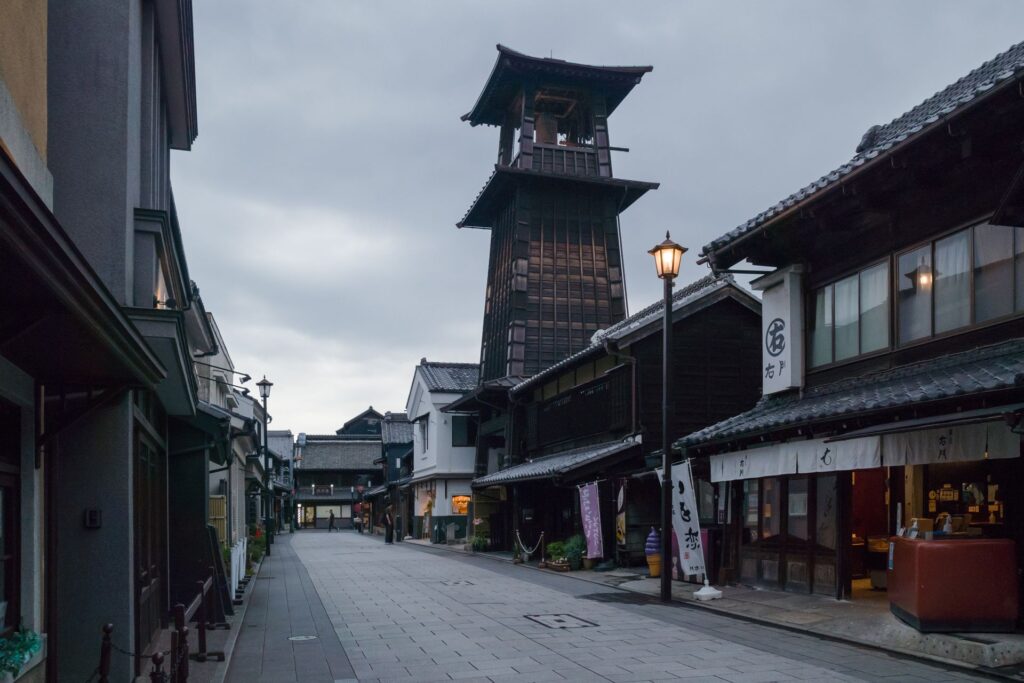
If Saitama has a single “must-see” town, it is Kawagoe, often nicknamed Ko-Edo (“Little Edo”). Located about 30 minutes from Ikebukuro, Kawagoe preserves a rare streetscape of kurazukuri (earthen-walled warehouse) buildings from the late Edo and early Meiji periods.
Japanese cultural property listings note that these fire-resistant structures survived repeated urban fires, allowing Kawagoe to retain an architectural continuity Tokyo largely lost. Walking Ichibangai Street feels less like stepping back in time and more like stepping sideways—Edo-scale urbanism without Edo-scale crowds.
Nearby sights such as Kita-in Temple, closely associated with the Tokugawa family, reinforce Kawagoe’s historical gravity. The temple’s relocated Edo Castle structures are frequently cited in Japanese sources as among the few surviving palace-related buildings from that era.
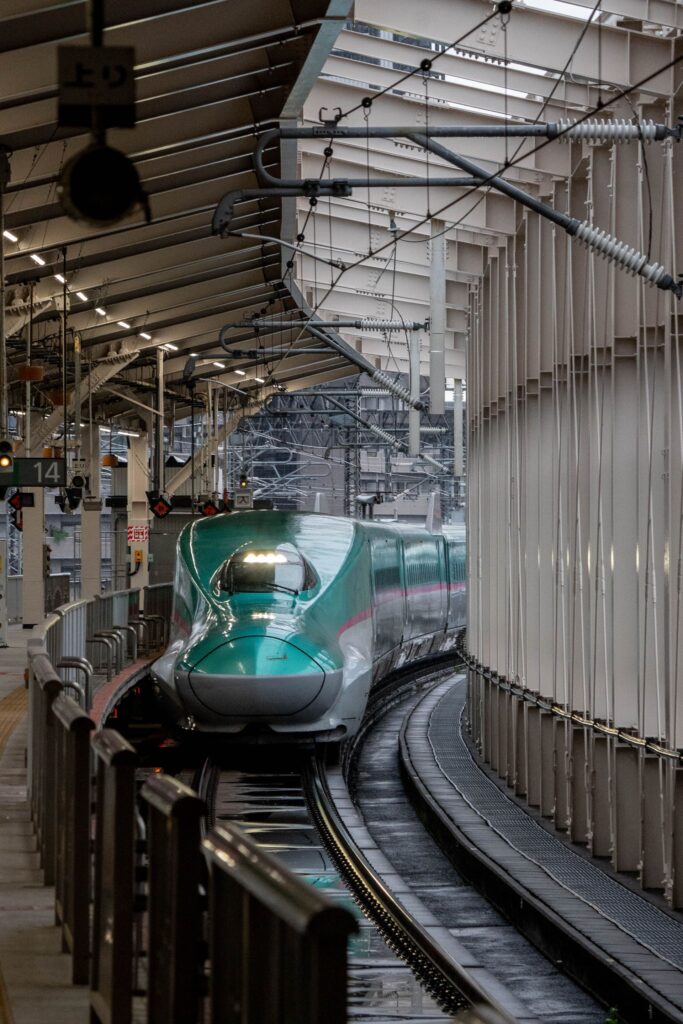
North of central Tokyo lies Omiya, a major rail junction that most people associate with transfers rather than destinations. But Omiya is anchored by Musashi Ichinomiya Hikawa Shrine, one of the oldest and most significant Shinto shrines in the region.
Japanese shrine records trace Hikawa’s origins back over 2,000 years. What makes it remarkable is not just age, but scale. The shrine’s approach extends nearly two kilometers through a forested corridor—an intentional buffer between the everyday city and ritual space.
Unlike compact urban shrines in Tokyo, Hikawa allows time to stretch. The walk matters. The trees matter. For visitors, it offers a rare experience: a major religious site that has not been visually compressed by surrounding development.
Tokorozawa, in western Saitama, holds a quiet but nationally significant place in modern Japanese history. It was home to Japan’s first official airfield, established in 1911. Japanese historical references consistently identify Tokorozawa as the birthplace of Japanese aviation.

While much of the original airfield is gone, parks and memorials preserve its outline. The area illustrates how Saitama absorbed early industrial and military infrastructure that Tokyo could not easily accommodate. Even today, Tokorozawa feels transitional—part city, part hinterland—reflecting that legacy.
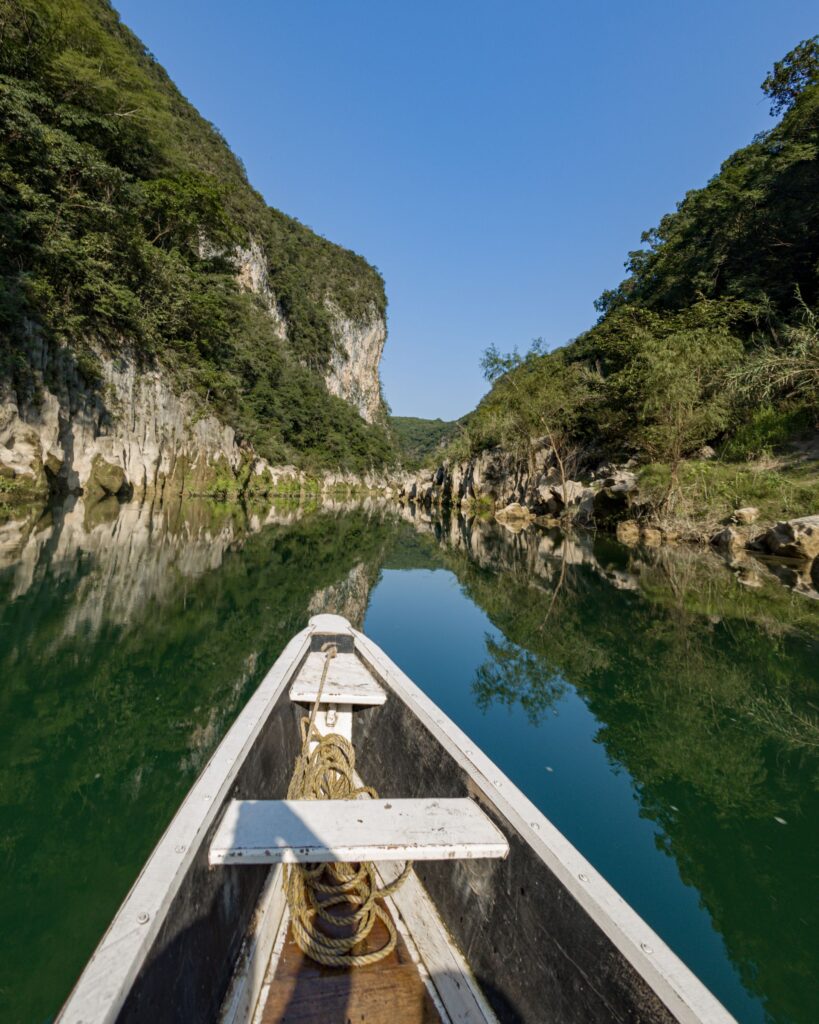
Within an hour from central Tokyo by rail lies Nagatoro, a scenic area along the Arakawa River. Japanese geological sources designate Nagatoro’s layered rock formations as a national natural monument, highlighting their educational and scientific value.
Riverboat rides through the gorge have existed since the early 20th century, originally catering to urbanites seeking nature without distance. The experience remains gentle rather than dramatic—slow boats, shallow rapids, seasonal foliage.
Nagatoro’s significance lies in accessibility. It demonstrates how Saitama functions as Tokyo’s outdoor classroom, offering landscapes that feel removed without requiring endurance or planning.
Saitama is not only historical and scenic. Cities like Kawaguchi, just north of Tokyo, were major industrial centers during Japan’s modernization. Japanese municipal histories describe Kawaguchi as a foundry town, specializing in metal casting and machinery.
That industrial DNA still shapes the area’s urban fabric: wide roads, factories repurposed into housing, and a practical, work-focused atmosphere. Kawaguchi rarely appears in guidebooks, but it explains how Tokyo grew without collapsing under its own weight.
One of Saitama’s strengths is that its cultural events are rarely staged for outsiders. Festivals such as Kawagoe Matsuri or regional shrine celebrations are listed in Japanese cultural calendars as living traditions, not tourist attractions.
Floats, music, and rituals are scaled to local streets and local participation. Visitors are welcome, but not centered. This creates an authenticity that can’t be manufactured—and is increasingly rare within Tokyo’s wards.
What unites Saitama’s most interesting destinations is not spectacle, but legibility. Within an hour, you can see how Edo functioned, how Meiji modernization unfolded, and how contemporary Japan balances growth with continuity.
Japanese regional planning documents often describe Saitama as a kōiki seikatsu ken—a wide-area living zone rather than a tourism prefecture. That framing is honest. Saitama does not perform identity; it sustains it.
For visitors, this means fewer highlights and more understanding. You don’t collect photos; you collect context.

Saitama Prefecture matters because it shows what Tokyo depends on but rarely showcases: land, labor, time, and memory. It is close enough to feel familiar and distant enough to breathe differently.
Within an hour, you can step into Edo-era streets, ancient forests, river-carved stone, and industrial history—all without leaving the orbit of the capital.
Saitama doesn’t ask to be visited.
It waits for people ready to notice.
Stay tuned for more exciting content like this! Follow us on our social media platforms and check out our blog regularly to stay updated on the latest news, trends, and insider stories from Japan. Don’t miss out on future updates—sign up for our newsletter for exclusive content delivered straight to your inbox!