How to Survive Japanese Summer
After surviving nine summers in Japan, I would like to consider myself a bit of an expert. That being said, I’m always surprised when I find new ways to stay cool.
Japan is extremely hot and humid during the summer, and Osaka, in particular, gets unbelievably hot. I wouldn’t be surprised if you’re living here and suddenly notice your electricity bill increasing every month.
I also understand that many foreigners aren’t familiar with how to deal with the poor insulation found in some Japanese apartments compared to homes in their own countries. That’s why I’m hoping this article will give you a few practical ideas that won’t break your budget, starting with one of the biggest questions every summer:
Should you use a fan or the air conditioner?
To learn more, we have another article talking about safety concerns on AC use at night here.
Fan vs. Air Conditioner: Which Is Better?
Isn’t that the age-old question?
I actually researched this a couple of years ago when I first got gifted a fan. I was able to use it until the weather became unbearably hot before eventually switching over to the air conditioner because it was simply easier. Honestly, both have their own pros and cons.
Fans
One of the biggest advantages of using a fan is that it’s incredibly cheap to run. Fans use very little electricity and do a great job of circulating the air around your apartment.
However, they don’t actually cool the room. They simply move the hot air around, which can make things feel a little uncomfortable on those especially hot and humid Japanese summer days.
Air Conditioning
An air conditioner is the quickest way to lower the room temperature while also removing humidity from the air. In my opinion, it’s much better for sleeping because you don’t wake up feeling sweaty, and it’s also the safest option during the extreme heat waves we’ve been experiencing recently.
On the other hand, it does cost more money to run, it can dry out your skin, and it’s very easy to fall into the habit of using it more than you actually need to.
So…Which Option Saves More Money?
To break it down simply, most fans use around 20–50 watts of electricity, while air conditioners generally use anywhere from 500–1,500 watts, depending on the model and the size of the room.
One thing to keep in mind is that sometimes running a fan all day isn’t necessarily cheaper than using the air conditioner for an hour to cool the room first and then switching to the fan afterward.
Sometimes it’s less about working harder and more about working smarter.
My Tips to Save Money During Summer
Dry Mode (除湿)
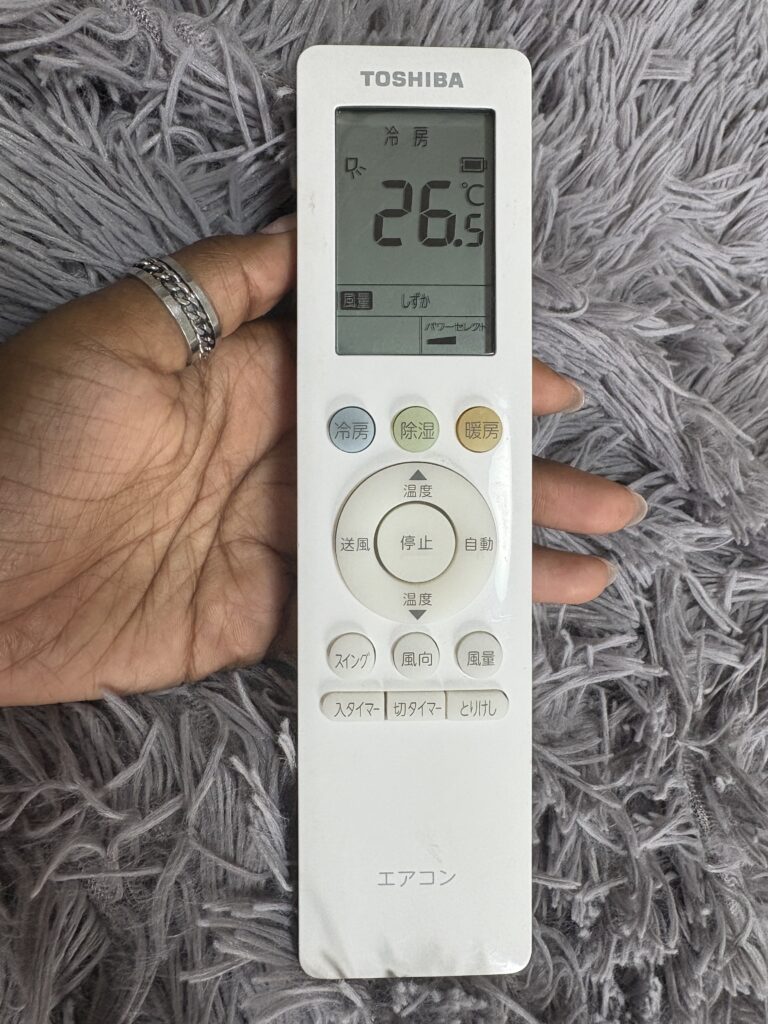
One feature many foreigners don’t know about is Dry Mode (除湿) on Japanese air conditioners.
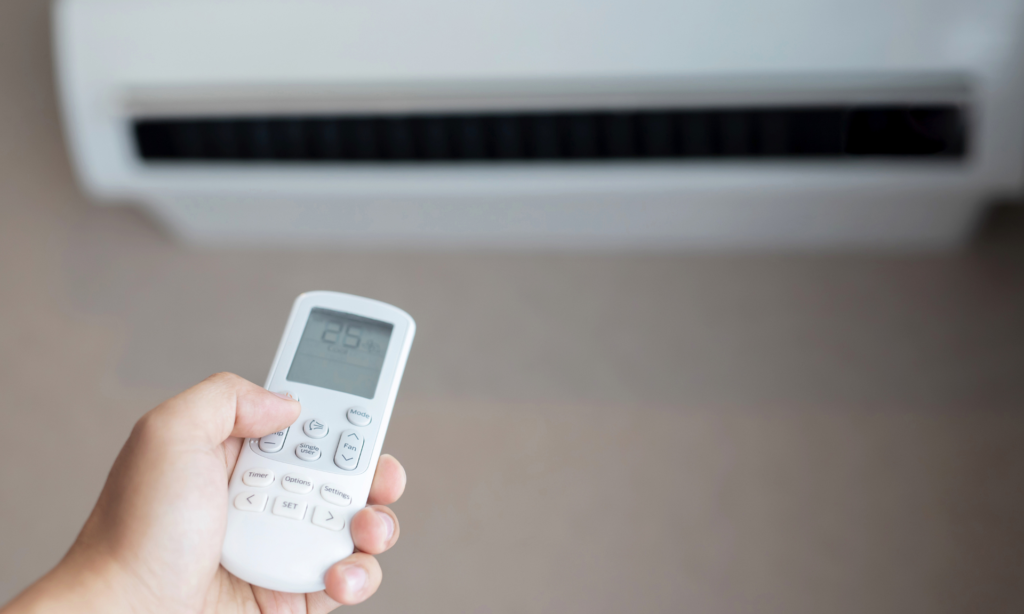
On your remote, you’ll notice an option for Dry Mode. This setting removes humidity from the room while generally using less electricity than full cooling mode. Since Japan’s summers are extremely humid, reducing the moisture in the air often makes the room feel much cooler, even without lowering the temperature very much.
It’s especially useful during the rainy season and humid summer evenings.
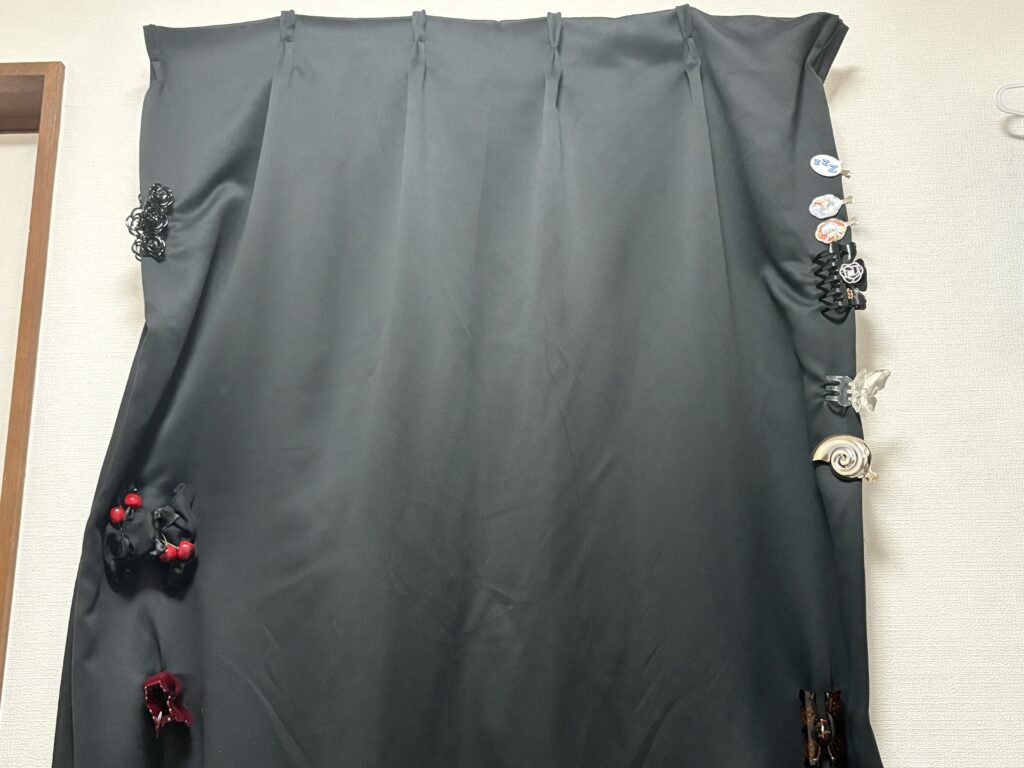
Black Out Curtains
(Please ignore my hair clips hanging in the photo!)
Keeping sunlight out of your apartment makes a much bigger difference than people realize.
This is especially important if your apartment faces west, since you’ll get strong afternoon sunlight.
I personally use blackout curtains because they help block the harsh sunlight, keep my room darker at night, and make it much easier to maintain the temperature inside without constantly running the air conditioner.
Keep Your AC Around 26–28°C
This may be a tip you haven’t heard before, but many people recommend setting your air conditioner between 26°C and 28°C (79–82°F) and using it together with a fan.
A lot of people immediately set their AC to 18°C, but I personally think that ends up costing more money. I actually like having a little warmth in my room, and keeping the temperature slightly higher has definitely helped keep my electricity bill lower over the years.
Extra Ways to Stay Cool
There are also plenty of small things you can do to stay cool without constantly relying on your air conditioner.
Try wearing breathable clothing like linen or moisture-wicking fabrics. Sleeping with a cooling mattress pad or cooling pillow can also make a huge difference, especially during those hot summer nights. You can easily find these items at stores like Nitori, Daiso, Don Quijote, Loft, or other home goods stores throughout Japan.
They’re small changes, but together they can help keep your apartment cooler and reduce how often you need to blast the air conditioner.
Happy Summer Saving!
It feels like each year gets hotter, but that doesn’t mean you can’t beat the heat and stay comfortable while navigating another Japanese summer. Just keep these tips in mind, experiment with what works best for your home, and hopefully you’ll notice a difference in both your comfort and your electricity bill.
Use the extra money you save to treat yourself to a well-deserved ice cream!
Until the next article, please stay happy, healthy, and cool in Japan!
Stay tuned for more exciting content like this! Follow us on our social media platforms and check out our blog regularly to stay updated on the latest news, trends, and insider stories from Japan. Don’t miss out on future updates — sign up for our newsletter for exclusive content delivered straight to your inbox!