From the middle of July to the middle of August, Japanese offices suddenly close. In a country where taking a vacation is reserved for days with high fever, and absence from work is seen as illegal, this is remarkable. But even more the reason: They go to welcome back the dead. Read on for more.
Japan’s summer holiday season reaches its absolute peak during the Obon period in mid-August, when schools and companies simultaneously shut down. Tourist destinations become congested, and accommodation prices — in both hotels and minpaku (民泊, short-term apartment rentals) — hit their highest point of the entire year. Popular resorts such as Kawaguchiko (near Mt. Fuji), Karuizawa, and Okinawa fill up months in advance, and one must also brace for traffic jams and long waits at restaurants on the ground.
In the July-to-September window, the accommodation prices rise the most sharply during the Obon season. In resort destinations like Okinawa, prices stay elevated throughout summer, but the Obon peak stands out above all others. If you want to see more on Obon, click here.
The reason is simple: This is when everyone travels. But why? And why are they in such a hurry to get back again – why not stay a few days more?
The Obon festival in July and August is when most Japanese take their vacation.
U-turn rush
The Uターンラッシュ (U-turn rush) refers to the concentrated congestion that occurs when people return to their usual place of residence after the kisei rash (homecoming rush). In Japan, it arises as people who spent the year-end and New Year holidays, Golden Week, Obon, Silver Week, and other long holidays in regional areas return to their urban home base.
The movement is called the “U-turn” because people drive out, turn around, and come back – just like a U-turn on the road. They have to fit the entire trip into their short vacation.
The ”kisei rash” and the U-turn rush occur because company and school holiday periods coincide, causing large numbers of people to travel to regional areas all at once and then return to cities simultaneously. During the first half of the long holiday, the direction away from major cities becomes congested; during the second half, the direction back toward cities is congested.
The Obon festival brings extended families to the temples.
Private car congestion
During the U-turn rush, the vast majority of people use private cars or public transportation, causing congestion on ordinary roads and expressways, a rise in rail occupancy rates, shortages of reserved seats (especially on long-distance limited express trains and Shinkansen), congestion at terminal stations, and high passenger rates at airports and ports.
For 2026, the departure peak of the homecoming rush is forecast for Sunday, August 9, while the U-turn rush peak is expected over August 15 (Saturday) through August 16 (Sunday). Traffic jams begin as early as 7 a.m. on peak days, leading many people to depart the previous night and drive through congested sections before stopping to rest.
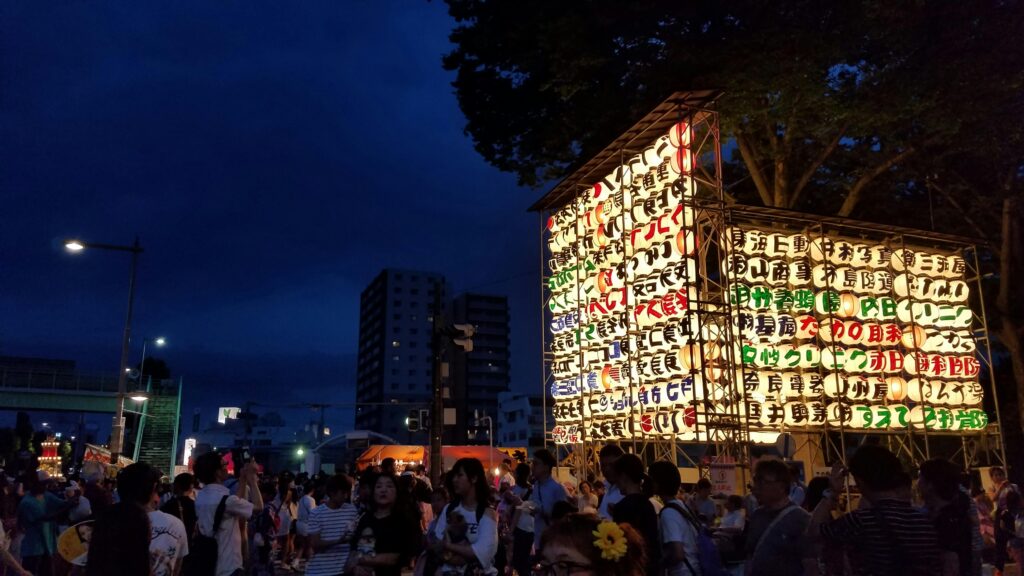
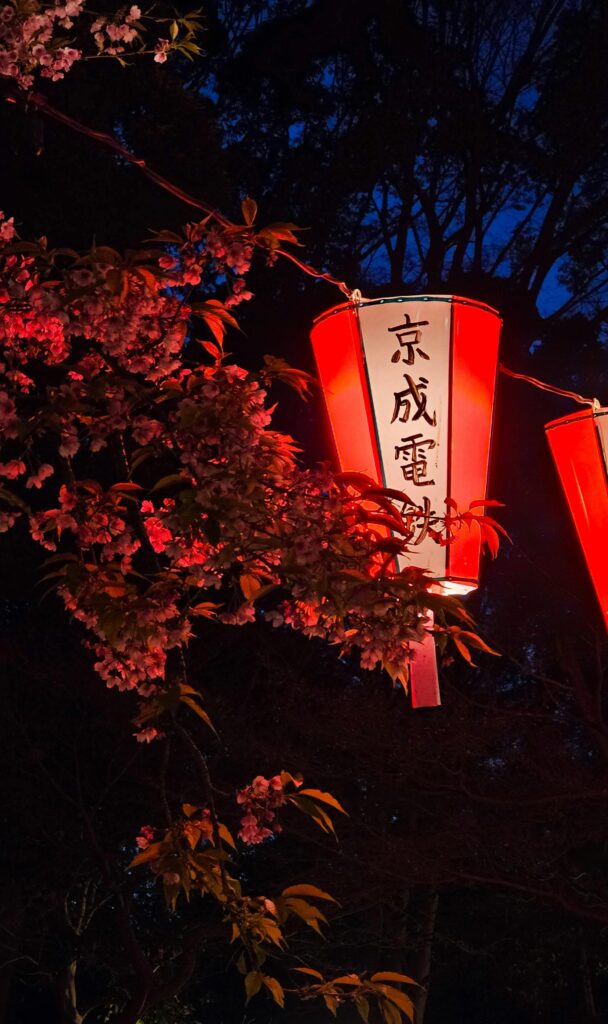
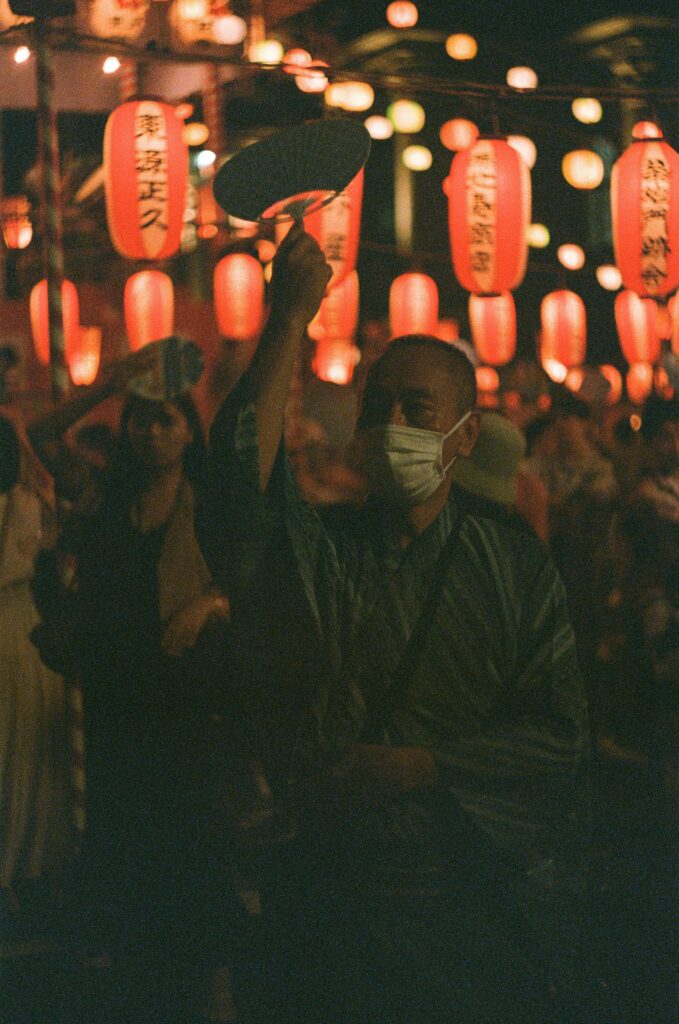
In some places, the Obon dancing is a major event.
Going to meet the dead
The reason they go is family, and more specifically, dead family. Even when family members are scattered for the rest of the year, during Obon they return to the ancestral home (jikka) to give thanks to their ancestors together. Relatives who might never otherwise meet sit together, confirm one another’s well-being, and — crucially — pass on family histories, oral traditions, and “wisdom” that exist only within their lineage. It is, in this sense, an irreplaceable opportunity to know one’s own roots.
The 13th is the day of mukaebon, when families visit the family graves and light the mukaebi to welcome the ancestors home. The middle days involve inviting a Buddhist priest or going to the temple for a memorial service, followed by a family meal to remember the deceased together.
Obon is a Japanese traditional cultural practice in which the spirits (精霊, shōryō) of deceased relatives and ancestors, believed to return from the other world to their homes during summer, are welcomed with gratitude, entertained as a family, and then sent back.
The Obon festival usually happens in summer, but in some places later.
Varying Obon times
Obon is rooted in Buddhism but is not a purely Buddhist rite — it is a distinctly Japanese culture that has merged with Shinto teachings and other beliefs.
The timing of Obon varies by region (and so does the U-turn rush). There are broadly three periods: the “July Obon” (shin-bon) from July 13–16, observed in parts of Tokyo, Kanagawa, Hokkaido, Kanazawa, and Shizuoka; the “August Obon” (kyū-bon or tsukiokure-bon) from August 13–16, which is the most widespread nationally; and the “old lunar calendar Obon,” observed from mid-August to early September in certain areas. 
The August Obon runs from the 13th (迎え盆, mukaebon — welcoming day) through the 14th (middle day), the 15th (送り盆, okuribon — sending-off day), and the 16th (final day).
On the 13th, the day of welcoming ancestors, families visit the grave, bring back the flame of a candle as a mukaebi (welcoming fire), and in the evening light a fire outside the house — traditionally using ogara (peeled hemp stalks) placed in a ceramic dish — so that ancestors can find their way home without losing their path.
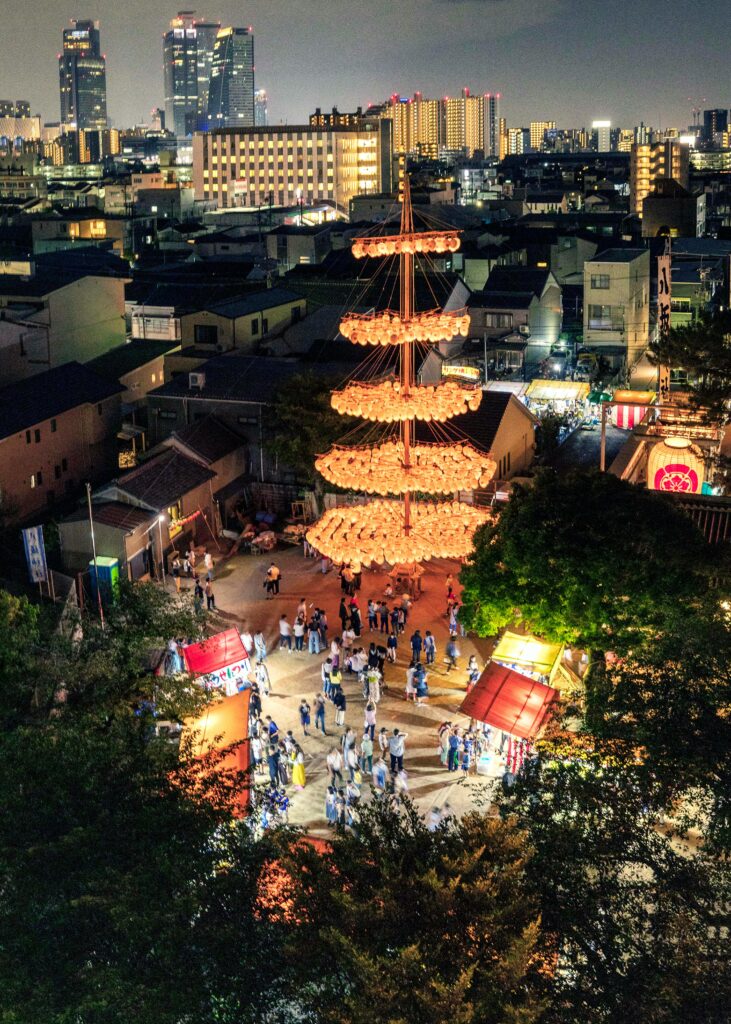
The bonodori is a joyful time since the dead can participate in the dance.
Return after three days
The okuribi (sending-off fire) returns the ancestors to the other world on the 16th. Kyoto’s Gozan Okuribi — the famous fires lit on five mountains — is one of the most celebrated regional expressions of this custom. Since the dead only get three days to stay in the living world, the living families make their visit equally short.
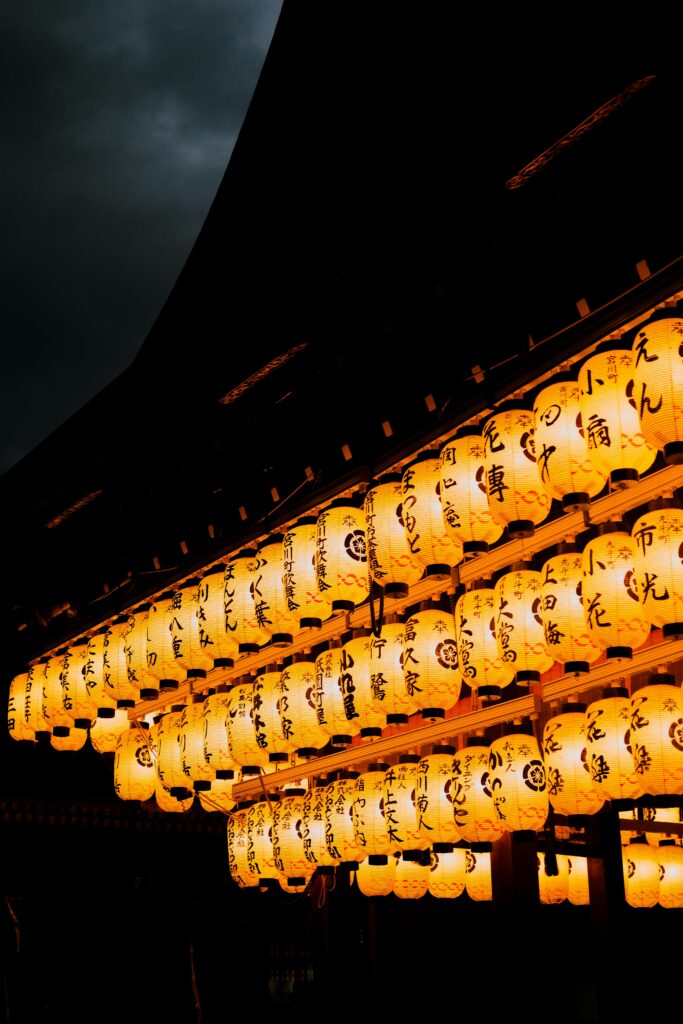
In the family’s Buddhist altar room, a shōryōdana (spirit shelf) is assembled, lanterns (chōchin) are displayed, and especially elaborate offerings are prepared. The family visits the graves together, participates in the village’s tōrō nagashi (lantern floating), and dances the Bon Odori. In some regions, a shōryō-uma (spirit horse) made of cucumber and a shōryō-ushi (spirit ox) made of eggplant are displayed — symbolic vehicles for the ancestors.
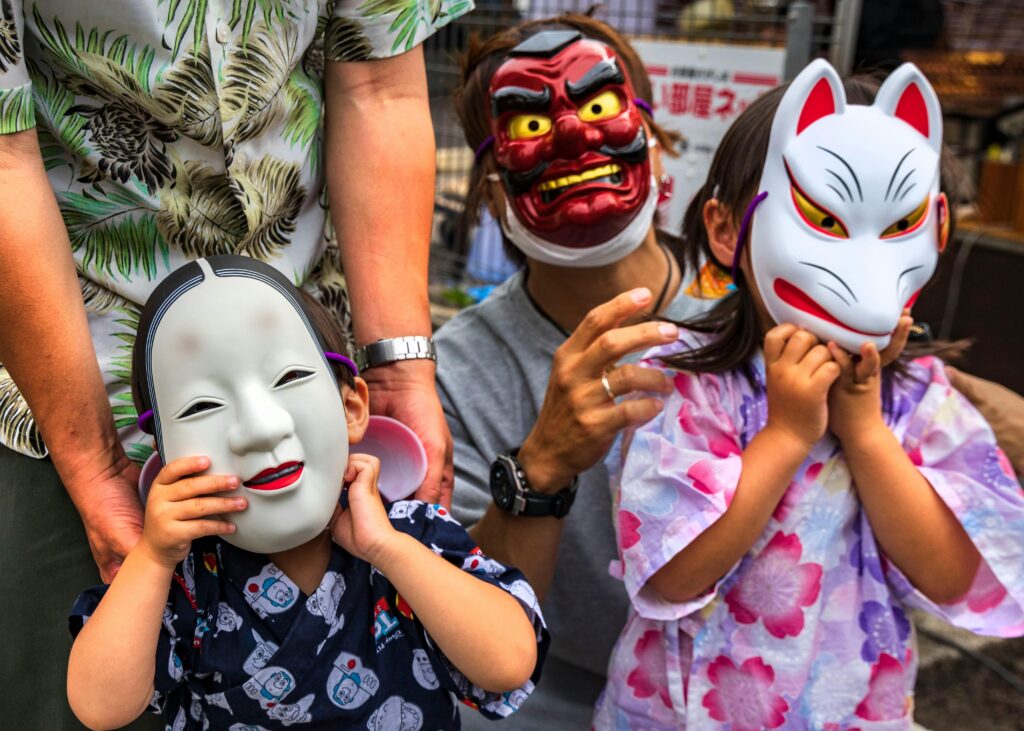
The bon-odori is an event where children can participate.
Five days of mandatory leave
The Obon holiday (summer vacation, natsuki kyūka) and paid annual leave are legally distinct. The Labor Standards Act does not contain any provision mandating a summer vacation; it is a special leave (tokubetsu kyūka) defined by each company, not a statutory obligation.
Whether a summer vacation exists at all differs from company to company. Companies that do provide one generally align it with the Obon period of around August 14–16.
Until around the Showa 40s (mid-1960s), department stores and shops in Tokyo would close on the yabu-iri day (a day when domestic servants and apprentices were given leave, coinciding with Obon). It is thought that the widespread corporate practice of taking Obon leave is a vestige of this custom.
The mandatory acquisition of at least five days of annual paid leave was introduced because of the distinctly Japanese corporate culture in which employees, even if entitled to paid leave, could not use it due to concern about others’ reactions. The only way to reform this, it was argued, was to compel it by law.
While it was formerly common for entire companies to take Obon leave simultaneously, the diversification of working styles has led to a growing number of companies allowing each employee to take their consecutive holiday at a time of their own choosing. Strangely enough, they all choose to take it in the Obon season, increasing the pressure on travel and accommodation even more.
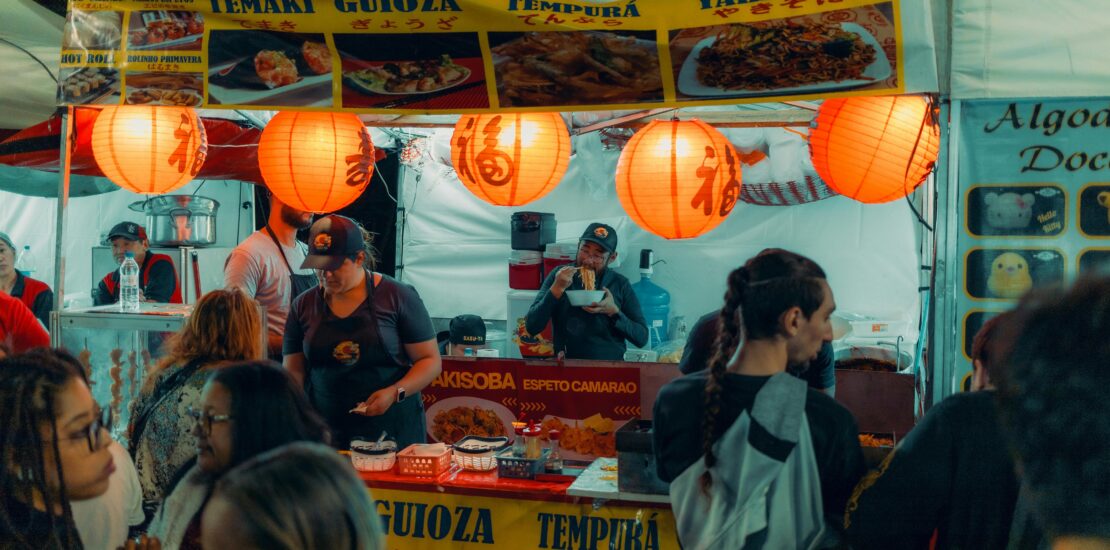
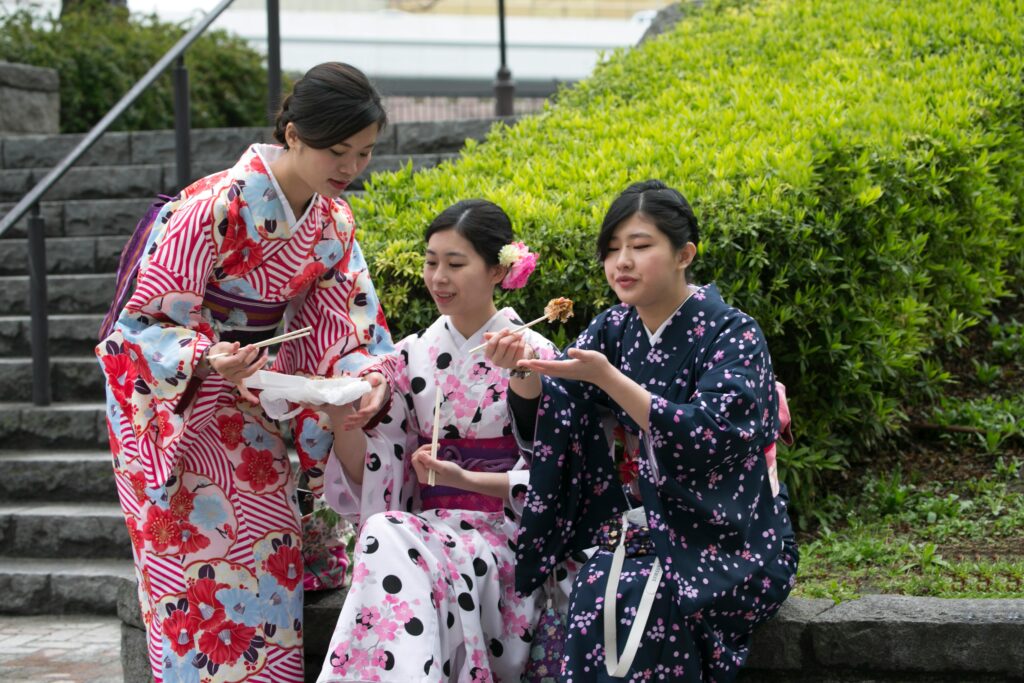
Meeting friends at the festival is an equally good reason to participate.
High travel season
August Obon is the high season (haishippu) for domestic travel, and accommodation reservations operate on a first-come, first-served basis. Most hotels accept reservations two to six months in advance, though some allow bookings up to a year ahead. Popular hot-spring inns (ryokan) in top destinations like Hakone, Atami, and Kusatsu often open reservations a full year in advance, and the most sought-after rooms at such properties disappear almost immediately.
For summer travel, accommodation plans incorporate early-booking discounts (hayawari), so those whose schedule is confirmed are encouraged to book as soon as plans go on sale. However, early-discount plans typically carry cancellation fees from the moment of booking — in some cases 100% upon cancellation — so travellers must read the fine print carefully before committing.
With such demand, prices run through the roof. But once Obon passes, the situation reverses dramatically. From late August onward, as people return to work and school, tourist numbers drop sharply. Prices at the same properties often fall by 20–50% compared to the peak, and in some cases, the same hotel can be booked for close to half the Obon price. In late August, last-minute bookings also become viable, with plenty of availability and a wider range of room types to choose from.
Avoiding Obon travel
The image of “Obon = expensive” prevents some people from travelling altogether during this period. Popular tourist destinations do indeed see prices surge at this time, though flexible travellers — using day-trip hot-spring facilities, budget-friendly accommodation, or meal-included plans — can keep costs down and still enjoy the season.
The moment Obon ends, the situation transforms completely. The same tourist spots that were packed and pricey become quiet and affordable almost overnight, as the majority of people have returned to work and school. Travellers who can shift their plans even slightly — to the last week of August or into September — gain access to far cheaper accommodation, shorter queues, and a much more relaxed atmosphere at the very same destinations.
Stay tuned for more exciting content like this! Follow us on our social media platforms and check out our blog regularly to stay updated on the latest news, trends, and insider stories from Japan. Don’t miss out on future updates — sign up for our newsletter for exclusive content delivered straight to your inbox!
Wisterian Watertree
Wisterian Watertree has been living in Tokyo and other Japanese cities for
the past 20 years, helping visitors get the best of Japan. He is the author of two
books, ”Take Your Toddlers To Tokyo” and ”Driving In Japan”, with more on the
way. You can read more on his website Japan Top 10, https://japan-top-10.com.