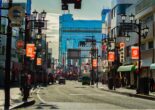
Ibaraki Prefecture sits northeast of Tokyo, close enough to commute from and far enough to be overlooked. But this quiet and industrial prefecture – home to Hitachi and several other industrial conglomerates – has some of the most important cultural and natural sights in Japan.
That distance — psychological rather than physical — is exactly what makes Ibaraki interesting. Within roughly an hour by train from central Tokyo, Ibaraki offers landscapes, towns, and institutions that feel older than Tokyo’s current identity and less concerned with being watched.
Historically, Ibaraki was divided primarily between Hitachi Province and parts of Shimōsa Province, regions that developed along rivers, coastal routes, and inland plains rather than around imperial courts or major ports.
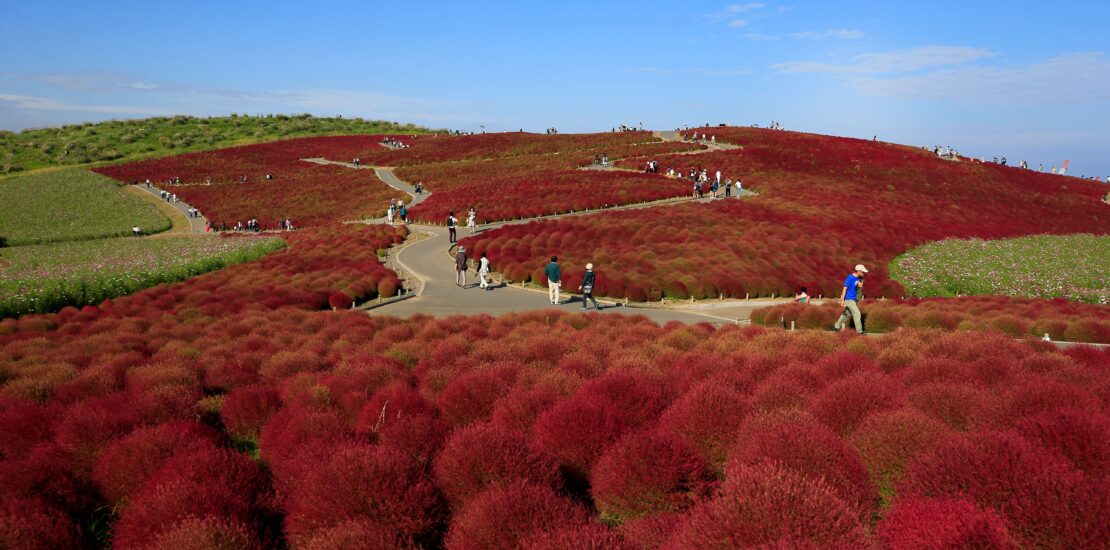
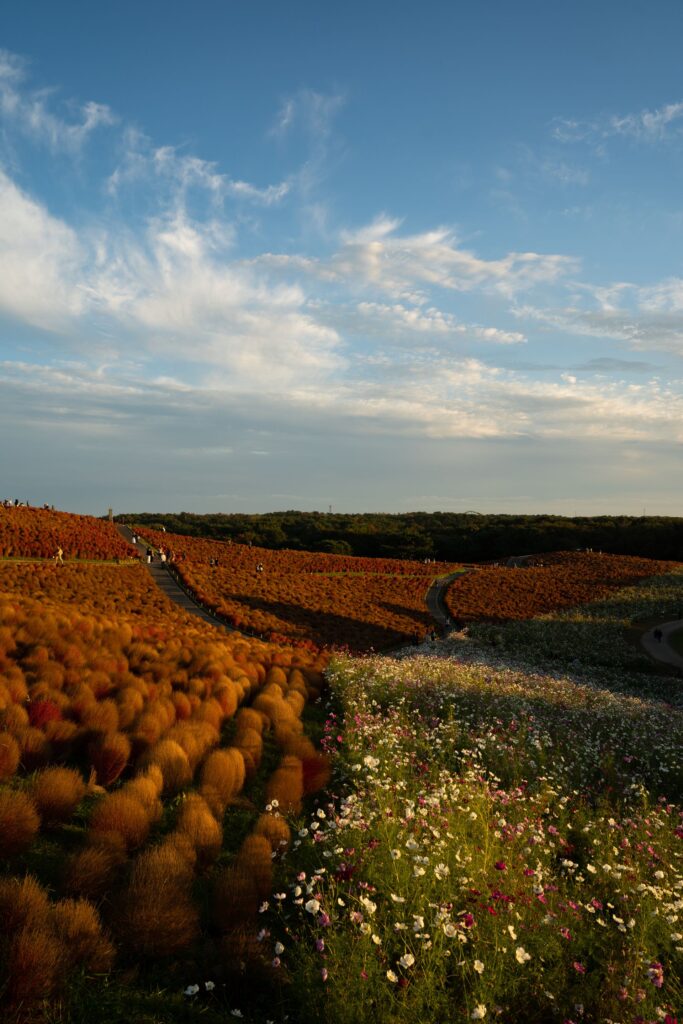
Today, Hitachi is better known for its huge seaside park than its ancient shrines.
Japanese historical sources consistently describe Hitachi as a land of shrines, agriculture, and early state authority. One of Japan’s oldest provincial capitals was located here, and the region played a role in early centralization long before Edo became dominant.
Unlike areas that later became urbanized through castle towns or merchant centers, Ibaraki’s identity remained dispersed. Power was local, land-based, and closely tied to seasonal rhythms. Even as Tokyo expanded, Ibaraki remained oriented toward production rather than presentation.
Historical heart
The historical heart of Ibaraki is Mito, the former seat of the Mito Domain, one of the three Tokugawa ”gosanke” (or cadet) branches. When the Tokugawa shogun did not have any male heirs (even with one of his usually several mistresses), he would adopt a suitable heir from one of the cadet branches of the family.
The Mito branch was the beneficiary several times, but also the home of a rebellious school of thought that tried to preserve the Emperor as the head of state, but keep the feudal system, and expel the barbarians, the foreigners who — starting with Commodore Perry and his black ships — were seen as corrupting Japan.
Japanese political histories emphasize that Mito’s importance lay not in military strength, but in ideology. The Mito School of scholarship helped shape late Edo political thought, including reverence for the emperor and criticism of the shogunate — ideas that later fueled the Meiji Restoration.
Today, Mito’s most famous site is Kairakuen, one of Japan’s Three Great Gardens.
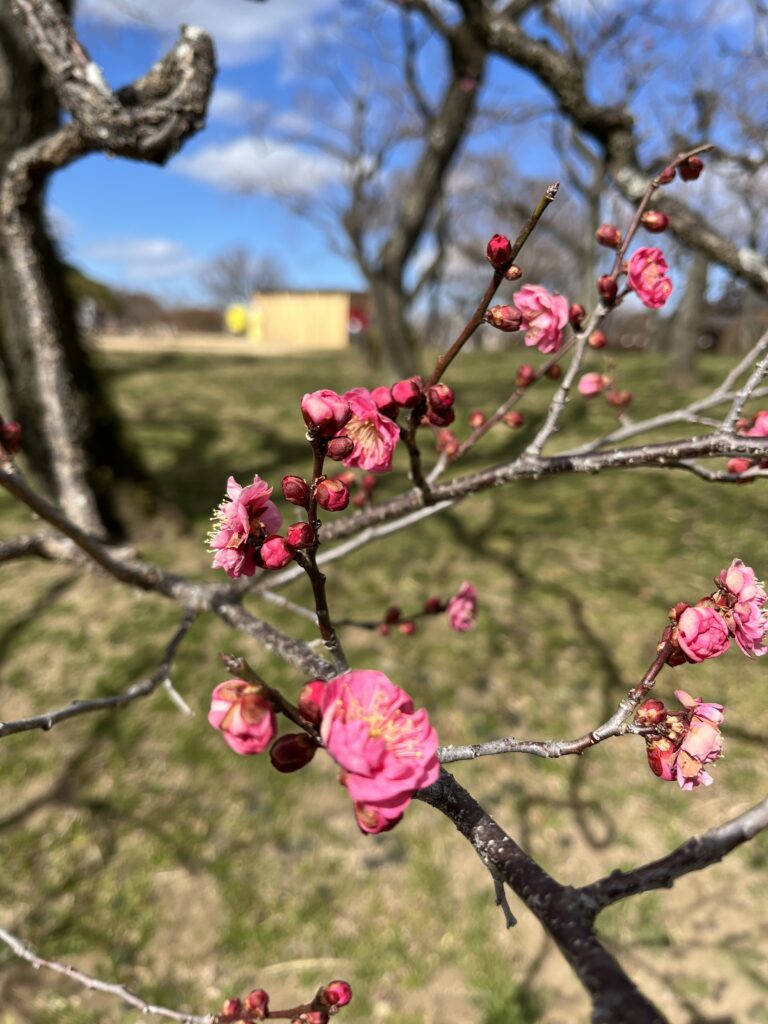
The ume blossoms of Kairakuen is a very special sight for a few weeks in spring.
Established in 1842, it was designed not only for the domain lord but explicitly for public enjoyment, an unusual concept at the time. Japanese garden historians note that Kairakuen’s emphasis on ume trees — over 3,000 of them — reflected both aesthetic preference and agricultural practicality. The flowering of the trees, more sheer and refined than the overwhelm of the cherry blossoms.
Mito is reachable from Tokyo via limited express trains in about an hour. Beyond Kairakuen, remnants of the domain’s administrative center and museums dedicated to Tokugawa Nariaki and Mito scholarship provide context for how ideas, not armies, changed Japan.
The Twin Peaks Mountain
If Ibaraki has a single symbol, it is Mount Tsukuba. Unlike the solitary cone of Mount Fuji, Tsukuba has two peaks and a long history as a sacred mountain tied to agricultural fertility and seasonal worship.
The symbol of the mountain is the toad, possibly because of its twin brow ridges. But it also makes for an interesting souvenir. You can buy small frog statues, and even — in many of the gift shops — toad oil, good for about the same things as snake oil.
Japanese shrine records trace Tsukuba Shrine to ancient times, and the mountain appears frequently in classical poetry.
What makes Tsukuba particularly significant today is accessibility. The Tsukuba Express connects Akihabara to Tsukuba in about 45 minutes, placing a genuine mountain environment within commuter range. Cable cars and ropeways allow visitors of all abilities to reach viewpoints, while hiking trails retain religious markers and stone paths.
Modern science and ancient belief (and frog oil)
Japanese cultural studies often describe Tsukuba as a model of coexistence between modern science and ancient belief. At the mountain’s base lies Tsukuba Science City, developed in the postwar period as a national research hub. This is home to a big university and the main satellite development center of Japan, where you can see several Japanese-made weather and research satellites — not copies, but spares, if the launch had failed.
To the north, the mountain range continues, rising to respectable heights as you move away from the coast and towards Tochigi prefecture. Here, in the northwestern corner of the prefecture, is one of the major fruit-growing areas of Japan, rivaling the more famous Yamagata.
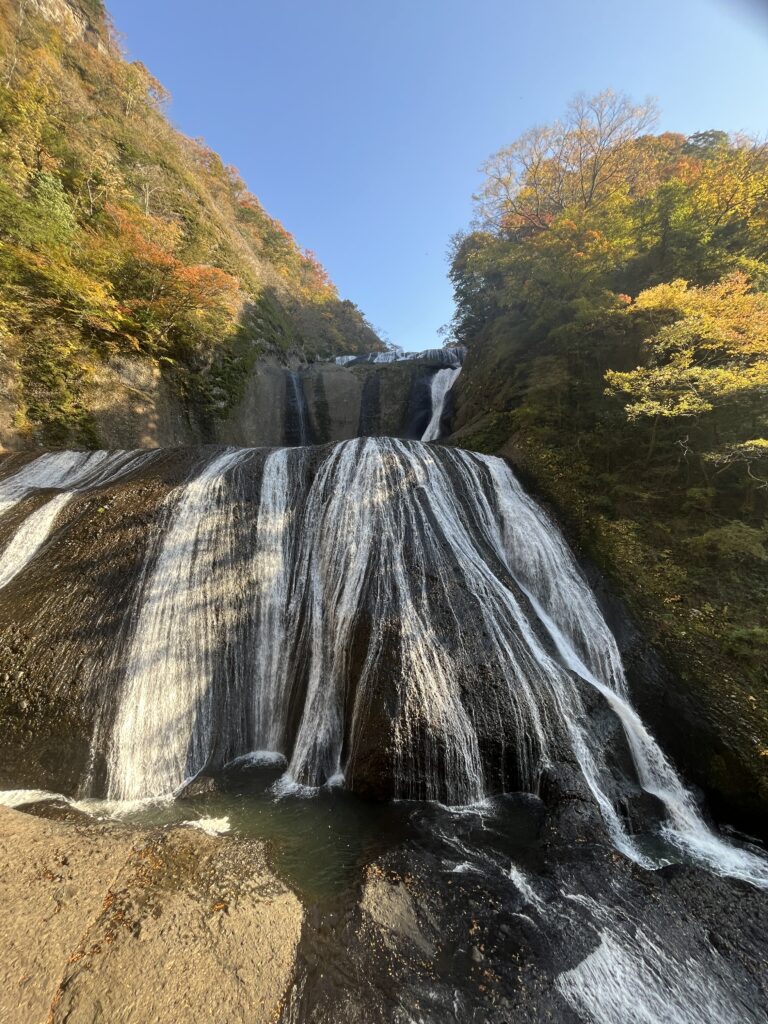
Japan has some surprising waterfalls, and one of the three most famous is in Ibaraki.
But tourism in this part of Ibaraki is focused on one of Japan’s “Three Great Waterfalls” (alongside Nachi and Kegon). Standing 120 meters tall and 73 meters wide, the water cascades down four massive cliff tiers (earning it the nickname Yodoki no Taki, or “four-times fall”). The viewing area is easily accessible on foot, and for those in wheelchairs, via an elevator and a tunnel through the mountain facing the waterfall, offering a spectacular view. This has been a fixture on Japanese tourist routes since the 18th century, and is still a main draw among day-trippers spending time in one of the many ryokan of the region, and rarely visited by foreign travelers.
World-leading tall Buddha
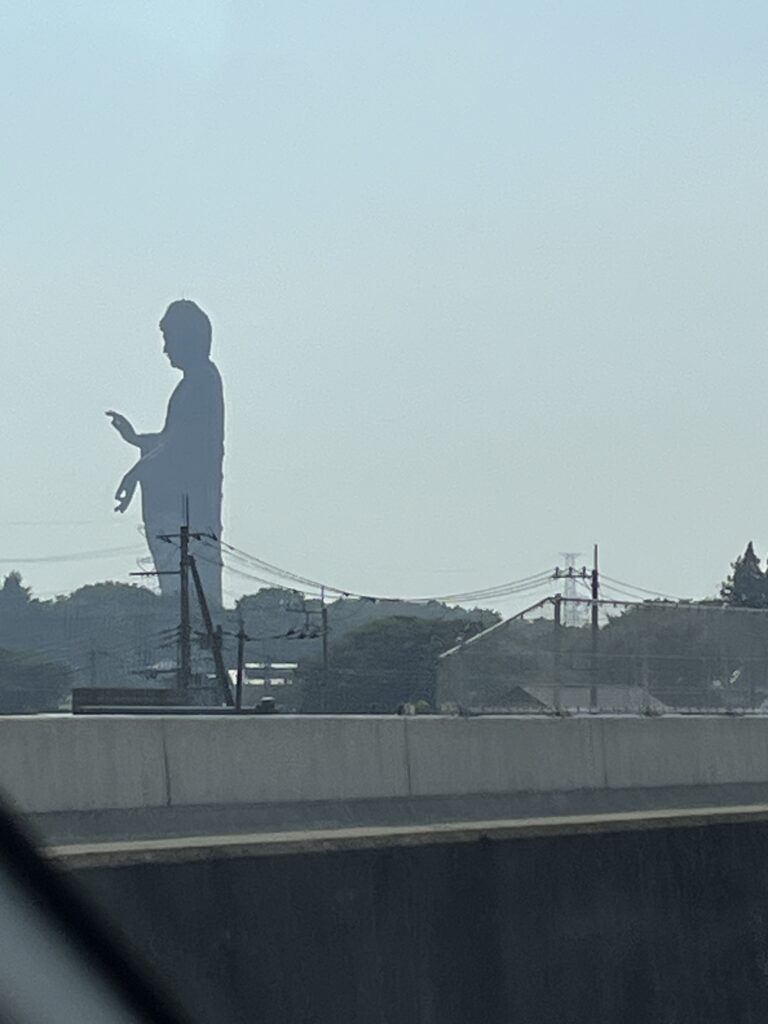
South of Tsukuba lies Ushiku, home to the Ushiku Daibutsu, one of the tallest Buddha statues in the world. Completed in 1993, the statue is visible from trains passing through the flat Kantō plain. Despite its scale, the Daibutsu was not built as a tourist spectacle but as an expression of Pure Land Buddhist devotion.
The Ushiku Daibutsu is one of the tallest Buddha statues in the world.
Visitors can enter the statue, which contains floors dedicated to Buddhist teaching, contemplation, and memorial spaces. The surrounding gardens and cemetery grounds are quiet, expansive, and deliberately non-commercial.
Ushiku is reachable from Tokyo in under an hour by JR lines. The experience contrasts sharply with urban temples: here, scale replaces density, and silence replaces foot traffic. It is Ibaraki’s spiritual geography made visible.
Home of electric brandy
Near the Ushiku Daibutsu is Chateau Ushiku, where wine cultivation started in Japan. Grapes had been grown in the Yamanashi prefecture since the Jomon era. But with Western influence came wine cultivation. The drink became popular among the Tokyo newly rich, as well as the still-sold ”Denki Bran”, a Japanese abbreviation for ”Electric Brandy”. The winery developed into a wine distributor (purchasing a Bordeaux negociant), and some 10 years ago started producing high-quality wines.
Not too far from Ushiku, but slightly beyond the strict one-hour threshold for some routes, Kasama remains functionally close to Tokyo and central to Ibaraki’s cultural identity. It is one of Japan’s major pottery centers, with Kasama-yaki traditions dating back to the Edo period.
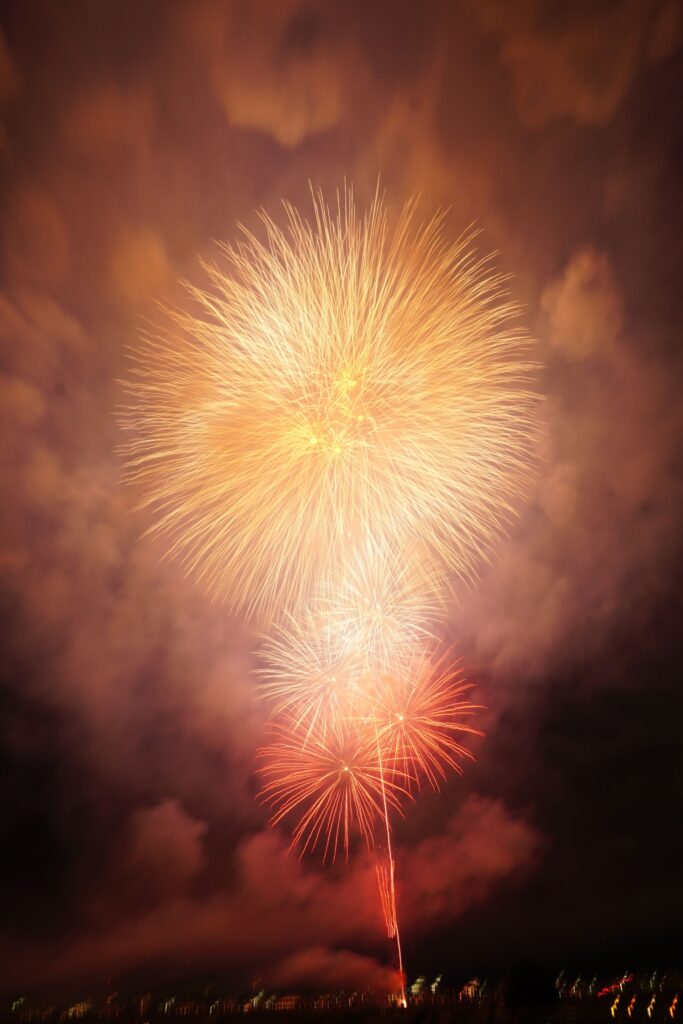
Ibaraki is home to several fireworks festivals in July and August.
Japanese craft histories describe Kasama as pragmatic rather than decorative. Its ceramics were everyday objects — storage jars, bowls, roof tiles — made to be used. That ethos persists. Workshops, kilns, and galleries are integrated into the town rather than isolated.
Nearby Kasama Inari Shrine, one of Japan’s three major Inari shrines, anchors the area spiritually and economically.
Festivals, markets, and daily worship coexist without performance. Kasama shows how Ibaraki preserves culture through use, not display.
Ancient Edo transport
Much of Ibaraki’s character comes from its geography. The Tone River system, which defines eastern Kantō, shaped settlement, agriculture, and transport here long before modern flood control. Japanese environmental studies often highlight Ibaraki as a region where large-scale engineering and traditional land use collided early — and where the results are still visible.
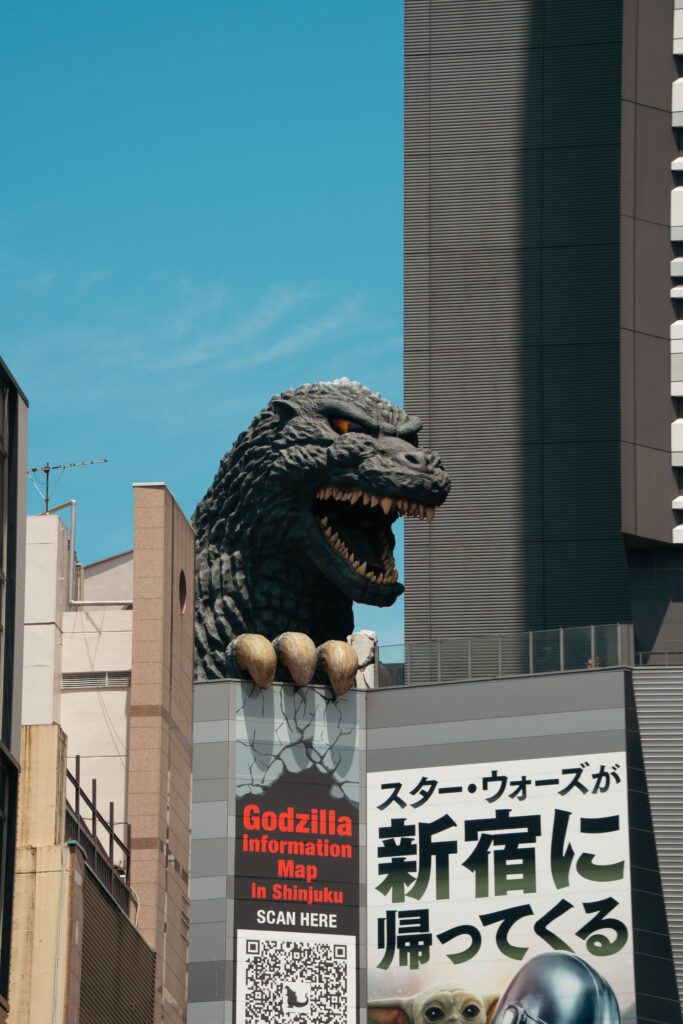
The Tone River runs from humble beginnings in the high mountains of Gunma Prefecture to wide, flat floodplains, a haven for migrating seabirds, at the border with Chiba Prefecture. In the movies, this is where Godzilla (the latest incarnation) died.
The latest incarnation in the Godzilla series met her end in Ibaraki.
Before the railways, the Tone River system was the main freight artery towards Edo. Through small channels, the main river connected to the Arakawa River in Edo, bringing freight (including the yellow bricks from which Ginza was later constructed) from as far as Tochigi.
Ibaraki does not market nostalgia or novelty. It offers proximity without compression. You can reach it quickly, but once there, space expands. History appears without explanation panels. Shrines function without fanfare. Towns remain oriented toward residents rather than visitors.
Stay tuned for more exciting content like this! Follow us on our social media platforms and check out our blog regularly to stay updated on the latest news, trends, and insider stories from Japan. Don’t miss out on future updates—sign up for our newsletter for exclusive content delivered straight to your inbox!
Wisterian Watertree
Wisterian Watertree has been living in Tokyo and other Japanese cities for
the past 20 years, helping visitors get the best of Japan. He is the author of two
books, ”Take Your Toddlers To Tokyo” and ”Driving In Japan”, with more on the
way. You can read more on his website Japan Top 10, https://japan-top-10.com.