Japanese gardens are designed to capture the colors of two seasons: spring, when flowers like peach and naturally cherries dominate the landscape, but also with special seasonal regard for other colorful flowers like wisteria and iris; and the fall, when the colors of the autumn leaves create a color symphony all of their own.
In Tokyo, the autumn foliage season spans from late October (in western regions like Mt. Takao and Showa Kinen Park) through mid-December (in central urban parks). There is a clear weather transition during this period:
November brings average daytime temperatures around 13°C to 15°C (55°F–59°F), which drop sharply to 8°C to 10°C (46°F–50°F) by early December.
Early November is the best season for stunning autumn colour views.
The period is historically characterized by high-pressure systems, resulting in many crisp, sunny, and dry days (known as ”Nihonbare” or Japanese fine weather). However, radiative cooling means mornings and late evenings feel freezing.
When thinking about how to dress for autumn leaf viewing, layering is essential. For daytime strolls under the sun, a light coat or heavy sweater is sufficient. If you plan to stay for evening light-ups or hike Mt. Takao, a windproof heavy winter coat, gloves, and a scarf are highly recommended, as temperature drops feel swift once the sun dips below the horizon (around 4:30 PM).
Contend with the crowds
Unfortunately, you may have to contend with crowds to see the colors. Tokyo’s autumn colors draw millions of domestic and international visitors. Weekends are when the Japanese have the opportunity to see the fall colors, although with the increased number of fit and active retirees, ordinary working days are also starting to be crowded.
To bypass peak congestion, there are a few simple tricks that will make seeing the autumn leaves all the more pleasant.
You need to be an early riser to beat the crowds.
First: go as early as possible. For open public spaces with no gates (Meiji Jingu Gaien, Yoyogi Park), arriving between 6:30 AM and 8:00 AM is the only way to experience empty paths. Even by 7:30 AM, crowds begin to trickle in. Remember that temple and shrine grounds – often affording great autumn color views – open at sunrise and close at sunset (unless they have lightups).
Second: Go early to avoid the ticket lines. For gated gardens (Rikugien, Koishikawa Korakuen, Shinjuku Gyoen), the entry queues are at their worst from 11:00 AM to 2:00 PM. Arriving 15 to 20 minutes before the morning opening time (usually 9:00 AM) means getting tickets easily to enter with the first wave of visitors.
Plan for light-ups
Third: Plan for the light-ups. Many parks feature evening illuminations (Rikugien, Showa Kinen Park, Otaguro Park). That means they experience severe peak crowding between 5:00 PM and 7:00 PM right after work. To avoid long lines, plan your entry after 7:30 PM, when the dinner crowd clears out but before the final admission cuts off.
Fourth: Plan your transport. Tokyo commuter rush hour runs from 7:30 AM to 9:00 AM and 5:30 PM to 8:00 PM on weekdays. On weekends and public holidays, the transit routes feeding into popular foliage hubs (like the Chuo Line toward Tachikawa/Mitaka or the Keio Line toward Mt. Takao) jam tightly from 9:30 AM to 11:30 AM.
The fall colors can create extraordinary photo opportunities.
Instead of using the absolute closest subway exit, walk an extra 5–10 minutes to a secondary station. For example, use Sendagaya Station instead of the heavily congested Shinjuku stations for Shinjuku Gyoen, or Shinanomachi Station to approach Meiji Jingu Gaien from the quieter rear side.
If you follow these strategies, you will have easy access to the ten top fall color viewing sites in Tokyo.
1. Meiji Jingu Gaien Ginkgo Avenue
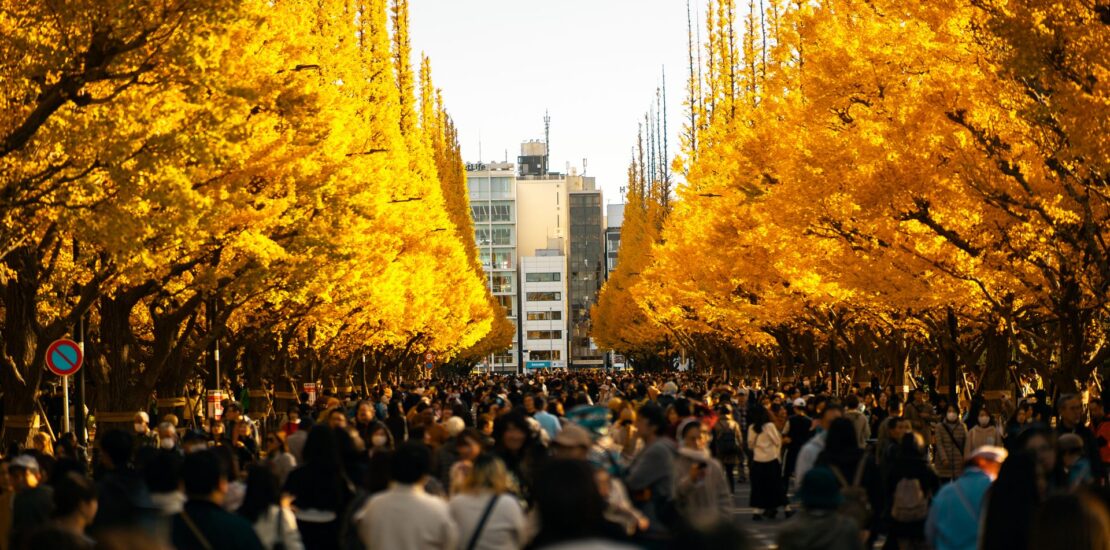
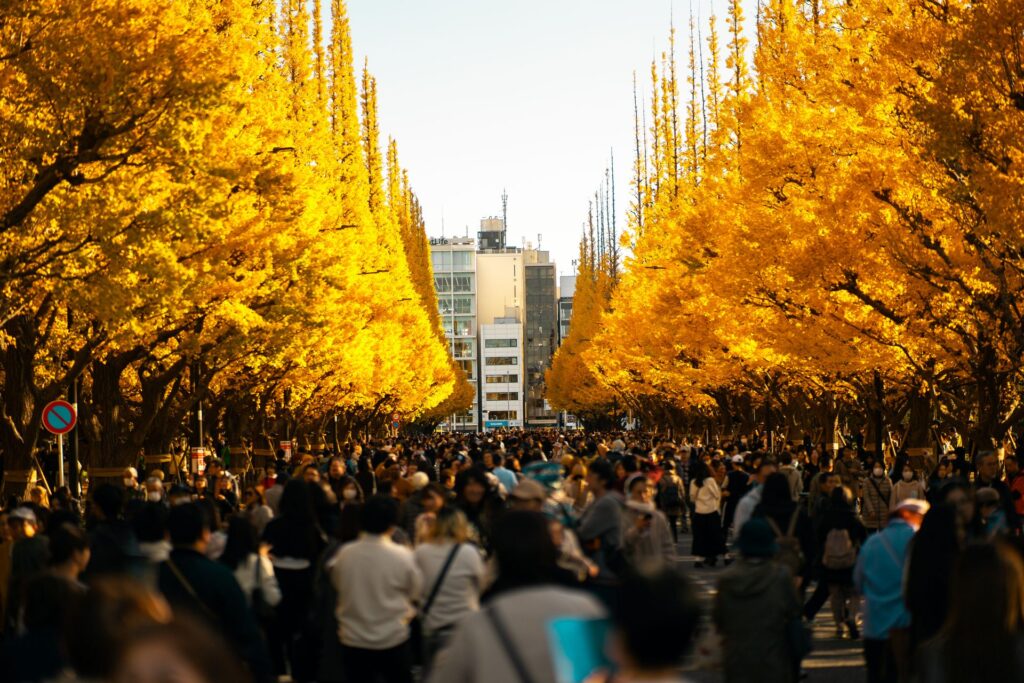
The golden tunnel of Meiji Jingu Gaien Ginkgo Avenue is arguably Tokyo’s most iconic autumn landscape. Spanning roughly 300 meters from Aoyama-dori, the 146 meticulously pruned ginkgo trees create a breathtaking perspective framing the Meiji Memorial Picture Gallery. Japanese sources consistently rank this as the top destination for late autumn “yellow leaf” viewing.
The avenue has avoided development, even though city planners included it in a plan for a new business district in the area. In other words: See it while it is still there.
The gingko alley at Meiji Jingu is awe-inspiring.
Peak season: Mid-November to early December. It gets highly crowded, especially during the annual Ginkgo Festival.
The avenue runs roughly north-south. Early morning light hits the ginkgo tips at a low angle without creating harsh shadows from the buildings. Crucially, this is the only window to shoot down the center of the road without vehicle traffic or throngs of people blocking the perspective.
Best time for shooting photos: 7:00 AM – 8:30 AM
Access is a 5-minute walk from Gaienmae Station (Tokyo Metro Ginza Line) or Aoyama-itchome Station (Tokyo Metro Ginza/Hanzamon Lines, Toei Oedo Line). It is a 10-minute walk from **Shinanimachi Station** (JR Chuo-Sobu Line).
2. Showa Kinen Park
Located in western Tokyo, Showa Kinen Park offers an expansive natural escape that peaks slightly earlier than central Tokyo. This is a sprawling national park ideal for bicycle rentals, picnics, and evening autumn light-up events, and worth visiting any time of the year.
The main highlight its two major ginkgo-lined avenues – the 300-meter “Canal” path and the “Komorebi” avenue – alongside a traditional Japanese garden featuring vivid red maple trees.
Peak Season is late October to late November. The best time to take photos is from 9:30 AM to 10:30 AM. Position yourself at the “Canal” ginkgo avenue right as the gates open. The morning sun strikes the water and reflects upward, adding an extra luminous glow to the yellow canopy. The “Komorebi” forest path benefits from rays piercing through the branches at this time.
Access is a 2-minute walk from Nishi-Tachikawa Station (JR Ome Line) directly to the park’s closest gate, or a 10-minute walk from **Tachikawa Station** (JR Chuo Line). The location is at least a 40-minute ride from central Tokyo, so make sure to take the express train and not a local train.
3. Mount Takao
If you want to add a bit of culture to your autumn colors, Mount Takao features ancient temples and shrines scattered among hundreds of years-old cedar trees, with stunning views over the Tokyo cityscape combined with exquisite fall colors. Features multiple hiking trails alongside a cable car and chairlift for easy climbing. If you are tired at the end of the day, there is a good onsen next to the train station.
Media rankings highly recommend the view from the cable car window, where travelers pass through a literal tunnel of fiery red maples, as well as the vibrant foliage surrounding the historic Takaosan Yakuoin Temple near the summit.
Peak season is Mid-November to late November. Best time for photos is relatively early in the morning, from 8:00 AM to 9:30 AM. The early morning sun illuminates the cable car clearing cleanly. Additionally, catching the earliest cable car allows you to photograph the maple trees around Takaosan Yakuoin Temple before hiking groups crowd the courtyards. Mountain shadows deepen quickly in the afternoon, making for dramatic but hard-to-spot photos.
Access is a 5-minute walk from Takaosanguchi Station (Keio Line) to the base cable car station (Kiyotaki Station). It takes at least 40 minutes from central Tokyo, so make sure to take the express train. Crowding will not be so bad in the morning, as you are going in the other direction from the commuter crowd.
4. Shinjuku Gyoen National Garden
Shinjuku Gyoen National Garden is calm, manicured, and spacious. It provides a sprawling urban oasis right in the heart of Tokyo. According to park management records, the landscape blends French Formal, English Landscape, and Traditional Japanese gardens. Visitors can enjoy a prolonged foliage season due to the wide variety of trees, including deep red maple thickets and towering, gold-leafed sycamores.
Note that alcohol is prohibited and a small entry fee is required, keeping the environment pristine. This also means the park has formal opening hours.
The peak season is early November to mid-December. The best time for autumn leaf photos is 1:30 PM – 3:30 PM. The vast open lawns mean you don’t have to worry about building shadows early in the day. However, the late afternoon “golden hour” sun catches the deep red of the Momijiyama (Maple Mountain) area and the massive English landscape trees perfectly, casting long, dramatic shadows.
Access is a 5-minute walk from Shinjuku-gyoemmae Station (Tokyo Metro Marunouchi Line) or Sendagaya Station (JR Chuo-Sobu Line), or a 10-minute walk from the South Exit of Shinjuku Station.
5. Rikugien Gardens
As a designated Special Place of Scenic Beauty, Rikugien Gardens is a classic Edo-period stroll garden built in 1695. Deeply traditional, poetic, and meticulously landscaped, it is best experienced with a bowl of matcha at one of the lakeside teahouses.
The main fall foliage views are the reflection of roughly 400 maple trees on the central pond, as well as the dramatic, artistic evening light-up events that illuminate the autumn leaves against the night sky.
Peak season is late November to early December. The best time for shooting photos is 7:30 PM – 8:30 PM** (Night) or 9:00 AM (Day). In the daytime, the morning sun lights up the central pond reflections beautifully. For the famous illumination, avoiding the 5:00 PM opening line is key. The lighting looks crispest under a night sky later in the evening, and the water is often calmer, acting like a mirror.
Access is a 7-minute walk from Komagome Station (JR Yamate Line or Tokyo Metro Namboku Line).
6. Koishikawa Korakuen Gardens
Another historic heavyweight, Koishikawa Korakuen Gardens was established by the Mito Tokugawa clan in the early Edo period. It is an immersive historical environment where traditional stone bridges, ponds, and scarlet leaves sharply contrast with the modern Tokyo Dome backdrop. In some ways, the garden feels scooped out of a mountainside, with the huge skyscrapers standing around.
The garden is designed to mimic famous Chinese and Japanese geographical features; the “Oiwake-ji” area and the maples arching over the “Daikanga” (reproduced riverway) create iconic views. But this was also the private garden of the cadet branch of the Tokugawa shogun clan, which means it includes several secluded spots where secret conversations should not be overheard.
Peak season for autumn colors is late November to early December. Best time for photos is 10:00 AM – 11:30 AM. Because this garden is surrounded by the high concrete walls of the Tokyo Dome and urban high-rises, early morning and late afternoon create severe, jagged shadows across the landscape. Mid-morning provides high, clear sunlight that fully reaches the deep ravines and pond surfaces.
Access is an 8-minute walk from Iidabashi Station (Toei Oedo Line, Toei Mita Line, Tokyo Metro Tozai/Yurakucho/Namboku Lines), or an 8-minute walk from **Korakuen Station** (Tokyo Metro Marunouchi Line).
7. Yoyogi Park
Yoyogi Park offers one of central Tokyo’s largest toll-free public green spaces. The park is lively and highly accessible. Perfect for a relaxed, open-air autumn walk or a picnic under the falling leaves.
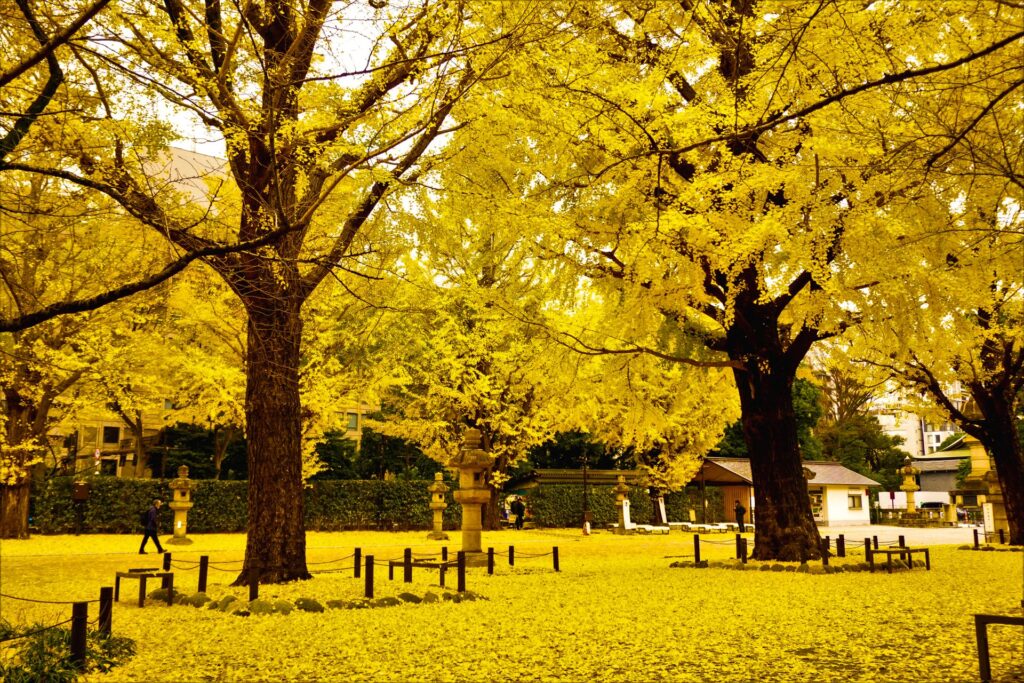
The golden light just before sunset creates an incredible, warm atmosphere when filtering through the tall, dense groves of yellow ginkgo and orange zelkova trees. The sun sits low enough to light up the falling leaves from the side. When the park floor is covered in yellow autumn leaves, this creates an otherworldly effect. This is especially prominent at the fountains and the northern side of the park massive groves of seasoned ginkgo and zelkova trees blanket the lawns in deep orange and bright yellow leaves.
The park changes when the ginkgo leaves cover the forest floor.
Peak season is late November to early December. Best time for photos is 3:00 PM – 4:15 PM when the rays of the sun hit the park floor. Pick a day with clouds as well as sun for extra dramatic effects.
Access is a 3-minute walk from Harajuku Station (JR Yamanote Line) or Yoyogi-koen Station (Tokyo Metro Chiyoda Line). Note that the Meiji Shrine park is separate from Yoyogi Park, and if you enter the Meiji Shrine park you have to go back to the entrance to get to Yoyogi Park.
8. Inokashira Park
Nestled in the trendy western suburbs, Inokashira Park centers around a massive spring-fed pond. Romantic, neighborhood-centric, and scenic.
Tokyo regional travel boards recommend viewing the autumn leaves from the low-slung bridges or from the water itself via rowboats and swan boats, where red maples dramatically droop directly over the waterline.
The surrounding streets are packed with cozy cafes and second-hand clothing shops. For anime fans, this is also the location of the Ghibli Museum (but you need to buy a ticket well in advance to get in).
The peak season of the park is late November to mid-December. Best time for photos is 11:00 AM – 1:00 PM. Midday light is best here to eliminate the heavy shadows cast by the dense tree canopy lining the narrow pond. Midday sun pierces straight down onto the water, allowing you to capture the vibrant reflection of the overhanging red maples from a boat or bridge.
Access is a 5-minute walk from the South Exit of Kichijoji Station (JR Chuo Line, Keio Inokashira Line), or a 1-minute walk from Inokashira-koen Station (Keio Inokashira Line).
9. Maple Valley (Shiba Park)
Tucked within the borders of Shiba Park, Maple Valley (known in Japanese as *Momijidani*) is a beautifully reconstructed artificial ravine. A compact, shaded, and surprisingly quiet mountain-stream atmosphere hidden right next to a major urban landmark.
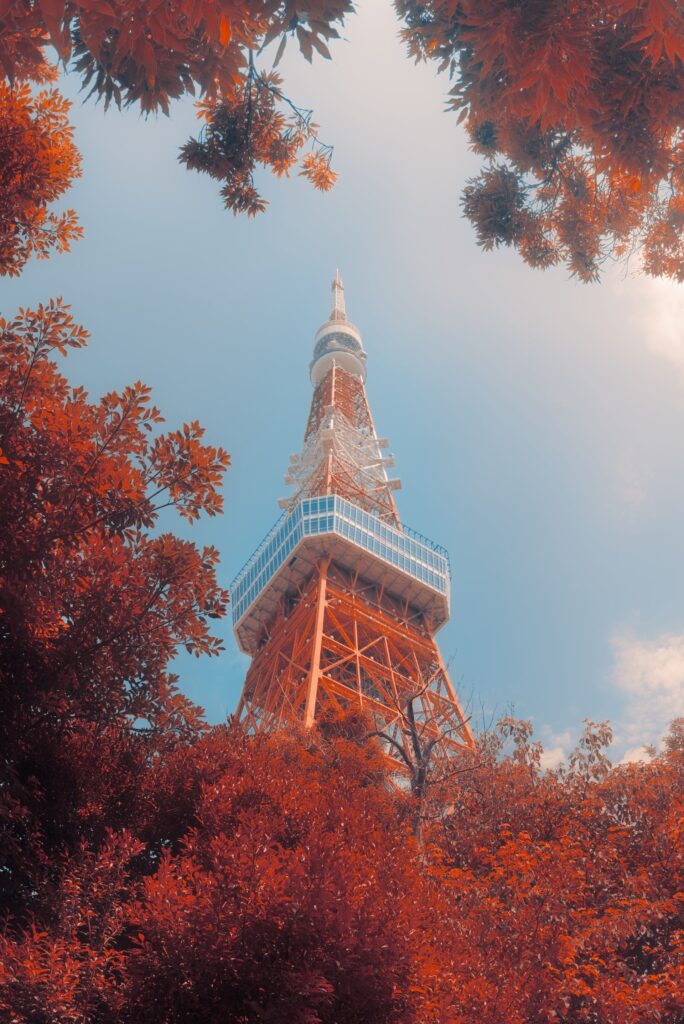
Local photography guides rate this highly because it provides a spectacular, classic angle where the fiery red maples directly frame the glowing orange structure of Tokyo Tower.
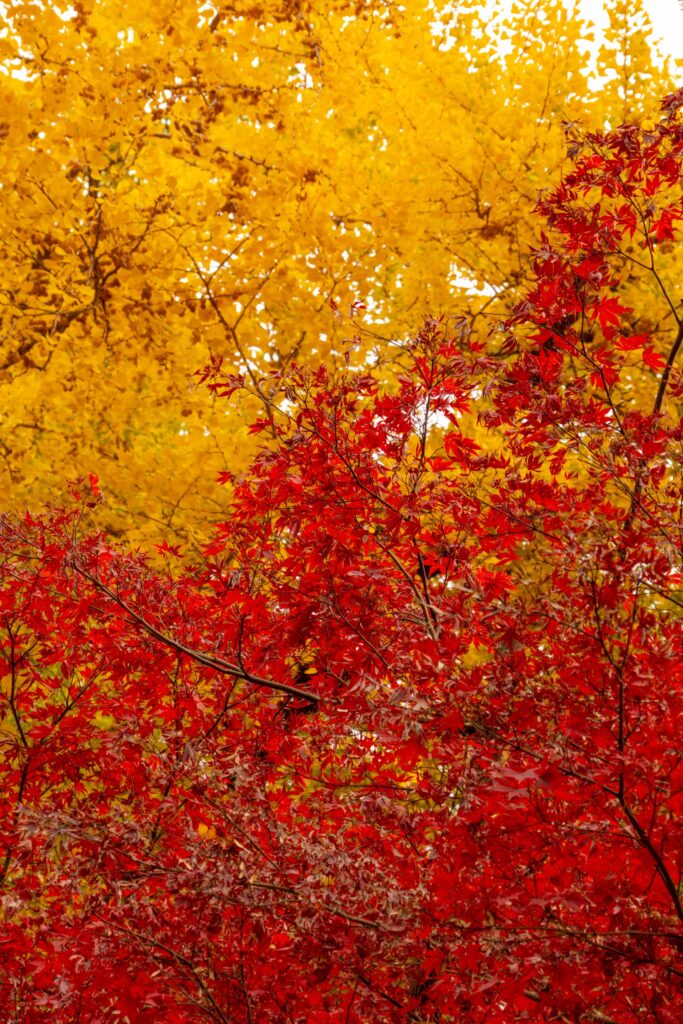
Different kinds of fall colors become stunning together.
Peak season is late November to late December. Best time for photos is 2:00 PM to 3:30 PM. Since the valley is a sunken ravine, it gets dark early. Mid-to-late afternoon sun hits the upper canopy of maples while illuminating Tokyo Tower in the background, creating the perfect color balance between the red leaves and the orange landmark.
Access is a 2-minute walk from Akabanebashi Station (Toei Oedo Line) or a 5-minute walk from Shibakoen Station (Toei Mita Line).
10. Otaguro Park
A hidden gem in Suginami Ward, Otaguro Park is the former residential estate of music critic Motoo Otaguro. This place is quiet, residential, and deeply artistic. It offers a much more relaxed alternative to the highly crowded central city gardens.
Municipal heritage reviews note its striking 100-year-old ginkgo avenue near the gates and a serene stroll garden where massive maples line a quiet stream. It is highly regarded by locals for its peaceful night light-up displays. The contrast between the deep blue slate sky at the twilight magic hour and the warmly lit yellow ginkgo trees is visually stunning.
Peak season is late November to early December. Best time for photos is the twilight hours in late afternoon to early evening (5:15 PM – 6:15 PM). The park shuts its gates briefly at 4:30 PM and reopens at 5:00 PM for the light-up event. Line up by 4:45 PM to enter right at twilight.
Access is a 10-minute walk from the South Exit of Ogikubo Station (JR Chuo Line, Tokyo Metro Marunouchi Line).
Stay tuned for more exciting content like this! Follow us on our social media platforms and check out our blog regularly to stay updated on the latest news, trends, and insider stories from Japan. Don’t miss out on future updates—sign up for our newsletter for exclusive content delivered straight to your inbox!
Wisterian Watertree
Wisterian Watertree has been living in Tokyo and other Japanese cities for
the past 20 years, helping visitors get the best of Japan. He is the author of two
books, ”Take Your Toddlers To Tokyo” and ”Driving In Japan”, with more on the
way. You can read more on his website Japan Top 10, https://japan-top-10.com.