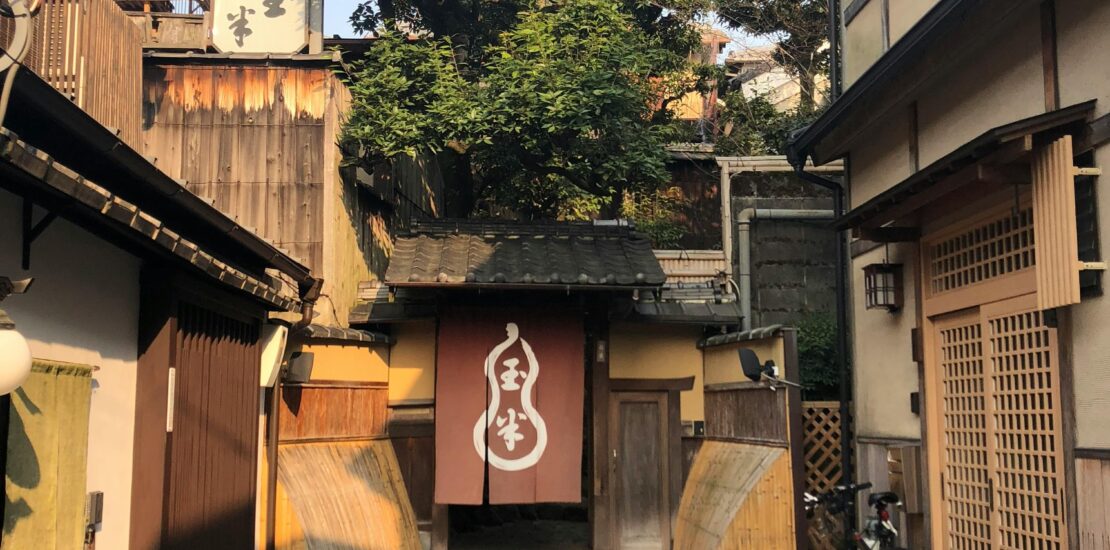
Katsushika Ward (葛飾区, Katsushika-ku) sits at the northeastern tip of the 23 wards of Tokyo, bordered on the east by the Edogawa River, which forms the boundary with Chiba Prefecture (Matsudo and Ichikawa cities); on the west by Adachi Ward; on the south by Edogawa Ward and Sumida Ward; and on the north by the Ooba River, which separates it from Saitama Prefecture (Yashio and Misato cities). In practice, all of these are part of the Tokyo megacity, and you rarely notice when you cross the border between two prefectures. But Katushika is the only place in Tokyo where you can do that by ferry.
The only ferry crossing
Yagiri no Watashi is a river ferry service connecting Shibamata on the Tokyo side with Chiba Prefecture on the opposite bank, with origins in the early Edo period. It is the only remaining ferry crossing of its kind in Tokyo, and it has appeared in novels and popular songs. The one-way fare is currently ¥300.
Katsushika is known as a place rich in nature and the warm, human-oriented spirit of the old shitamachi (downtown) culture. The ward retains a distinctive regional character described as kawadera no ninjō — the warm human bonds typical of riverside, old-town communities.
The hometown of Shitamachi
Katsushika Ward is characterized by its “Shitamachi” (traditional downtown) atmosphere, where the retro charm of the Showa era blends with Edo-period history. While famous domestically as the setting for popular films and manga, it has gained international recognition for its traditional architecture and serene Japanese gardens.
This spirit is embodied in two beloved popular-culture touchstones: the character “Ryōtsu-san” from the manga Kochira Katsushika-ku Kameari Kōen Mae Hashutsujo (Kochi Kame), set in Kameari, and “Tora-san” from the film series Otoko wa Tsurai yo, set in Shibamata.
Charming temple shopping street
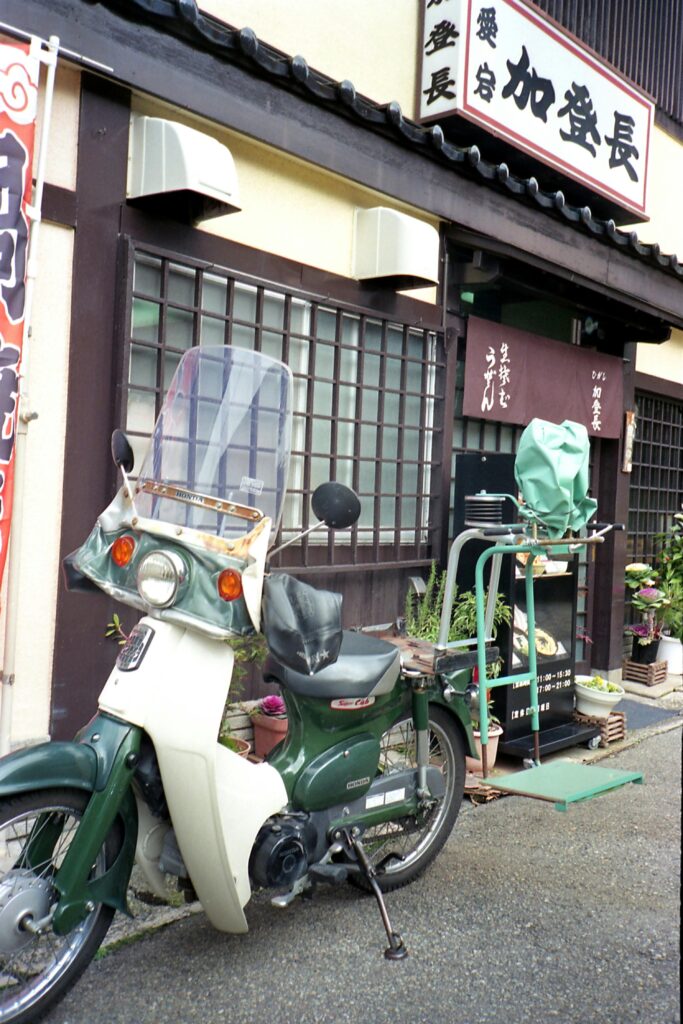
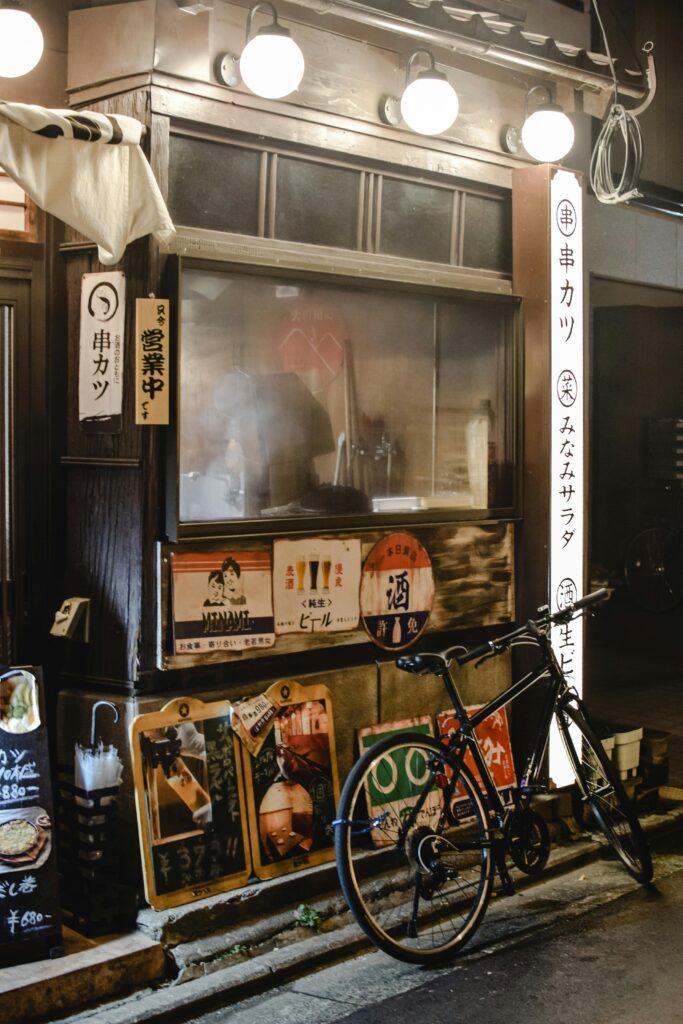
Shibamata is one of the biggest attractions in the ward, which otherwise mostly consists of Tokyo’s sleeping towns. The Taishakuten Sandō, running from Shibamata Station to the Nitennmon gate, is a charming shopping street suffused with a Shōwa-era retro atmosphere.
Along approximately 200 metres of stone-paved lane, long-established confectionery shops, souvenir stores, and restaurants line both sides, creating a scene full of shitamachi (old downtown) character. The street’s specialties — kusa dango (mugwort rice-flour dumplings), ningyo-yaki (figure-shaped cakes), and freshwater fish dishes — are popular for eating while strolling.
The approach was also used as a filming location for the Tora-san character Otoko wa Tsurai yo movie series and continues to draw visitors for photography.
The street leads up to Shibamata Taishakuten, formally known as Keieisan Daikyoji (経栄山題経寺), a Nichiren-sect Buddhist temple. It was founded in the early Edo period in Kanei 6 (1629) by two monks, Zennaiin Nichichū and Daikyōin Nichiei.
Toward the end of the 18th century, during the tenure of the 9th chief priest, Nikkyo, veneration of the Taishakuten deity at the temple grew significantly, and it became known as “Shibamata Taishakuten.” The festival day of Taishakuten was set as the kōshin (day of the Monkey) in the sexagenary cycle, and the temple attracted great numbers of pilgrims through its connection with kōshin folk beliefs.
The backstory of the main object of worship is particularly vivid: a wooden plaque-icon (ita honzon) said to have been carved by the founder Nichiren himself had gone missing for many years. When the 9th priest Nikkyō undertook repairs to the main hall in An’ei 8 (1779) and discovered the plaque icon atop the ridge beam on a kōshin day, he established that date as the temple’s festival day.
Four years later, in 1783, during the severe Tenmei Famine, Nikkyō himself carried the icon on his back through the streets of Edo to allow suffering people to worship it, reportedly producing miraculous benefits that spread Shibamata Taishakuten’s fame widely.
The temple is celebrated for its remarkable woodcarving. The Nitennmon (Two Heavenly Kings Gate), completed in Meiji 29 (1896), is a two-storied gate in the irimoya-zukuri style with karahafu and chidori-hafu gables, entirely of zelkova wood; within it stand ancient statues of the Zōchōten and Kōmokuten.
The Taishakudō (main worship hall) features ten carved relief panels on its exterior walls depicting stories from the Hokke-kyō (Lotus Sutra), executed from the late Taishō to Shōwa 9 (1934) by ten master craftsmen.
The garden behind the great hall, called Suikeien (邃渓園), is a designated Tokyo Metropolitan Historic Site, laid out from Shōwa 4 (1929) and completed in its current form in Shōwa 40 (1965); visitors can appreciate it from an encircling veranda.
The “Zuiryū no Matsu” pine tree in the precincts was designated a Tokyo Metropolitan Natural Monument in 2016. In the 20th century, the temple became famous as the home setting of the beloved film series Otoko wa Tsurai yo (It’s Tough Being a Man).
So famous is Tora-san that there is a museum dedicated to him. The Katsushika Shibamata Tora-san Memorial Museum is dedicated to Kuruma Torajirō, the protagonist of Japan’s most beloved popular film series.
Inside, the kurumaya (Tora-san’s family dumpling shop) set used in filming has been faithfully reconstructed, along with precious materials from all 48 films in the series, including props and production items. An observatory offers views across the Edogawa riverbank, the landscape that Tora-san loved. Hands-on exhibits cover Shōwa-era culture and daily life. The museum recently underwent a significant renovation and reopened in April 2025.
There is also a museum dedicated to the director of the series. The Yamada Yōji Museum introduces the world of the director best known for the Otoko wa Tsurai yo series, with exhibits on his major works including Gakko (School) and Tasogare Seibei (The Twilight Samurai), as well as behind-the-scenes filming secrets.
Behind the Tora-san museum sits Yamamoto-tei, a Western-influenced modern Japanese-style residence built in the 1920s. It is now owned by Katsushika Ward and open to the public. It underwent extensions and renovations from the late Taishō to the early Shōwa periods to reach its current form.
The land was originally that of the Suzuki family, who ran a roof-tile factory until the Great Kantō Earthquake of 1923. Yamamoto Einosuke, the founder of a camera-parts manufacturer (Yamamoto Kōjō), relocated to Shibamata after the earthquake and acquired the site.
The structure is a two-storey wooden tile-roofed building with a first-floor area of 400 m² and a second floor of 50 m², plus a basement, dozō (storehouse), and nagayamon (long-house gate), all in a rare style spanning traditional shoin-zukuri (study-style) Japanese architecture through to Western-influenced rooms.
The Western-style reception room features mosaic flooring, white plaster ceilings, and stained-glass windows — introducing the Western furnishings that were a status symbol among the wealthy class of the early Shōwa era.
In 2003, it was designated a Tokyo Metropolitan Historic Building. Since 2003, it has consistently ranked in the top seven in the annual Japanese garden rankings published by the American journal ”The Journal of Japanese Gardening”.
Shibamata was selected as the first site in Tokyo to receive designation as a National Important Cultural Landscape (Jūyō Bunka-teki Keikan). The area around Shibamata Taishakuten, the Sandō, and the Edogawa riverside — including Yamamoto-tei — has been formally recognised by the national government as a landscape of outstanding cultural significance.
The Tora-san connection is not the only popular culture connection in Katsudhika. Kameari Katori Shrine was founded in the second year of the Kenchū era (1276) in the Kamakura period, and has protected the local community for 750 years. The shrine enshrines three deities: Futsunushi no Ōkami, Takemikazuchi no Ōkami, and Kunado no Ōkami — all associated with battle, contests, and victory — making it popular among athletes. A separate Dosojin (wayside deity) in the precinct is venerated for leg and foot health.
The shrine has an intimate connection with contemporary popular culture: within the precinct stands a bronze statue of “Ryō-san” (Ryōtsu Kankichi) from the manga Kochira Katsushika-ku Kameari Kōen Mae Hashutsujo (Kochi Kame), and a “Kameari Map” created by the manga’s characters shows the historical changes of the Kameari neighbourhood. Because manga artist Takahashi Yōichi, creator of Captain Tsubasa, is from Katsushika Ward, the shrine also offers soccer-goal-shaped votive plaque racks and good-luck charms connected to the series.
Bungling police box museum
The Kochikame Memorial Museum (こち亀記念館) opened on March 22, 2025, in Kameari, Katsushika Ward. It is an attraction based on the manga Kochira Katsushika-ku Kameari Kōen Mae Hashutsujo by Akimoto Osamu. Established by Katsushika Ward, the building’s exterior is modelled on the police box (kōban) where the protagonist Ryōtsu Kankichi is stationed.
The five-storey facility contains a “Famous Scene Experience Box,” a deluxe original-artwork gallery, the Honorary Director’s Room of Ryōtsu, and the “Ryōtsu Daimyōjin Shrine.” Visitors can view manga-related items, experience the story world, and enjoy interactive content. Reservations are required.
Edo-style iris garden
If you get tired of popular culture, Katsushika is equally famous for its gardens (which is saying a lot). Most famous among those is probably Horikiri Shōbu-en (堀切菖蒲園) — Horikiri Iris Garden.
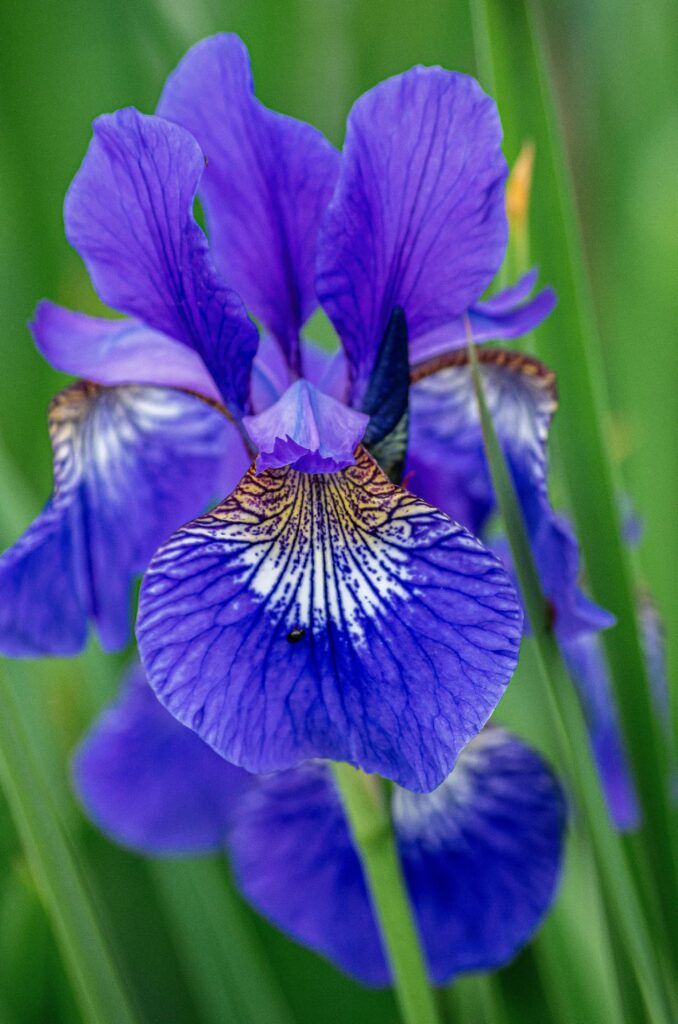
Horikiri’s iris garden is said to have been the first of its kind in Japan, originating approximately 220 years ago in the late Edo period. The present Horikiri Shōbu-en traces its lineage to the “Horikiri-en” garden established by Isogai Chūjirō in the Meiji period, around 130 years ago.
During the Edo period, the garden was counted among the “One Hundred Famous Views of Edo,” appearing in sightseeing guides, travel literature, and woodblock prints by Suzuki Harunobu and Utagawa Hiroshige. By the Meiji-Taishō period, five separate iris gardens flourished side by side at Horikiri, and some exported cultivars internationally. Wartime food-shortage policies forced conversion of these gardens to rice paddies; after the war, only the Isogai family’s Horikiri-en managed to restore operations by replanting stocks that had been preserved at a relative’s home in Adachi. In 1959 the Tokyo Metropolitan Government purchased the garden; it was transferred to Katsushika Ward in 1975.
Today the garden contains 200 varieties and 6,000 specimens of Japanese iris (hanashōbu), with peak bloom in mid-June. During the annual “Katsushika Shōbu Festival,” held in early to mid-June, events including parades are organized by a community council.
Wild plants and tame goldfish
Nearby is Mizumoto Park, a metropolitan park and the largest park in Tokyo’s 23 wards, distinguished by its extensive water-side landscape. Built along the Koaidame reservoir, it is the only park in Tokyo to feature a waterside (suigō) landscape. Canals of various sizes drawn from the Koaidame run through the park, creating the watery scenery. The park supports water-tolerant trees such as poplar avenues, metasequoia groves, and alder, as well as aquatic plants including Japanese iris, water lily, and kohone (Japanese spatterdock).
Within Mizumoto Park, on the grounds of a former metropolitan fisheries research station, is the Katsushika Ward Goldfish Exhibition, which is free to enter. Here, approximately 1,000 goldfish of around 24 varieties — including “Edo Nishiki” and “Edo Akane,” collectively known as Edomae kingyo (Edo-style goldfish) — are raised and displayed in concrete tanks.
The park covers 96 hectares — equivalent to about 20 Tokyo Dome stadiums. The Koaidame was originally the channel of the old Tone River, which was blocked off to create a large irrigation reservoir during the Edo period; the name “Mizumoto” (Water Origin) derives from this role as a water source for the agricultural land of Katsushika and Edogawa.
Unique Jizo Statue
Highlights include a grove of metasequoias considered the largest in Tokyo, a hanashōbu-en (iris garden) where approximately 200,000 Japanese irises bloom, an adventure playground, and a bird sanctuary where kingfishers and other birds can be observed.  The park contains the only natural habitat of the Onibasu (giant water lily, Victoria cruziana) in Tokyo, a natural monument of Tokyo Metropolis, as well as the near-threatened Fujibakama (thoroughwort).
Near Mizumoto Park stands a uniquely unusual Jizō (Buddhist guardian deity) statue known as the “Shibararejizō” (Bound Jizō). The statue’s body is wrapped all around with a straw rope. The tradition holds that to pray for protection from theft, ward off misfortune, or a fortunate match, worshippers bind the Jizō with a rope; when the wish is granted, they return to untie it. This distinctive votive practice is unlike any found elsewhere.
Stay tuned for more exciting content like this! Follow us on our social media platforms and check out our blog regularly to stay updated on the latest news, trends, and insider stories from Japan. Don’t miss out on future updates — sign up for our newsletter for exclusive content delivered straight to your inbox!