Nori is one of those Japanese foods that feels so basic it almost disappears. It wraps sushi, tops rice, hides inside convenience-store onigiri, and waits politely at the edge of a ramen bowl. Visitors notice it, eat it, and move on. But nori is not simple, and it is certainly not accidental. It is one of Tokyo’s most quietly sophisticated food technologies—born from the sea, refined by human observation, and historically tied to Tokyo Bay in ways the modern city barely remembers.
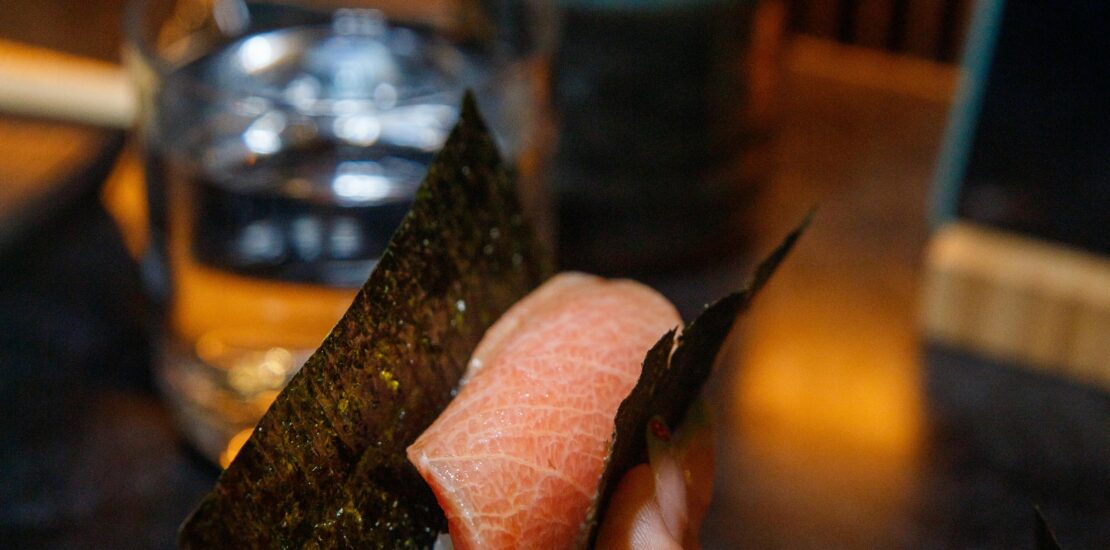
Nori is an essential ingredient in sushi rolls.
To understand nori is to understand how Tokyo learned to eat the ocean without exhausting it.
What Nori Actually Is (and Is Not)
Nori is not kelp. It is not wakame. It is not a plant in the way land vegetables are plants. Botanically, nori is made from species of red algae in the genus Pyropia (formerly Porphyra). Japanese scientific and food-culture sources are explicit about this distinction because it matters: Pyropia has a complex life cycle that humans did not fully understand until the 20th century.
The edible product we call nori is produced by harvesting microscopic algae that grow into thin sheets when spread, pressed, and dried. In other words, nori is less “picked” than it is constructed. Japanese references often describe it as closer to papermaking than farming, and that comparison is accurate. Nori is grown in the sea, but it is finished on land through careful processing.
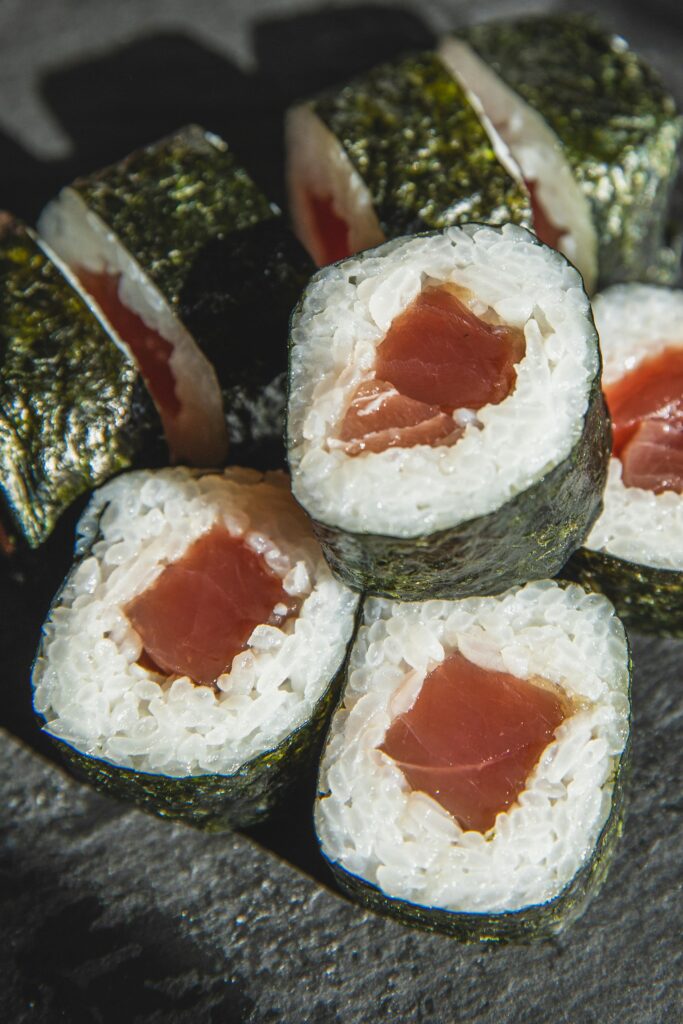
Nori is an essential ingredient in msny kinds of sushi.
This hybrid nature—half marine, half manufactured—is why nori became such a natural partner to Tokyo’s urban food culture.
From Invisible Spores to Black Sheets
Modern nori production follows a highly controlled process, refined over generations. According to Japanese fisheries and food-processing sources, cultivation begins with nets suspended in shallow coastal waters. Nori spores attach to these nets and grow during the cold months, typically from autumn through early spring. Cold water is essential; it suppresses competing organisms and encourages the algae’s growth.
Harvesting involves lifting the nets and removing the algae mechanically. What happens next defines nori as a distinctly Japanese product. The algae are washed, chopped into a slurry, and poured into frames lined with screens. Excess water drains away, leaving a thin, even layer. These sheets are then pressed and dried, traditionally in the sun but now more often in temperature-controlled facilities.
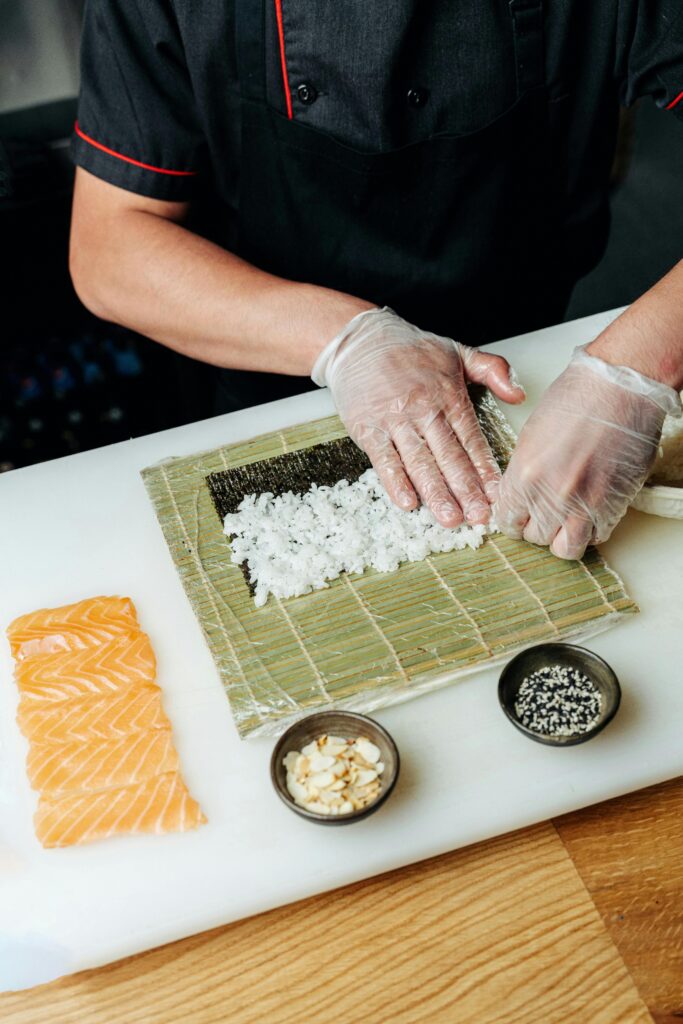
Making traditional sushi rolls is impossible without nori.
The result is the familiar rectangular sheet: crisp, brittle, and deceptively uniform. Japanese food science sources emphasize that quality depends on dozens of variables—water temperature, nutrient levels, timing of harvest, and drying speed. Good nori snaps cleanly. Poor nori bends or tastes dull.
This precision is why nori production has always favored regions close to large consumer markets. You want freshness, speed, and feedback. Historically, no market mattered more than Edo.
Tokyo Bay: Nori’s Forgotten Workplace
Before it became an industrial port and airport corridor, Tokyo Bay was a shallow, nutrient-rich estuary ideal for nori cultivation. Japanese historical records and Edo-period food texts describe nori as a specialty of Edo Bay, harvested by local fishing families and sold directly into the city. This was not luxury food; it was urban sustenance.
Nori became an essential ingredient in Japanese cuisine during the Edo period.
Edo’s population exploded in the 17th and 18th centuries, creating demand for foods that were compact, preservable, and flavorful. Nori fit perfectly. It paired naturally with rice, fish, and soy sauce, forming the backbone of what we now recognize as “Tokyo-style” cuisine.
Japanese sources often note that early nigirizushi—fast food for Edo workers—relied heavily on locally produced nori. The bay was not scenery; it was infrastructure.
That relationship began to fray in the late 19th and early 20th centuries as land reclamation, pollution, and industrialization transformed Tokyo Bay. By the postwar period, large-scale nori cultivation within the bay became increasingly difficult. Production gradually shifted to other regions such as Ariake Sea in Kyushu and parts of the Seto Inland Sea.
Tokyo, however, never stopped consuming nori. It simply outsourced the sea.
A Scientific Breakthrough That Saved an Industry
One of the most important moments in nori history happened far from Tokyo kitchens. In the 1940s and 1950s, nori production across Japan faced severe instability due to unexplained crop failures. The reason was unknown until British phycologist Kathleen Mary Drew-Baker identified the missing stage in Pyropia’s life cycle—a microscopic phase that grows on shells.
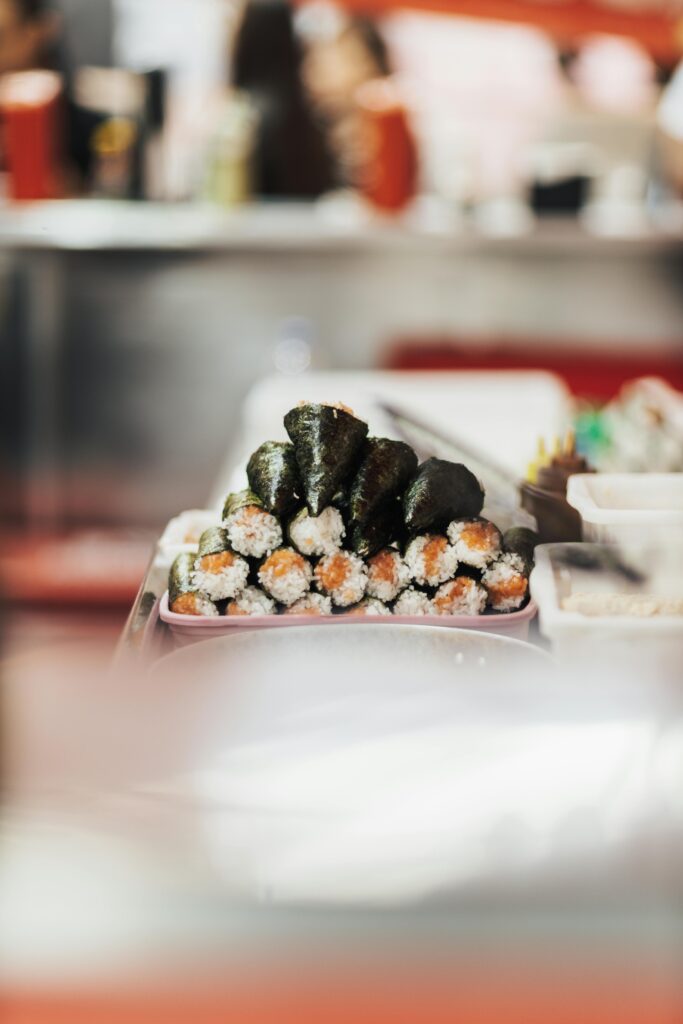
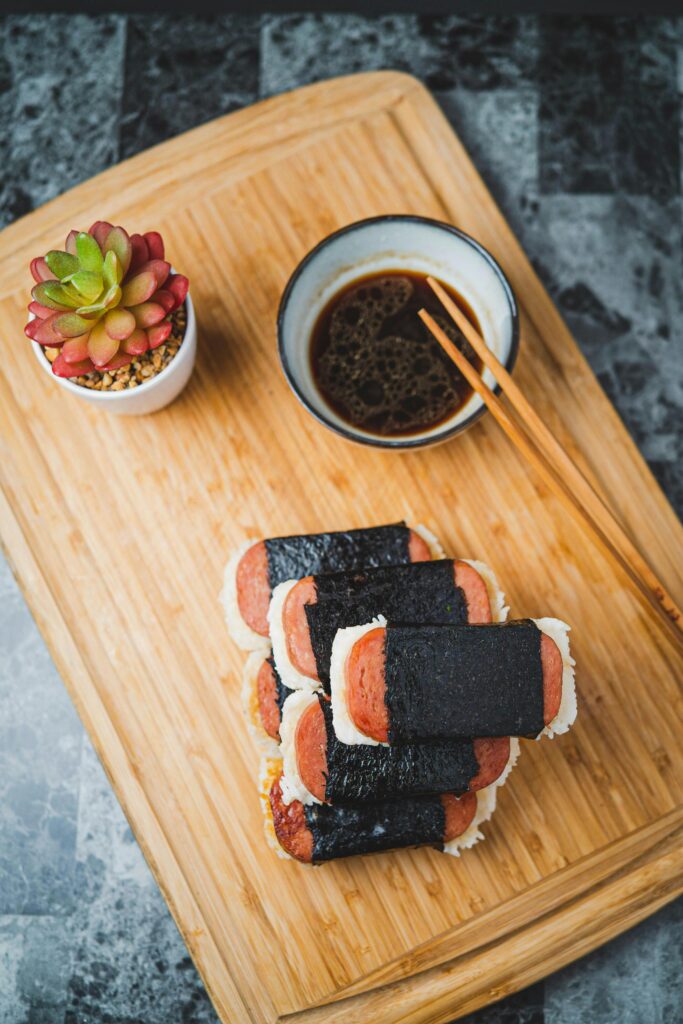
Nori is essential in Okinawan spam musubi, too.
Japanese scientists applied this discovery almost immediately, and Japanese sources consistently credit Drew-Baker’s work with rescuing the nori industry. Her contribution is so highly regarded that she is memorialized at Sumiyoshi Shrine in Uto, Kumamoto.
This moment matters because it transformed nori from a fragile, weather-dependent food into a controllable agricultural product. Without it, nori might have remained a regional specialty rather than a national staple—and Tokyo’s modern food culture would look very different.
Nori and the Shape of Tokyo Cuisine
Nori’s rise parallels Tokyo’s rise as a food capital. It appears in sushi, onigiri, ochazuke, soba, bento boxes, and even modern snacks. Japanese culinary histories often describe nori as a “connector ingredient”—one that binds rice, fish, and seasoning into a complete bite.
Unlike flashy ingredients, nori does not dominate. It frames. It adds aroma, umami, and texture without demanding attention. This restraint aligns closely with Edo culinary aesthetics, which favored balance over excess.
Even today, Tokyo consumers are famously picky about nori. Department store food floors sell graded sheets with price differences that surprise visitors. Convenience stores advertise the timing of when nori is released from plastic wrapping so it stays crisp. These are not marketing tricks; they reflect real sensory expectations.
Why Nori Still Matters
In contemporary Tokyo, nori’s connection to the bay is mostly symbolic. The water is cleaner than it once was, but large-scale cultivation is no longer practical in the capital’s shadow. Yet the identity remains. Japanese cultural sources often describe nori as a “taste of the sea that built Edo.”
Nori endures because it adapts. It works in traditional meals and industrial food systems alike. It survives long transport, yet responds instantly to humidity and handling. It is cheap enough for daily use and refined enough for ceremonial meals.
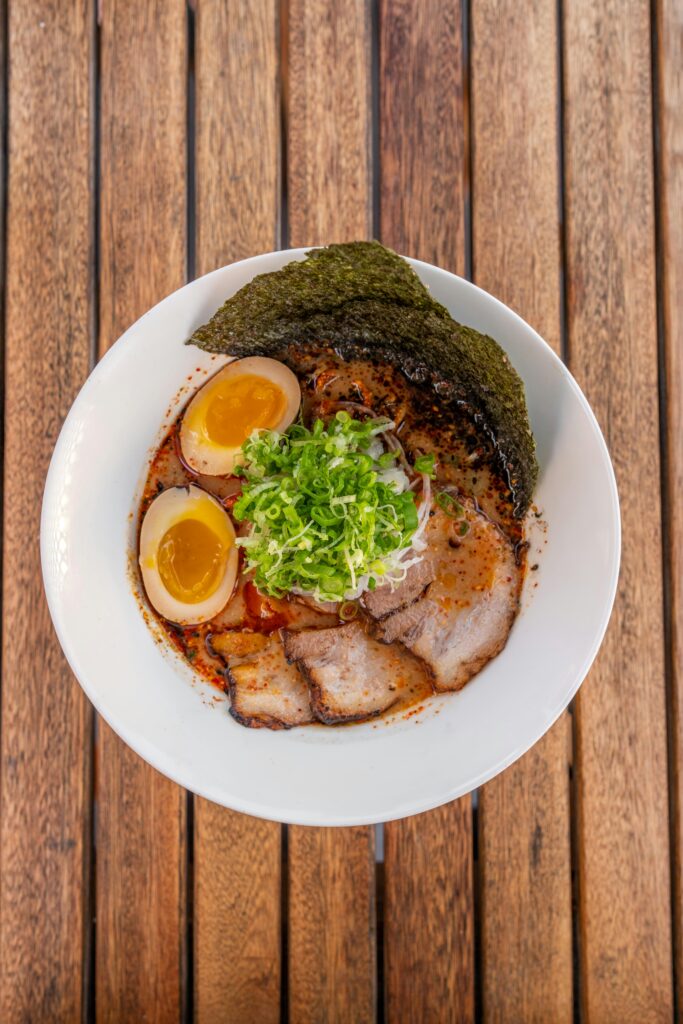
Nori is not only essential in sushi, but also in ramen.
Most importantly, nori embodies a very Tokyo idea: that nature can be engineered without being erased.
You may not think about Tokyo Bay when you eat a convenience-store onigiri, but you are tasting a system that once depended on it—a system of shallow water, cold seasons, careful hands, and urban appetite. Nori is not background. It is structure. And like much of Tokyo itself, it only looks simple once you stop paying attention.
Stay tuned for more exciting content like this! Follow us on our social media platforms and check out our blog regularly to stay updated on the latest news, trends, and insider stories from Japan. Don’t miss out on future updates. Sign up for our newsletter for exclusive content delivered straight to your inbox!
Wisterian Watertree
Wisterian Watertree has been living in Tokyo and other Japanese cities for
the past 20 years, helping visitors get the best of Japan. He is the author of two
books, ”Take Your Toddlers To Tokyo” and ”Driving In Japan”, with more on the
way. You can read more on his website Japan Top 10, https://japan-top-10.com.