Cycling in Tokyo: Rules, Parking, and Real-Life Tips for Daily Use
It is the single best way to go from your manshon to the station. Every morning before rush hour, Tokyo bicycle parking lots fill up. As the day moves on, the mothers transporting their children and shopping fill the streets. Read on to find out what happens next.
Japan introduced stricter bicycle enforcement from April 1, 2026, including the Blue Ticket system for riders aged 16 and over. This means certain violations such as ignoring traffic signals, using a phone while riding, riding without lights, or cycling unsafely with umbrellas or earphones can now lead to fines. Dangerous behavior like drunk cycling is still treated much more seriously under criminal penalties. For a full breakdown of the new bicycle rules and fines, check our separate guide here.
How To Handle Bicycles In Tokyo
In Tokyo, bicycles fall into three big tribes. There’s the everyday utility bike (the famous mamachari that can carry everything at once: baskets, kickstands, child seats strollers, etc.) ”Mamachari” is a portmanteau of ”mama” and ”chariot” and this tells you what it is about. This is a bicycle – usually electrically assisted – that is built for errands and station runs
Then there is the specialist/sport world (road, gravel, MTB, folding, e-bikes with fancy drivetrains). The stores, service culture, and even “where they tend to exist” are different—so the smartest move is choosing your tribe first, then your shop. Not for nothing is Japanese Shimano the world leader in bicycle gears.
Then, there is the third and most common tribe, those who carry society but never get noticed. This is where to look for the everyday bicycles, those that the ”salarymen” ride from their mansion to the train station every day. This is the kind if bicycle you never notice, until one day you suddenly realize they are everywhere.
Japan has embraced the European-style hobby bicycle culture with a vengeance, and any given Sunday you can see riders (usually elderly men) in colorful tights on the bicycle paths outside Tokyo, in Saitama, Ibaraki, and even Gunma. Where their close seniors took up golf, this generation are bikers – European style.
If you are buying a road bike, gravel bike, MTB, or anything where fit and maintenance matter, specialist shops are where you get real value: sizing advice, component know-how, and mechanics who speak “bike.” A good example is Y’s Road, a major sports-cycle chain; their Shinjuku flagship advertises direct access from Shinjuku-sanchome Station and professional mechanics on staff.
European-style cycling has emerged as a major Tokyo hobby.
You will often find these stores in dense commercial areas and near major stations (because they need foot traffic and brand visibility), or along “destination shopping” corridors.
The serious bicycle shops, however, go where the customers are. You will find gear that would make a Tour de France specialist shop proud. You have to know where they are, or know how to ask. But after service, rest assured that your bicycle will run better than when it was new.
For city bikes, kid bikes, and electric-assist mamachari, the “workhorse” chain is Cycle Base Asahi. Their service model is very Tokyo: you can book repairs/inspections online, show your reservation on your phone, and get a time estimate and completion notice. Asahi also publishes clear inspection pricing (useful for budgeting long-term).
Asahi works hard at being accessible, with street-level shops in residential zones, shopping streets, and along major roads—places you can wheel a bike in and out without battling stairs.
Asahi and other specialist bicycle stores are still on the verge of being expensive. The best place to get a good price for an ordinary bicycle are the big-box retailers (home centers, electronics, supermarkets).
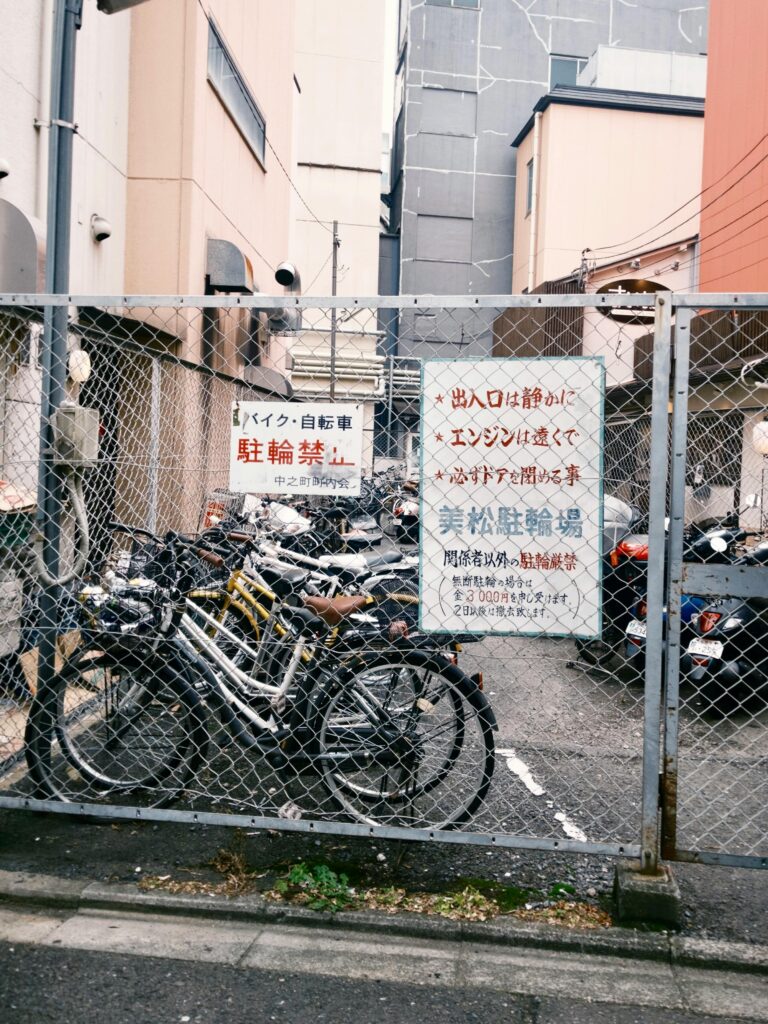
Bicycles in Japan has to be parked properly.
These are fine for basic city bikes, especially if you want “good enough” quickly. The catch is after-sales support: some are excellent, some are “we sold it, good luck.”
Rule of thumb: if you’re not comfortable diagnosing squeaks, brake rub, or a slipping chain yourself, buy from a place that clearly advertises service.
Japanese bicycle life is maintenance life. Like most industries, you do not just buy a thing, you buy a relationship with the vendor, who promises to take care of you as long as you come back when you need service. The good news is the mainstream chains have built a system for it.
Cycle Base Asahi explicitly offers periodic inspections and maintenance by qualified staff, with published price points for checkups.
Their online repair/inspection reservation system is designed for smooth in-store intake and updates.
Y’s Road emphasizes pro mechanics (Y’s Tech) and staff expertise for sport bikes.
If your bike suddenly won’t ride safely (brake failure, broken spokes, severe wobble), don’t limp it to the shop in traffic—walk it. Tokyo roads are busy, and bicycles are treated as vehicles under traffic law guidance. If they do not work properly, do not drive them.
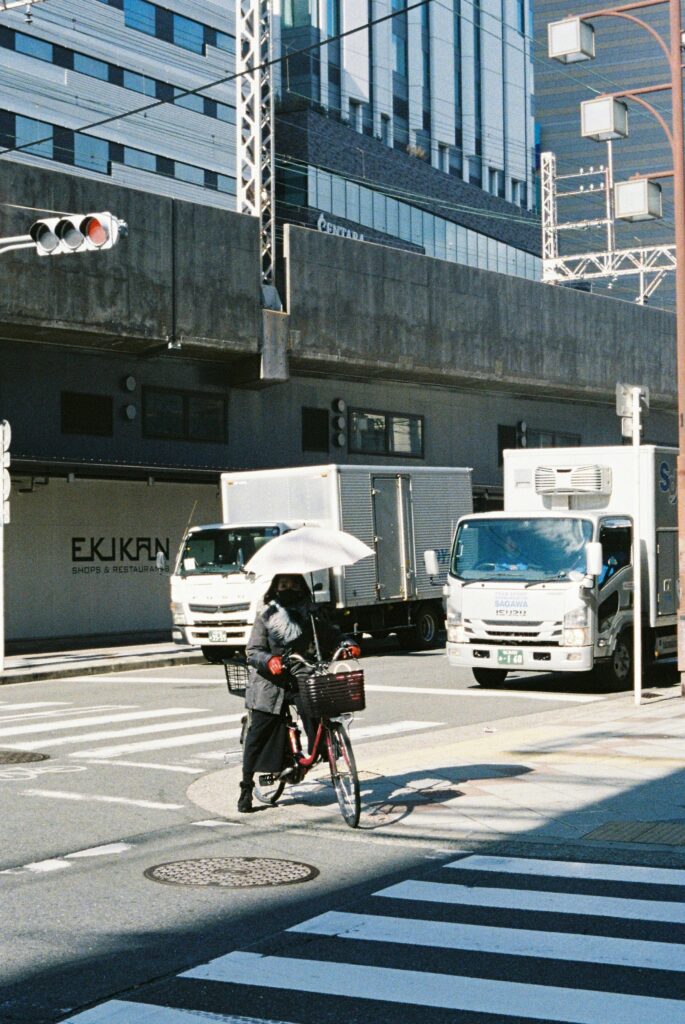
Bicycles in Tokyo are effective transports, rain or shine. Be aware that using umbrellas are now prohibited to use while riding a bicycle.
But those are new bicycles. Used bicycles: do they exist, and how much cheaper are they?
Yes—Tokyo has a strong secondhand market, and it’s especially useful if you just want a “station-and-back” utility bike.
Cycle Base Asahi runs a reuse program: they say their used bikes are assessed by qualified staff, receive 30+ point maintenance and cleaning, and include free inspections for one year after purchase.
Tokyo Cheapo outlines common ways to buy used bikes in Tokyo and notes secondhand bikes are generally cheaper than new, though prices vary a lot by condition and source.
Remember however that utility bikes can be meaningfully cheaper than new, but the “real” savings depends on whether the bike is serviced, whether parts are worn, and whether it includes any support after purchase. If a used bike is extremely cheap but needs tires + brake pads + chain, you may pay the difference anyway.
It may come as a surprise, but when you buy a new bicycle you get an offer to register it. It is formally registration for your safety (jitensha bōhan tōroku). And yes, you need it.
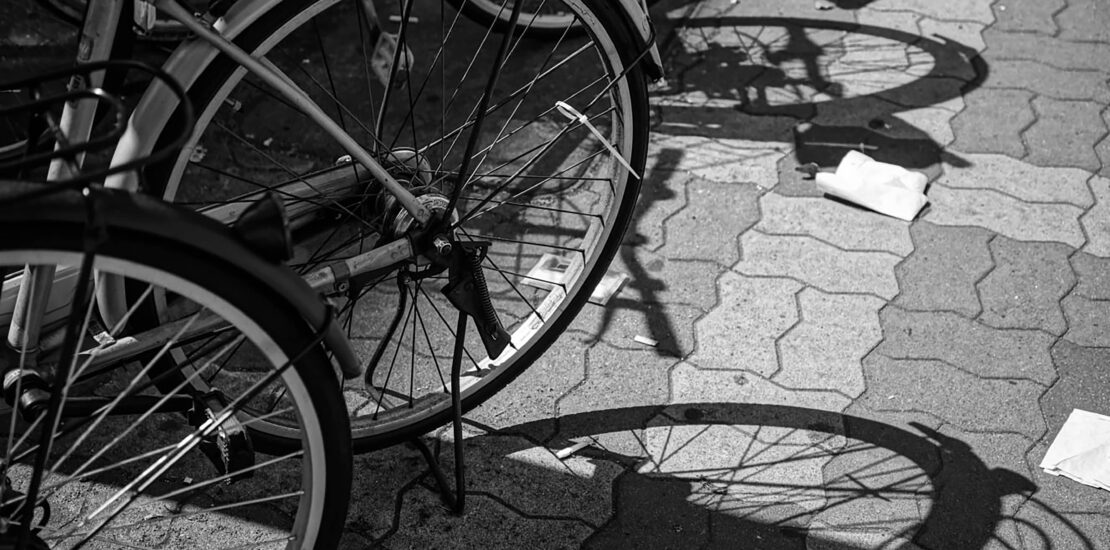
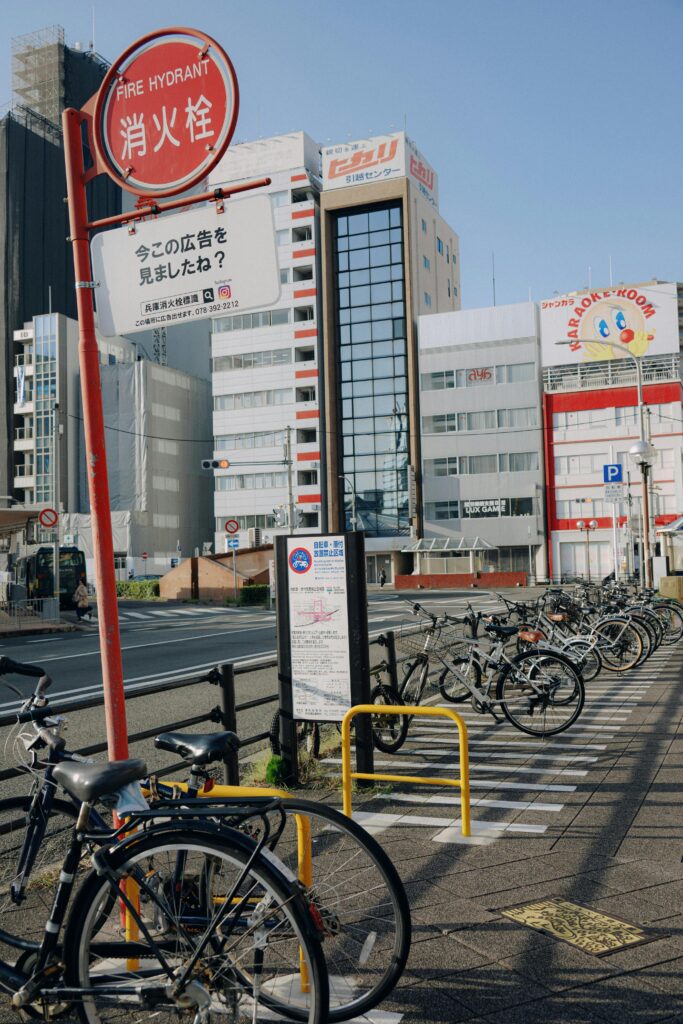
Bicycle parking is important, especially near the stations.
Tokyo is serious about bicycle theft prevention, and registration is part of daily life.
The Tokyo Metropolitan Police Department (警視庁) states that bicycle owners are obliged to register their bicycles for crime prevention, explains the system purpose, and notes registration validity is 10 years from the year after registration.
Tokyo’s multicultural living guide gives the practical workflow: many shops can register you at purchase; if you bought online or got a bike secondhand, you can go to a shop displaying the registration sign. It also lists the Tokyo fee as ¥660 and validity of 10 years.
The Tokyo bicycle crime-prevention association FAQ also lists the registration fee as ¥660 (tax-exempt).
The easiest place is at the shop when you buy. If you didn’t, follow the Tokyo Police guidance: registration procedures are handled at bicycle retailers commissioned by the association.
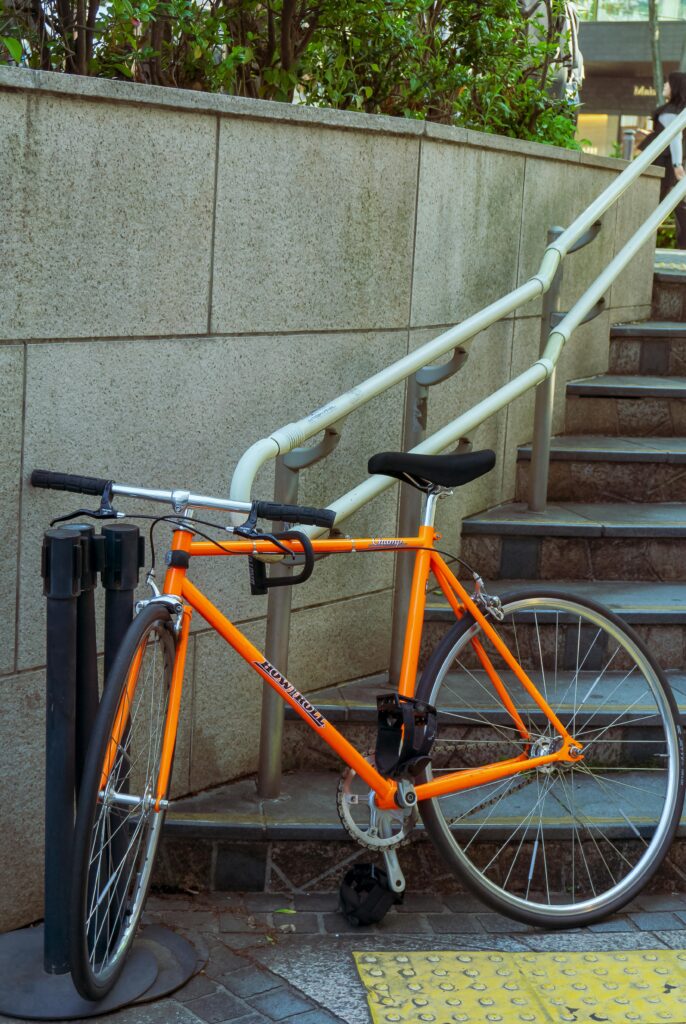
As light vehicles, you must park your bicycle properly.
Bicycles are treated as light vehicles, must follow road rules, and violations can bring serious consequences especially if you cause injury. Tokyo city requires riders to have bicycle liability insurance under the Tokyo Metropolitan ordinance framework. This matters because pedestrian-injury compensation cases can be financially devastating.
Registration is not the only safety aspect in bicycle ownership. Japan revised the Road Traffic Act so that from April 1, 2023, bicycle helmet wearing became an effort obligation (strongly recommended) for riders of all ages—not a universal “punished if you don’t” mandate in the way many people assume. Police guidance materials for the public also promote helmet use as a safety rule.
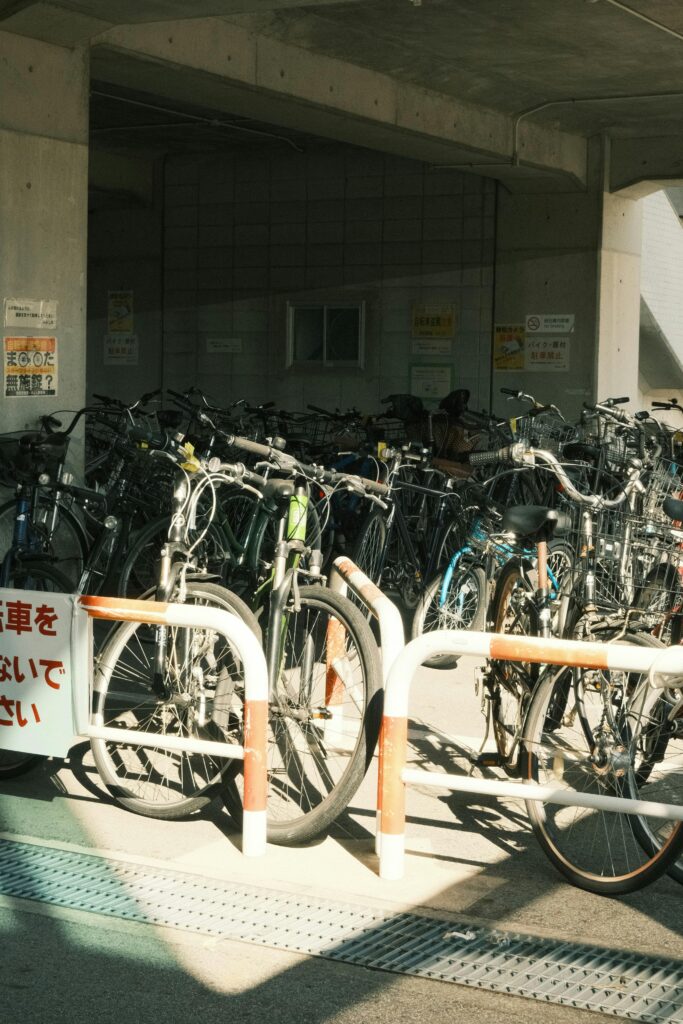
You need to take your helmet with you from the bicycle parking.
What happens if you don’t wear a helmet is the safety and potential liability after an accident; the “effort obligation” framing is not the same as a blanket ticket-every-time rule. (Local enforcement priorities can also differ.)
That is not true for bicycle lights. Police guidance is blunt: use bicycle lights at night without fail. If your lights don’t work, you’re not just risking a fine—you’re risking being invisible in a city where taxis and delivery vans appear out of nowhere.
And do not make the mistake that because it does not have an engine, you can ride home from the bar after the after-work. You can get stopped and fined for riding a bicycle when under the influence, too.
Bicycles makes sense for 1 to 4 km errands, station commutes, school drop-offs, and “Tokyo neighborhoods that look close on a map but feel far on foot.”
Don’t bike if you have nowhere legal to park at your destination, if it’s pouring rain (Tokyo sidewalks + umbrellas + bikes are a bad mix), or if you’ll be tempted to “just leave it for a minute” outside a station.
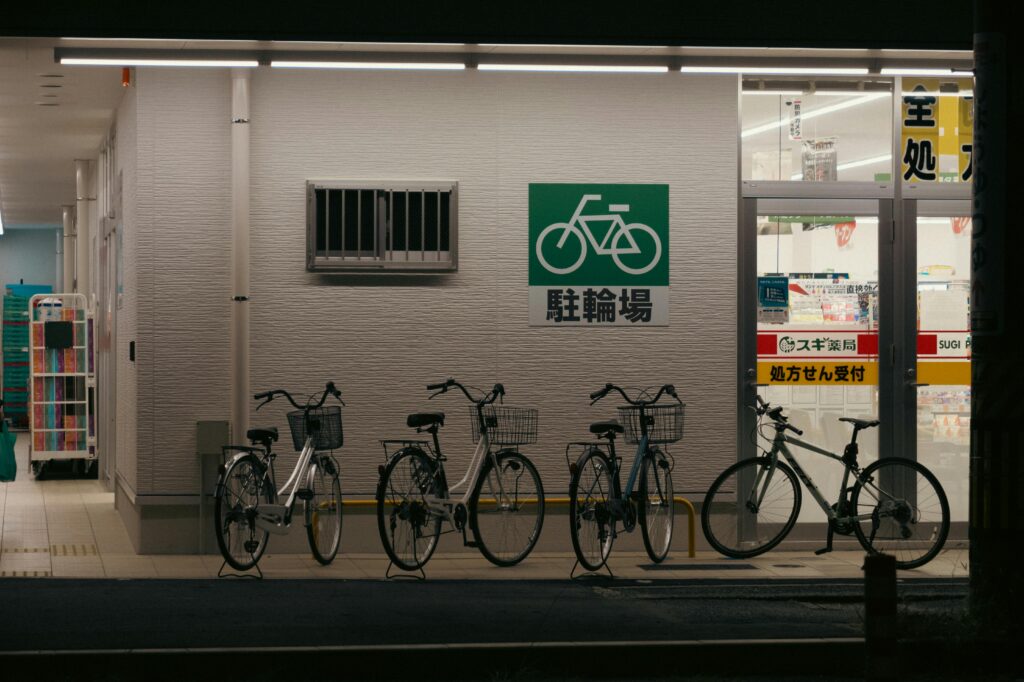
Once you have a bicycle, you need to put it somewhere. You need to know where you can’t park, and how the station parking areas work.
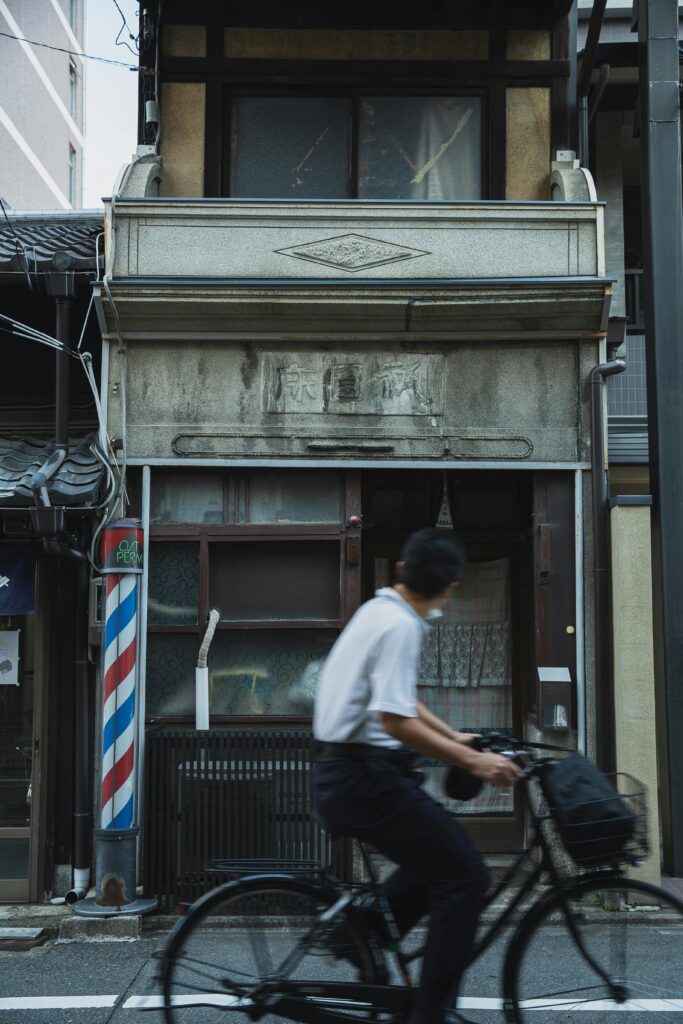
Bicycle riding works best close to home.
Around most stations, street parking is mostly prohibited; wards designate no-parking zones and actively remove bikes.
Minato City (as an example ward with clear English guidance) explains station areas are designated no-parking zones, bicycles can be immediately impounded, and there is an impounding fee of ¥2,000 to retrieve a bicycle.
Visitor-oriented guidance also notes that paid station-area bicycle parking commonly costs on the order of ¥100–¥200 per day (varies by location). If you want to keep your bicycle, use these chūrinjō (bike parking lots).
Most apartment buildings and housing complexes have explicit rules with designated bicycle racks, sticker systems, one-bike-per-unit limits, or “no oversize bikes.” Your best move is to treat bicycle parking as a housing feature—ask about it before you sign. If you own a sport bike, confirm whether indoor storage is allowed; many buildings don’t love muddy tires in hallways.
Stay tuned for more exciting content like this! Follow us on our social media platforms and check out our blog regularly to stay updated on the latest news, trends, and insider stories from Japan. Don’t miss out on future updates — sign up for our newsletter for exclusive content delivered straight to your inbox!
Wisterian Watertree
Wisterian Watertree has been living in Tokyo and other Japanese cities for
the past 20 years, helping visitors get the best of Japan. He is the author of two
books, ”Take Your Toddlers To Tokyo” and ”Driving In Japan”, with more on the
way. You can read more on his website Japan Top 10, https://japan-top-10.com.