Japan Living and Culture Shock
If you are moving from a different country to live in Japan, you are bound to experience a bit of culture shock. It might be the complexity of the train system, the way Japanese people tend to be indirect in communication, or even the etiquette of visiting an onsen for the first time.
You aren’t alone! Almost everyone living in Japan for the first time has the exact same questions. One of the most common “Welcome to Japan” hurdles is the waste management system. It can feel like a part-time job at first, but I’m here to introduce you to the world of Japanese trash sorting so you can have a smooth, stress-free transition into your new home.
Trash Sorting in Japan
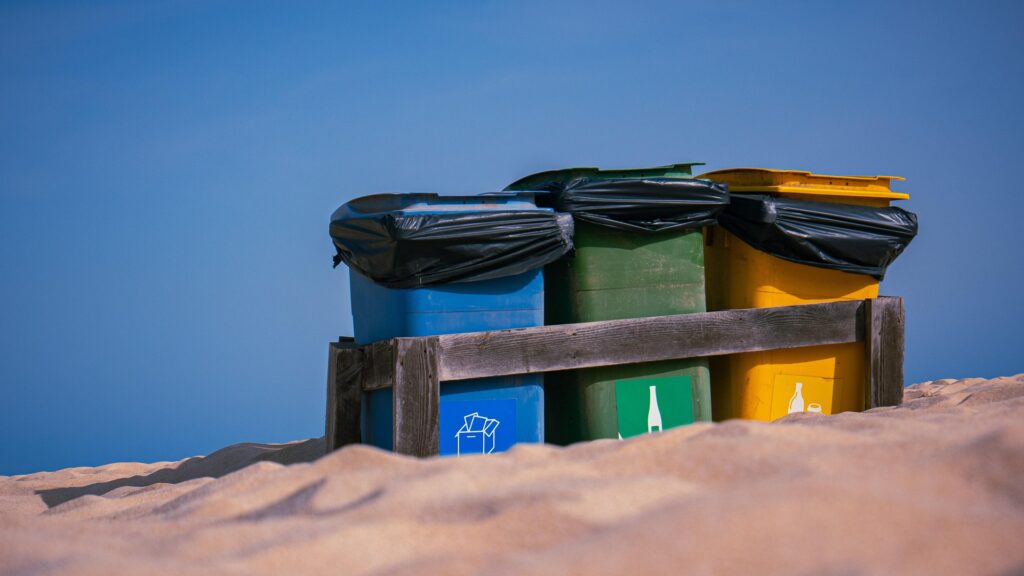
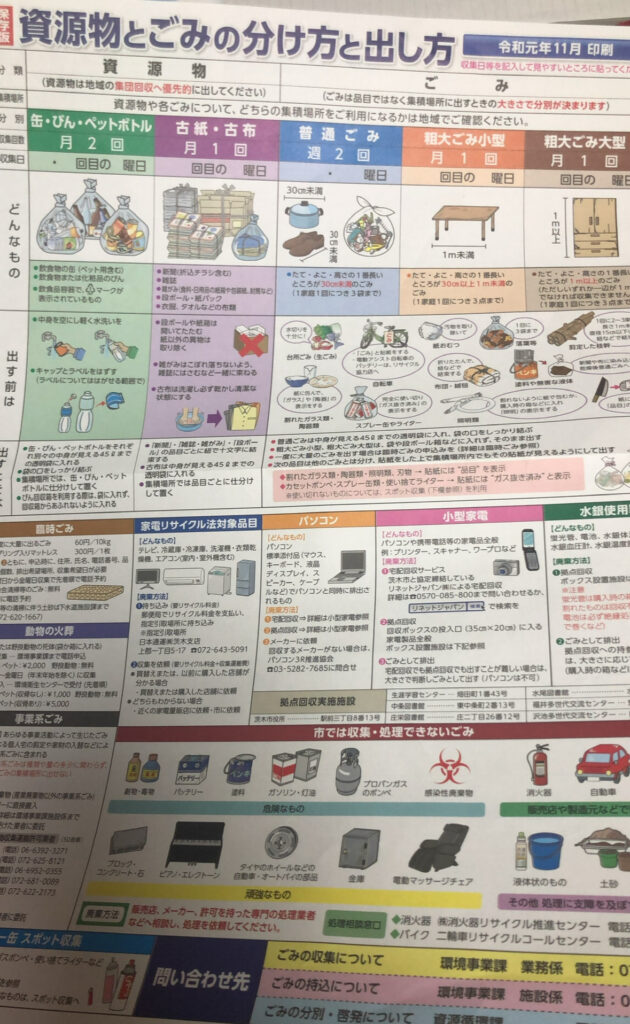
Compared to many Western countries, Japan can seem incredibly strict with how waste is handled. However, there is no single “national” rule. Every single municipality (city, ward, or town) has its own specific set of regulations.
I have lived in four different places in Japan, ranging from big cities to rural towns, and almost every time, the rules were different! Despite these regional variations, you should always be aware of three main factors:
*Storage: How and where you keep trash inside your home.
*Collection Points: Where the trash actually goes on pick-up day.
*Building Rules vs. City Rules: Sometimes your apartment complex has stricter (or more convenient) rules than the city itself.
The Basic Categories of Japanese Waste
- Burnable Trash (燃えるゴミ – Moeru Gomi): This is your everyday household waste. It includes food scraps, tissues, dirty packaging, and non-recyclable items. This is usually collected two or three times a week.
- Non-burnable Trash (燃えないゴミ – Moenai Gomi): These are items that cannot be safely incinerated, such as small electronics, ceramics, glassware, and lightbulbs. Collection for these is much less frequent, often only once or twice a month.
- Plastic Containers & Packaging (プラ – Pura): This covers food trays, shampoo bottles, and yogurt containers. Look for the “Pura” symbol (a small square logo) on the packaging! ***Always rinse these off! If they are dirty with food, they technically become “burnable” waste in many cities.***
- PET Bottles: Soda and water bottles fit here. In Japan, you are expected to remove the cap and the plastic label. The cap and label go into “Plastic,” while the bottle itself goes into the PET category.
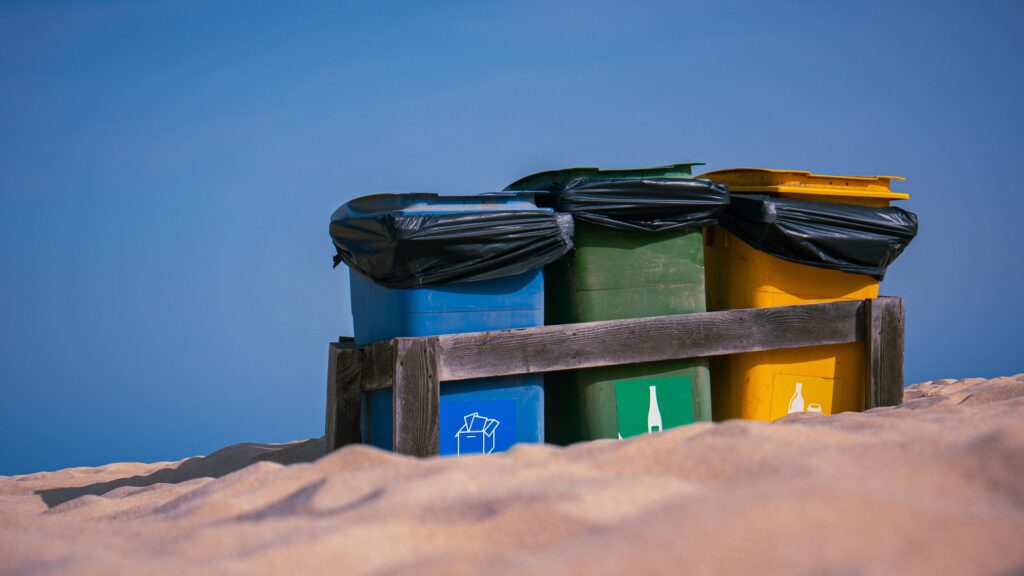
- Cans & Glass Bottles: Aluminum soda cans, steel soup cans, and glass jars are usually collected together in separate bins or bags.
- Cardboard & Paper: This includes newspapers, magazines, and shipping boxes. You should flatten your cardboard and tie it neatly with white string (found at any 100-yen shop) before putting it out.
- Oversized Trash (粗大ゴミ – Sodai Gomi): This is for big items like furniture, suitcases, mattresses, or appliances. You cannot just leave these on the curb! You must call the city to make a reservation, buy a specific “Sodai Gomi” sticker at a convenience store, and put the item out on the designated day.
Important Rules to Remember
Before you even bag your trash, check if your city requires official trash bags. Many municipalities require you to buy specific colored bags (often yellow, green, or blue) that have the city’s name on them. You can buy these at any grocery store, supermarket, or convenience store. If you use the wrong bag, the sanitation workers might leave a “rejection” sticker on your trash, and it will stay on the curb…
Also, timing is everything. Most cities require you to put your trash out early in the morning (usually by 8:00 AM) on collection day. Some areas strictly forbid putting trash out the night before because it attracts crows and stray cats.
Trash in Apartments
If you live in an apartment complex (mansion or apato), you might have it a bit easier. Most buildings have the rules clearly posted in the lobby or near the trash area.
Many modern apartments offer 24-hour trash disposal. This means there is a dedicated room where you can drop your bags off at any time of day or night, and the building manager handles the rest.
When I lived in Osaka, my apartment complex didn’t require specific colored city bags, so I could use any transparent bag. However, when I moved to the rural city of Tanabe, it was a huge shock! I had to buy specific bags for everything. I was so embarrassed because I didn’t know the rule, and my landlord was actually going through my trash and re-sorting it for me! To avoid that awkwardness, I highly suggest asking your realtor or landlord for the “Trash Map” (Gomi Map) as soon as you move in or even before.
Trash in Houses
Living in a standalone house (ich戸建て) has its perks! You have more space to store your bins outside, and it’s easier to keep your recyclables organized. However, the responsibility falls entirely on you.
In a house, you usually have to take your trash to a local “collection point” on the street shared by your neighbors. You must be very careful to follow the strict city schedule. If you miss the 8:00 AM window, you’re stuck with that trash for several more days. Plus, you are responsible for making sure the “crow nets” are secured. Japanese crows are incredibly smart and will rip open bags in seconds if they aren’t covered properly!
Happy Trash Sorting
It really is such a small thing, but I know it can feel overwhelming when you first move to Japan. Even after living here for eight years, I am still learning new things about the waste system!
If you are reading this and trying your best to sort correctly, you are already doing a great job. Being diligent about your trash is one of the best ways to be a “good neighbor” and ensure that Japan stays the clean, beautiful place we all love. Don’t worry too much~ if you’re confused, just ask a neighbor or use a translation app on the city’s trash poster as other options. It takes time, but you’ll find it easy after you get the hang of it.
Until the next article, please stay happy, stay healthy, and stay safe! 🙂
Stay tuned for more exciting content like this! Follow us on our social media platforms and check out our blog regularly to stay updated on the latest news, trends, and insider stories from Japan. Don’t miss out on future updates — sign up for our newsletter for exclusive content delivered straight to your inbox!