The “Visa Health Check” in Japan: When It’s Actually Required (and When It’s Just Paperwork in Disguise)
A Japanese visa can be hard to get, but for most applicants it is not a matter of their health. However, there are exceptions for some countries where you have to take a medical exam before getting a visa to live in Japan. In most cases the need for a health check is not a visa requirement, however, but a requirement from someone else. Read on to find out more.
Tokyo Room Finder readers often ask the same question in different ways: “Do I need a medical exam to get a Japan visa?” The answer is reassuringly unglamorous: for most Japanese visa/status-of-residence categories, Japan does not impose a broad, mandatory “full medical exam” requirement as part of the standard visa process. Instead, you’ll run into (1) one major government-mandated exception (tuberculosis pre-entry screening for certain nationals), and (2) “soft requirements” from employers, schools, or programs that feel mandatory because your sponsor says they are. Japan’s Ministry of Foreign Affairs (MOFA) also stresses that visa requirements vary by purpose and by the Japanese diplomatic mission where you apply, so you must follow the embassy/consulate checklist for your case.
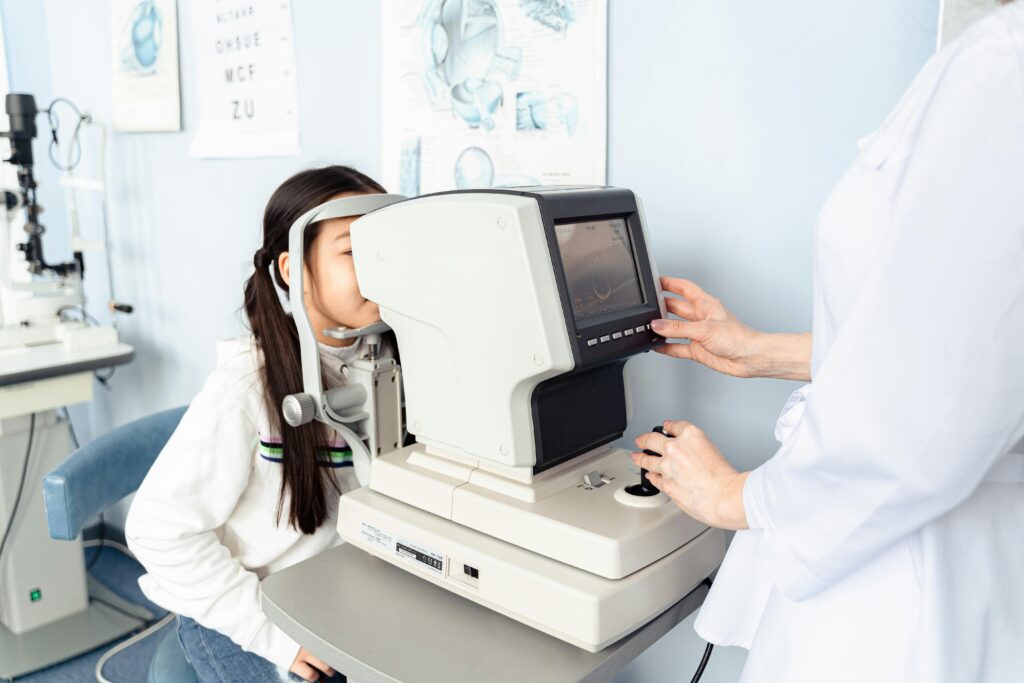
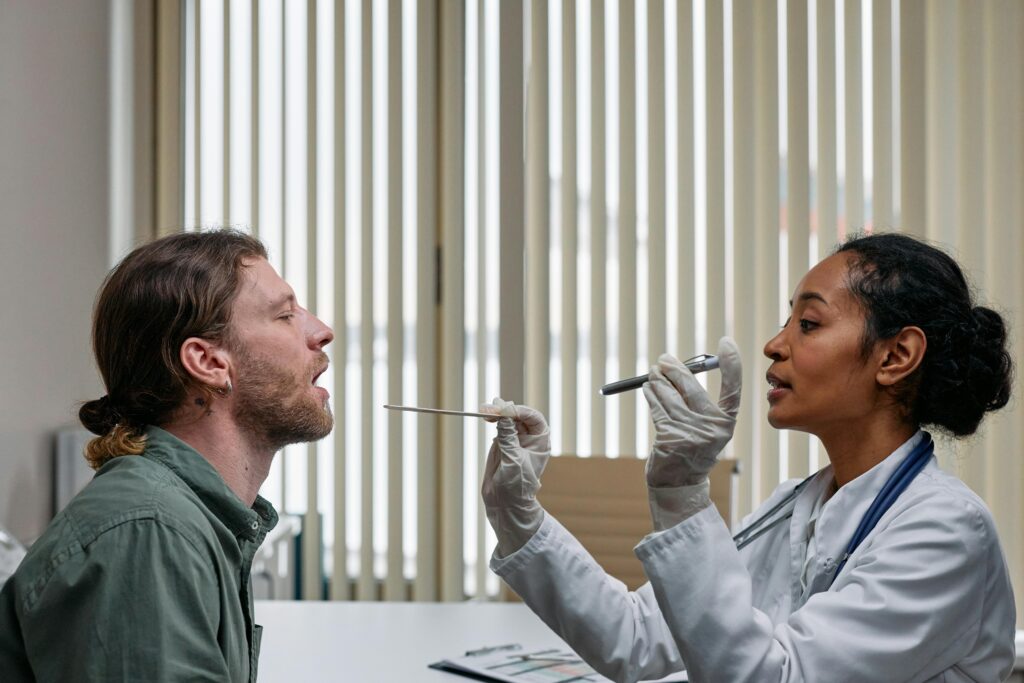
An eye sight check may be required by the school, but not the government.
Below is the practical breakdown by visa type and situation — solo vs. family, employee vs. non-employee — and what it costs, where you can do it, and whether you’ll face it again at renewal.
1) The big, real government requirement: JPETS (Pre-entry Tuberculosis Screening)
Japan’s Ministry of Health, Labour and Welfare (MHLW) introduced Japan Pre-Entry Tuberculosis Screening (JPETS) to reduce the risk of imported active TB. Under JPETS, certain applicants must undergo a TB screening (chest X-ray; sputum test at a doctor’s discretion if needed) at a designated “Panel Clinic” before traveling, and obtain a TB Clearance Certificate.
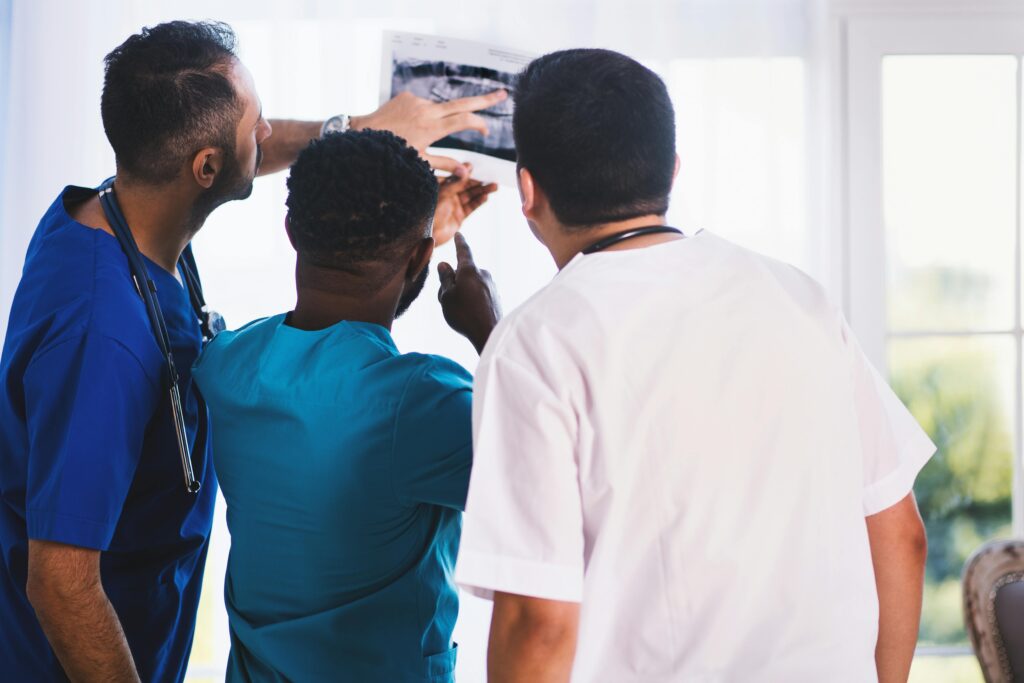
Lung X-rays are part of obtaining the JPETS certificate.
JPETS applies to nationals of the Philippines, Vietnam, Indonesia, Nepal, Myanmar, and China who intend to enter Japan and stay as mid- to long-term residents (with specific exclusions), or under Designated Activities for Digital Nomad and the spouse/child of Digital Nomad. It explicitly excludes re-entry permit holders from the screening obligation.
JPETS is nationality-based, but there’s a critical nuance: if you can prove (via residence permit or equivalent documentation) that your current place of residence is outside the target countries/regions, you can be exempt.
JPETS screening is done in the target countries at designated Panel Clinics (not “any clinic anywhere”). The official JPETS site and MHLW outline specify the Panel Clinic system and the screening flow.
MHLW states clearly:
The cost is borne by the applicant
Cost and issuance time vary by medical facility
In other words, there isn’t one official uniform fee you can quote — your Panel Clinic sets pricing.
The TB Clearance Certificate is valid for 180 days from the chest X-ray date, in principle, and you may be asked to present it even after arrival.
But there are exceptions. MHLW’s JPETS outline lists categories that are temporarily exempt, including (among others) certain JET participants, some JICA trainees, some scholarship students, certain commissioned training programs, some EPA nurses/care workers, specified skilled workers, and other designated-activity categories.
Checking for tuberculosis startd with listening to the lungs.
JPETS is not “harder” because you have a family — but it is multiplied. Each family member who is a covered national and entering as a mid- to long-term resident may need to do their own screening and get a certificate.
2) “Visa classes” and Whether They Normally Require Health Checks
For work visas (Engineer/Specialist, Instructor, etc.), there is typically no immigration-mandated medical exam as a standard requirement. What often happens is a company-mandated medical check as part of employment compliance.
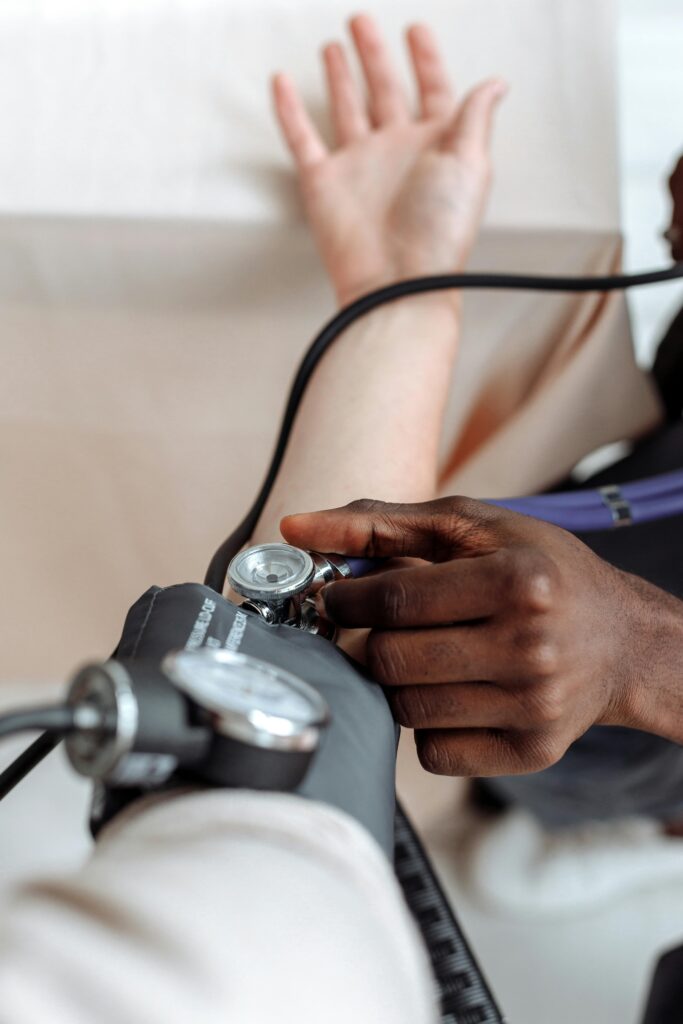
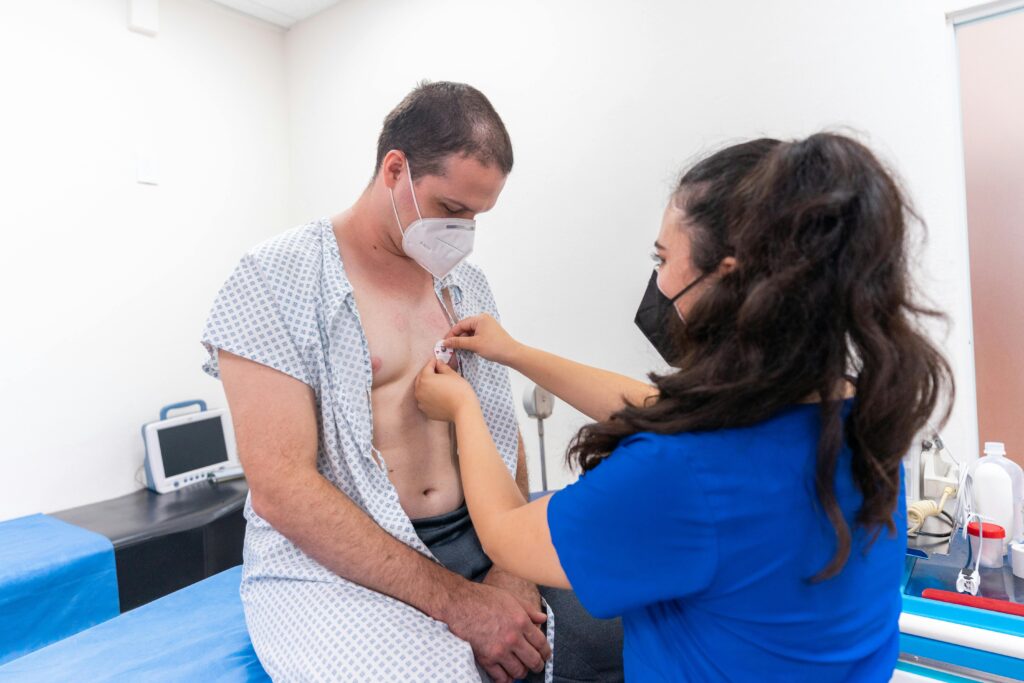
Checking the blood pressure is part of the regular health check.
Japan’s employer obligations are real: Employers must provide a medical examination at the time of employment and a periodical medical examination annually for regularly employed workers. You may see the vans parked outside office buildings, with lines of “salarymen” waiting to do the lung or stomach X-ray. That is not “for the visa” — it is ordinary occupational health compliance.
For student visas, there is typically no blanket immigration medical exam requirement, but schools frequently require health documentation for enrollment and public-health management. For example, the Institute of Science Tokyo (formerly Tokyo Tech) requires newly admitted international students to submit a designated health certificate for infectious-disease control purposes. This is usually a school requirement, not a national visa rule.
Schools may require future students to take a health checkup.
For dependent or family visas, in most cases, dependents follow the same overall “no general medical exam” pattern — except where JPETS applies by nationality/entry category. But there is one exception.
JPETS explicitly names Digital Nomads (and spouse/child) as covered for the TB screening framework when applicable by nationality. (Separately, Digital Nomad schemes often emphasize proof of health insurance — important, but not the same thing as a medical exam.)
3) Can You Do the “Required Health Check” in Japan Instead of Your Home Country?
For JPETS: generally no — the process is designed as pre-entry screening at Panel Clinics in the target countries, with the TB Clearance Certificate submitted during COE/visa processes.
For non-visa required checkups, like EKG, they can be done in Japan.
For employer or school health checks: often yes, and commonly done in Japan after arrival (because it’s tied to onboarding or enrollment). The exact tests, format, and timing are set by your employer/school. For school health checks, you may have to pay for it yourself; for company employees, the cost is always covered by the company.
4) Health Check Costs beyond JPETS: What People Actually Pay (and why it varies)
Because most “health checks” foreign residents encounter are employer/school-driven (not visa-driven), cost is usually a sponsor issue:
Many employers arrange the check and either pay or subsidize it (because they are obligated to provide exams).
Universities may require a certificate, and students pay a clinic fee (varies by institution and clinic).
For JPETS, cost variability is explicitly confirmed by MHLW (facility-dependent).
“Does the cost vary by area?”
For JPETS, it varies by Panel Clinic and by country context (pricing is not standardized in the MHLW outline).
For employment/school exams: it varies by provider and exam package, not by Tokyo neighborhood in any official “ward-based” sense.
Japanese clinics are tied to the insurance system and charge the same everywhere in Japan.
5) Does Visa Renewal Require a New Health Check?
In general, renewal of a Status of Residence (extension of period of stay) is document-driven, and Immigration Services Agency materials emphasize that the required application forms and supporting documents depend on your status and activity, not a universal medical re-check.
Visa renewals do not require a new health check.
JPETS and renewals: JPETS is framed as pre-entry screening for people who intend to enter and stay mid- to long-term, and it explicitly excludes re-entry permit holders. Once you have lived in Japan, you are assumed to be at very low risk for TBE.
6) The Tokyo Room Finder Checklist (the “don’t get surprised” version)
If you are a solo worker
Expect no immigration medical exam unless JPETS applies to your nationality/entry path.
Expect an employer medical exam at hire and annually.
If you are moving with a family
JPETS can become a multi-person requirement (each family member may have to be checked).
School requirements may add extra certificates for children, depending on the school.
If you are a student
Your visa process is usually COE-heavy, but your school may require a health certificate even if immigration doesn’t.
If you are from a JPETS target country but live elsewhere
You may be exempt if you can prove residence outside the target countries/regions.
Stay tuned for more exciting content like this! Follow us on our social media platforms and check out our blog regularly to stay updated on the latest news, trends, and insider stories from Japan. Don’t miss out on future updates — sign up for our newsletter for exclusive content delivered straight to your inbox!
Wisterian Watertree
Wisterian Watertree has been living in Tokyo and other Japanese cities for
the past 20 years, helping visitors get the best of Japan. He is the author of two
books, ”Take Your Toddlers To Tokyo” and ”Driving In Japan”, with more on the
way. You can read more on his website Japan Top 10, https://japan-top-10.com.