Japanese Restaurant Etiquette: Simple Mistakes That Can Ruin Your Meal
Japanese restaurants take a special pleasure in serving their customers, not just filling them up. But as a customer, you have to reciprocate. Read on to find out how.
Respect at the Table: Why Etiquette Matters in Japan
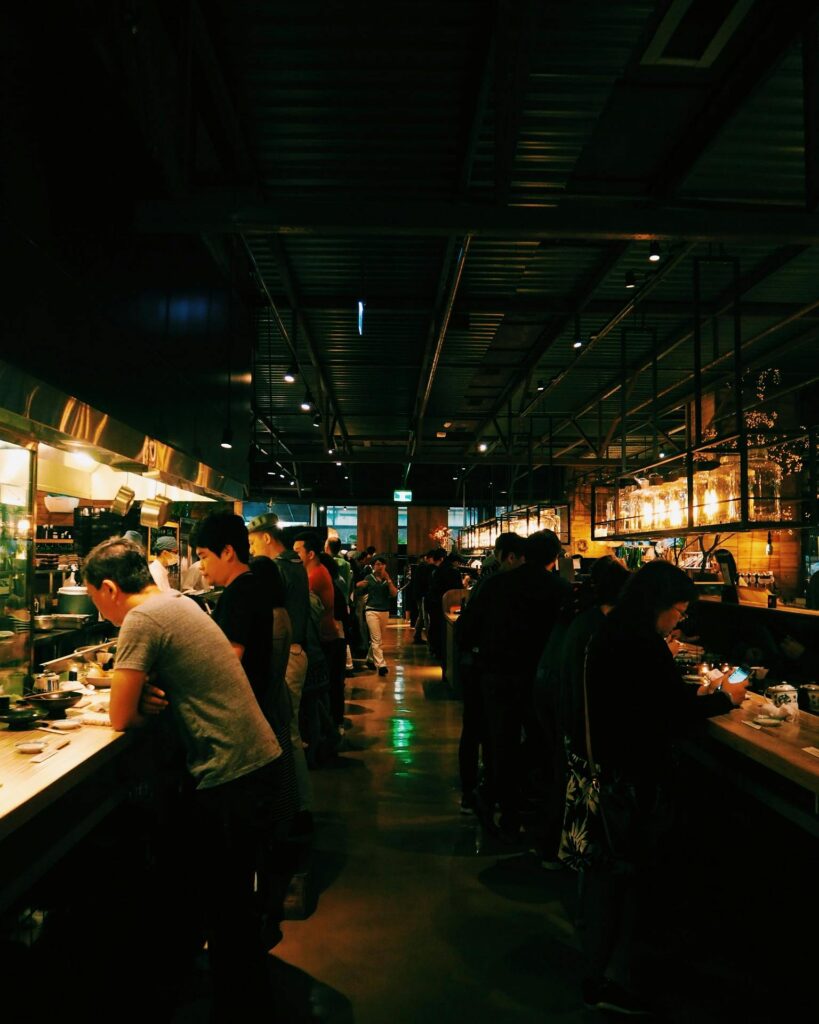
A fancy Japanese restaurant is a special place. However, even a simple izakaya has its own rules that you must follow. Breaking them will not result in your being thrown out (unless you behave VERY badly), but they will result in the staff becoming gradually more and more reluctant to serve you. You might also get sued if you behave unhygienically, like drinking from the soy sauce bottles. Some YouTubers thought this was fun, but lost in court and lost their entire family savings and their houses, plus future income (with an injunction against the behavior). So try to behave at least as well as you would at home.
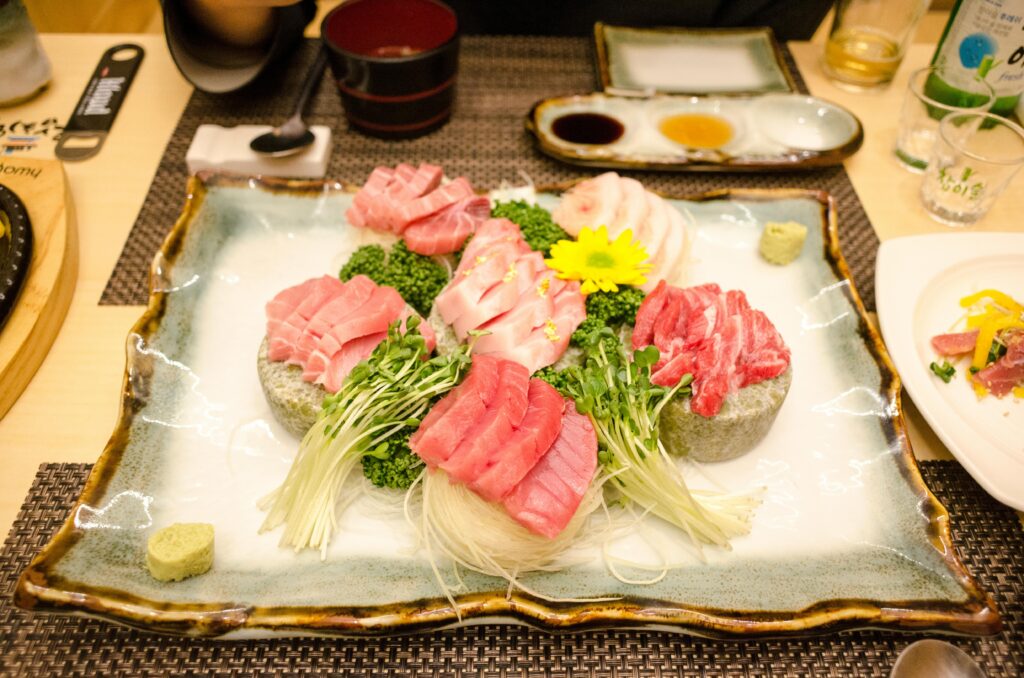
Eat small morsels of many dishes – the mixture is part of the experience.
For starters, there are two types of restaurants in Japan: Those where you serve yourself, and those where you are served.
They usually differ only in two ways: The price and whether you intend to consume alcoholic drinks. There have been occasional experiments with self-service for beer, but they typically end up closing down after a few months.
Self-Service vs Full-Service Restaurants
Where you serve yourself, as in ramen restaurants, teishoku places, and any restaurant with a vending machine up front, you bring your own tray to the table and remove it after eating as well. There are either chopsticks in a little box on the table, or you take them when you take the tray.
Set meals are often served in restaurants where you bus the table yourself.
Usually, however, unless it is a place where you went for lunch, a waitperson will show you the table and hand you menus. At least one of those is normally a drinks menu. Often, there are ”tabehoudai” (食べ放題) and/or ”nomihoudai” (飲み放題) offers, which mean” eat as much as you can” and ”drink as much as you can”. The menus in either case will be limited, and the offer only applies for a set time (usually 60 or 90 minutes). But if you were planning on having a reasonably wet drinking session, this is a great offer. Stick with beer, skip the sours, though. They will be watered down beyond recognition.
”Drink all you can” often means ”drink all the water you can.”
When you are seated, things do NOT work like in America, where the waiter will do everything to please you, up to a lap dance. Remember: There are no tips in Japanese restaurants, so you can not curry the waitperson’s favor by overpaying them. In Japan, you get paid for what you do — and, you will find, they take pride in it.
Once you are seated, the waitperson will not come back. Until you call them, that is. There is a small button on the table connected to a bell in the kitchen, and when you press that, they will appear faster than you can say ”oishiimono tabetai”. But if you do not press it, they will leave you alone.
Really fancy – and old – restaurants present traditional menus.
You order dishes from the menu (which, nowadays, usually has photos in it). The photos usually make the dishes appear much larger than in reality, so be prepared to order a few and share. You will appreciate the different flavors, since, however small, they will be lovingly cooked and appear fast.
There is a hybrid in between restaurants where you order from a vending machine and places where you order from the waitress that have started to appear, and that is places where you scan a QR-code with your mobile, and then order from the menu which appears on your phone (connected to your table, too). The job of the staff becomes only to bring the food and drinks. An advantage of this is that the menu can be shown in English, or Chinese, Korean, or Swedish, for that matter.
No Tipping in Japan
As long as you accept there is some risk of mistranslation, but the automated translations of single words from Japanese to English have become so much better now that this makes sense.
While general good behavior and remembering that tipping is a no-no in Japan will get you far, there are a few restaurant-specific tips to remember. Not following them will at the very least surprise, if not positively outrage, the Japanese customers.
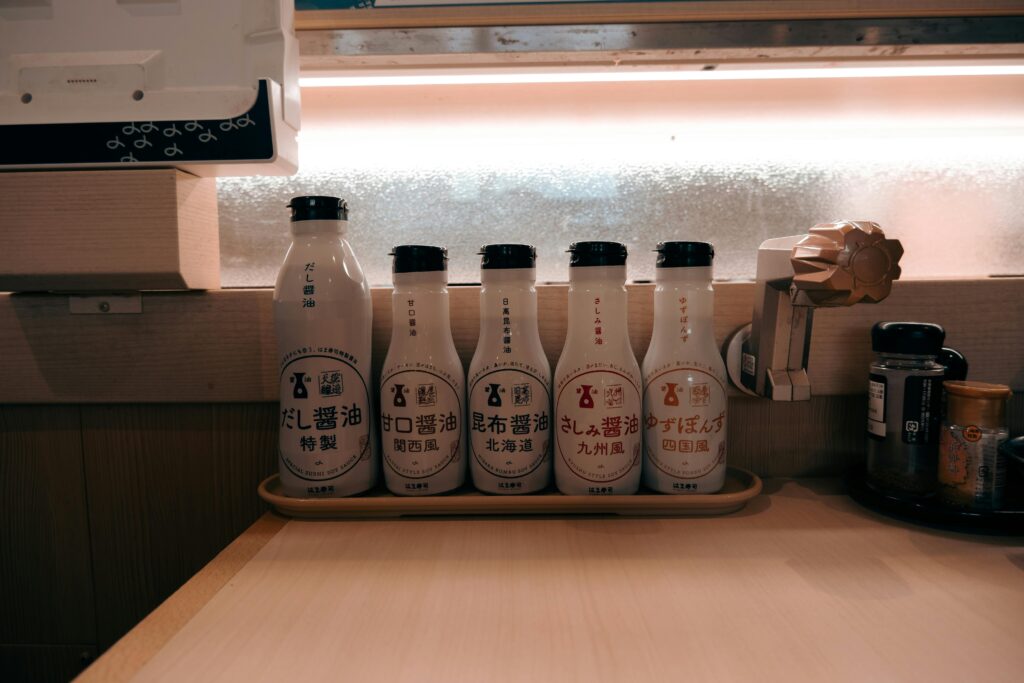
Take just a little soy sauce – especially when you have a choice.
For starters, how to behave in a kaiten-zushi restaurant. This Japanese culinary invention, where the dishes go round and round on a conveyor belt, has taken a huge hit during the pandemic. Many places have restructured the way they serve customers; the dishes are now sent directly instead of going around in front of everyone.
In any sushi restaurant, just take about a teaspoon of soy sauce from the soy dipping plate. And take a small dollop of wasabi, no bigger than a pea, and stir it into it. Most ready-made sushi contains a very small amount of wasabi (unless you order ワサビ抜き, wasabinuki, which means made without wasabi. It is good to remember that if you have kids, they tend to react more strongly to the spicy flavor. The chef has worked hard to create the balance of flavors in the dish, and smothering it in wasabi does both the chef and your palate a disservice.
Pick the sushi you want – but only that.
If you find yourself in an old-style kaiten-zushi restaurant, you pick the dishes you like from the conveyor. But you should only take one at a time, and never put a plate back on the belt. Even if you picked the wrong thing.
When Slurping Is Actually Polite
There is one more kind of restaurant where Japanese table manners can be confusing. The Japanese are quiet eaters, even going so far as to hide their mouths behind a hand as they ingest and chew. In Edo-era Japan, the display of teeth (and hence eating) was seen as extremely gross and aggressive, which is why women blackened their teeth (with powerful chemicals). Eating is very subdued in Japanese restaurants.
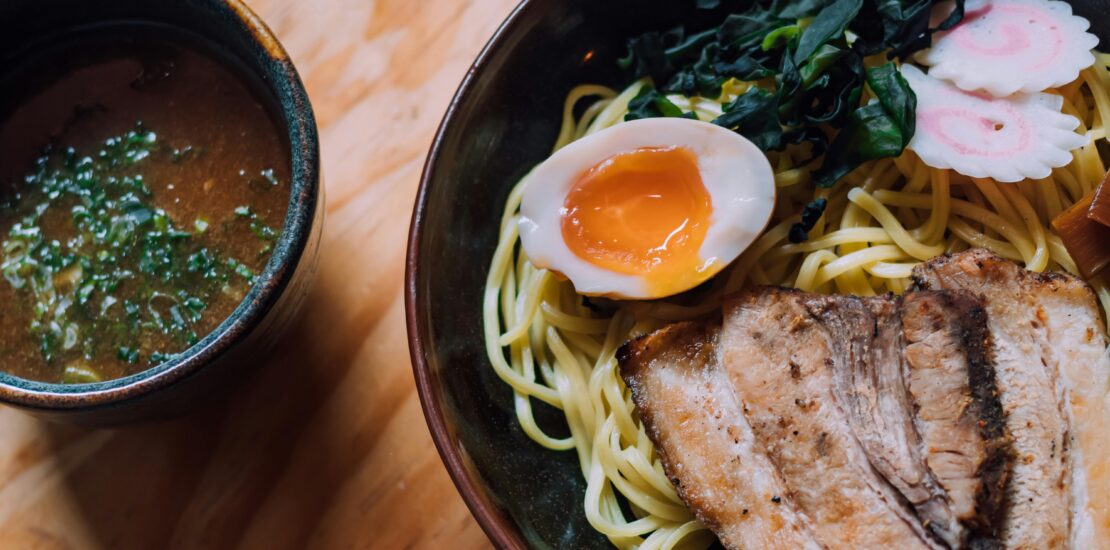
Slurping is fine in ramen restaurants.
Except, that is, in noodle restaurants. Here, the Japanese slurp away with gusto, making loud sucking noises as they ingest the noodles. The reason is, supposedly, that the noodles are supposed to be served piping hot, and to bring down the temperature so as not to burn your mouth, you slurp them in.
You will find people slurping in ramen restaurants, and to a much lower extent in soba and udon places. In udon places, you may also drink the broth, or maybe eating would be a better word, as there are tempura crumbs and cut onions to make it easier to eat.
In ramen restaurants, however, you do not drink (or eat) the broth, however tasty it may have been. Only a foreigner would even try to drink the leftover ramen soup.
Stay tuned for more exciting content like this! Follow us on our social media platforms and check out our blog regularly to stay updated on the latest news, trends, and insider stories from Japan. Don’t miss out on future updates — sign up for our newsletter for exclusive content delivered straight to your inbox!
Wisterian Watertree
Wisterian Watertree has been living in Tokyo and other Japanese cities for
the past 20 years, helping visitors get the best of Japan. He is the author of two
books, ”Take Your Toddlers To Tokyo” and ”Driving In Japan”, with more on the
way. You can read more on his website Japan Top 10, https://japan-top-10.com.