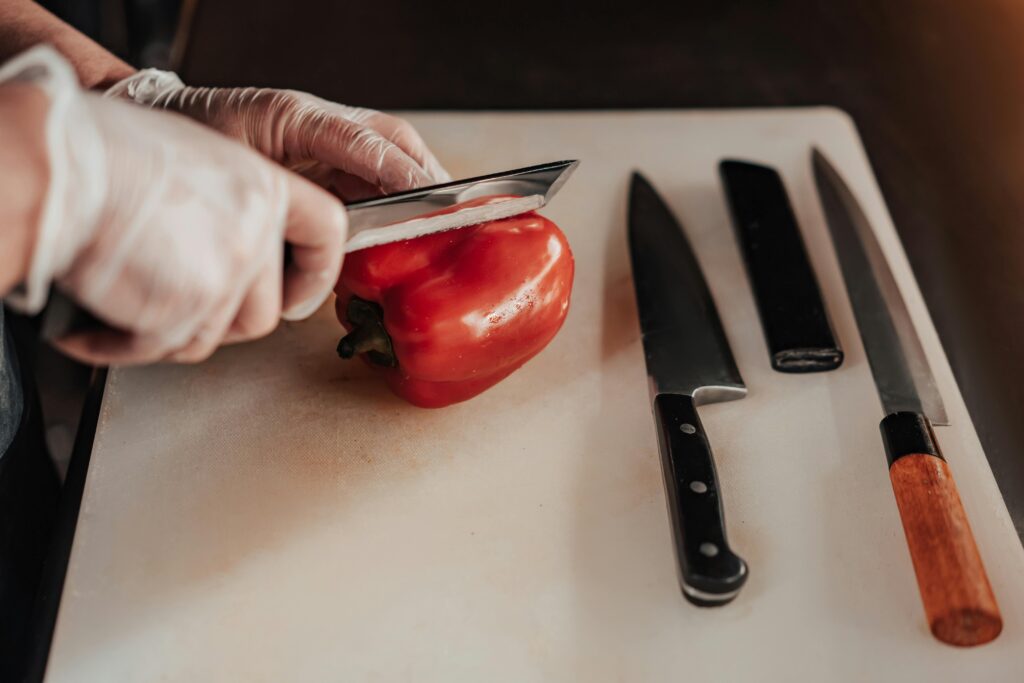
A Japanese sword should be so sharp that it could cut through the body of a man with one stroke. But when peace came, the swordsmiths had to find new outlets for their art. Today, Japanese kitchen knives built on that heritage are rightly famous. And surprisingly affordable. Read on to find out more.
The swordsmiths of Japan are half craftsmen, half magicians. Japanese swords were the ultimate symbol of samurai culture, and the sword a half-mystical entity. Not to speak of a supreme weapon of war.
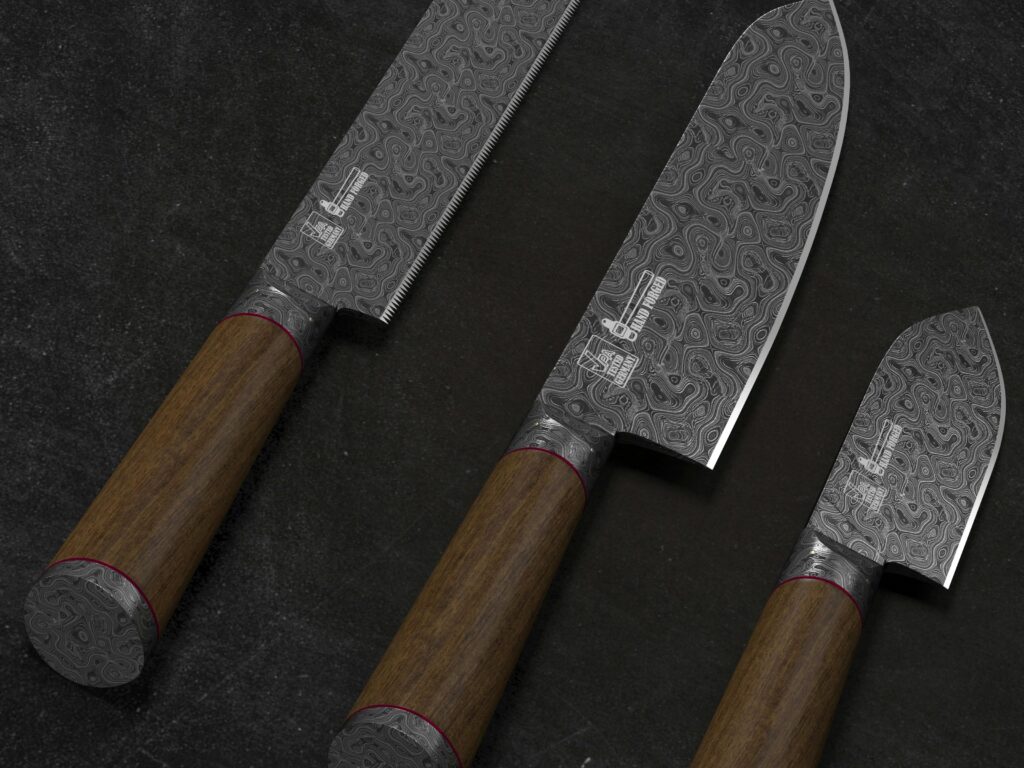
Today, museums — especially those dedicated to special people of the past — often exhibit swords. It is hard not to be captured by the sleek lines and the high metal polish, or often enough, the visible layering of different kinds of steel that makes the swords so sharp and constitutes the high craft of the swordsmith’s art.
Japanese craft knives are made like ancient swords.
But those swords are priceless — literally, because there is a strict export prohibition on antiques, and you can not bring them out of the country without permission. Should you find a Japanese sword for sale, it is most likely a copy, frequently made in China. When collectors pay millions of yen for special swords, taking exquisite care of them by dusting with ram’s horn powder and polishing with special cloths, a sword will not come cheaply.
But that does not mean you can not avail yourself of the swordsmith’s art. Because knives — some made by actual swordsmiths — are reasonably priced, if you know where to look. And there is no export license for knives. Just remember to put them in your checked luggage.
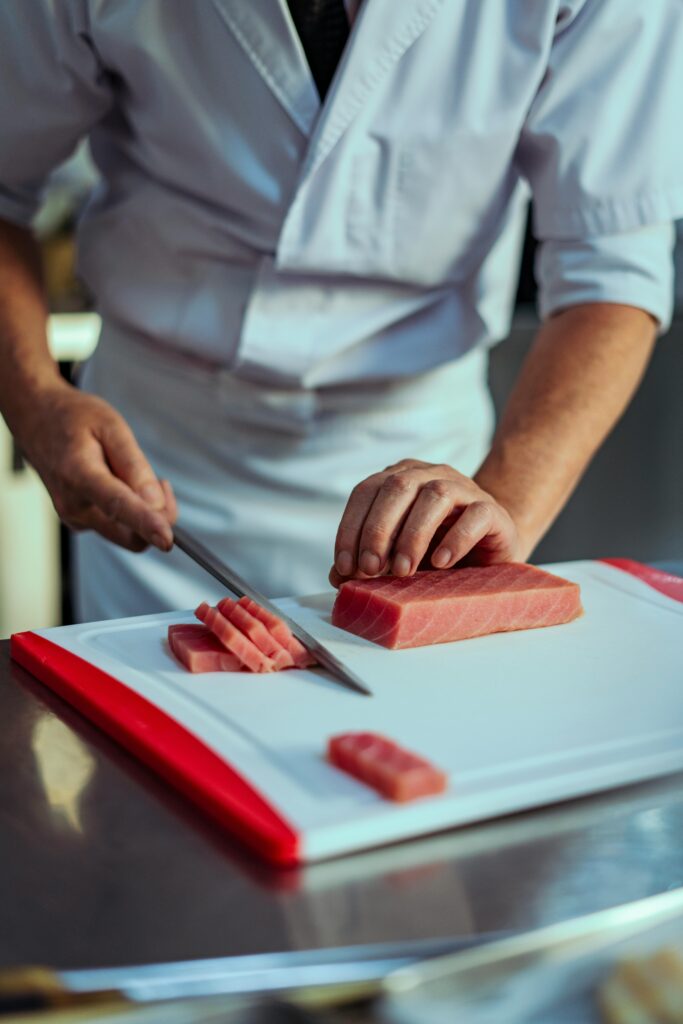
The sashimi chef actually makes the food taste better by cutting it right.
Why Sharpness Matters More Than You Think
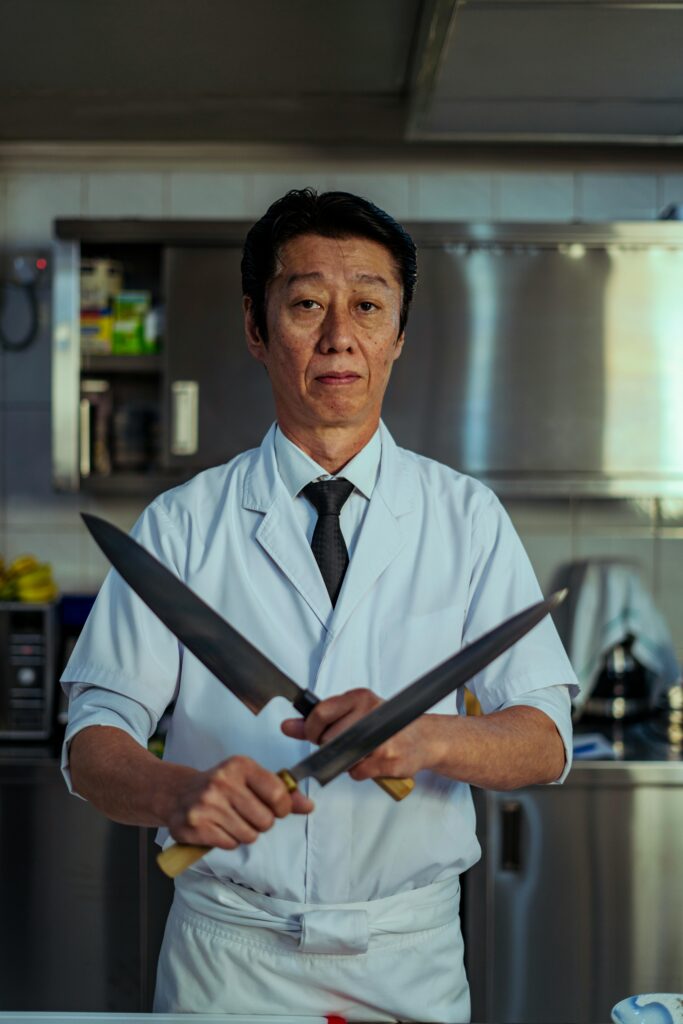
Strange as it may sound, Japanese knives actually make the food taste better if you know how to use them right. A really sharp knife will cut the fish (or meat) exactly the right way. This is part of why sushi in a really fancy restaurant tastes better than in a cheap place, and why many restaurants run by chefs in their 80s have a steady following. They have simply spent so many years perfecting their art that they can not help but make the dishes they serve tasty.
The ability to cut fish perfectly sits in the mind and hands of the chef, but to reach perfection, they also need perfect tools. And that is where the knife comes in.
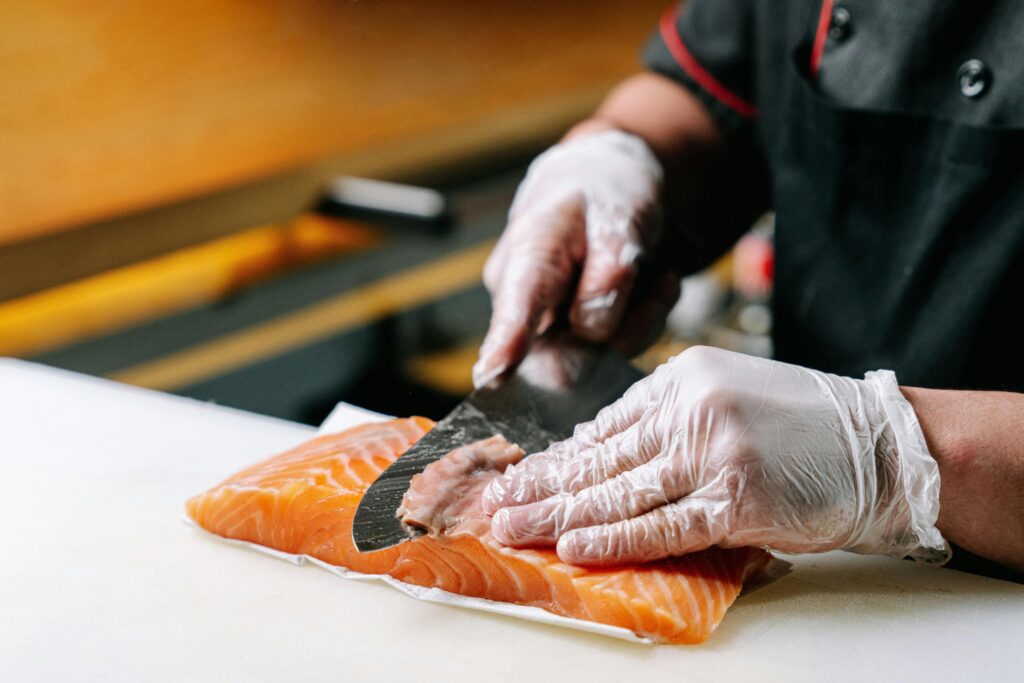
You need a special knife to cut fish for sushi and sashimi.
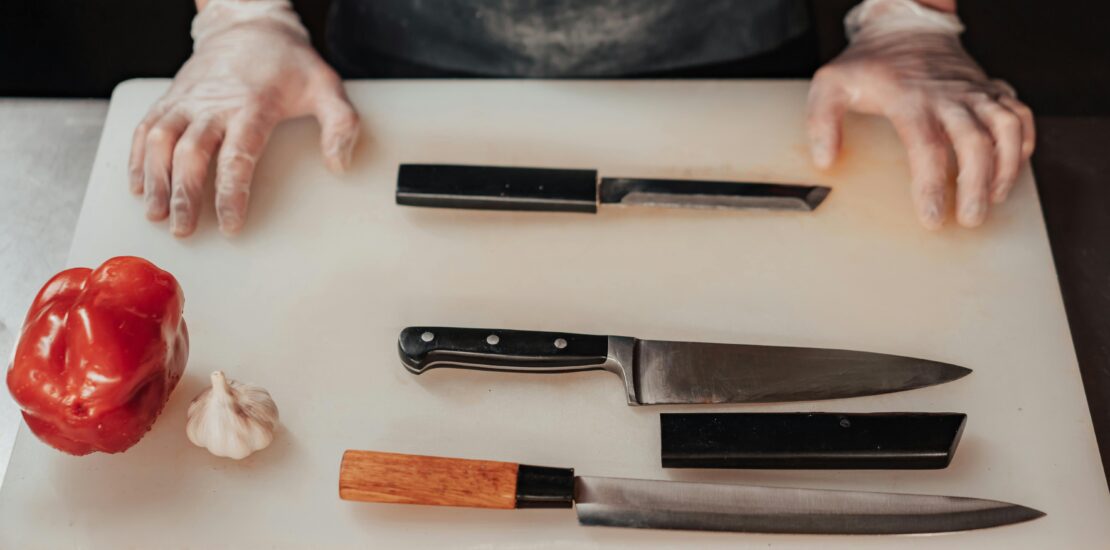
A yanagiba, 柳刃包丁, sashimi knife (that is used to cut fish for sushi and, of course, sashimi) is long and narrow, looking almost like a dagger. And it has to be so sharp that you could use it to split hairs – literally.
But it is also highly personal. The length of the blade and the balance of the knife – where the cutting edge rests in relation to how you hold it – is perfectly adapted to the chef and his style of work. Female sushi chefs are still a rarity, but the same thing still applies regarding knives.
Fish is not the only food that benefits from a special knife.
Choosing the Right Knife for Every Ingredient
It would be a strange kitchen where you would only be cutting fish, however. Japanese meals consist of a variety of ingredients, and they all require special knives to be cut the best way. And while some foods require the same precision as sashimi – chicken, for instance, or wagyu when served the Japanese way – there are others where precision is less important than brute force.
What is common for all traditional Japanese knives – and Japanese swords – is that the edge is formed by one side of the knife being straight, and the other side tapering into it, forming a very narrow triangle.
Be careful to get the right kind of knife.
Left-handed chefs may want to pay attention here, as a knife made for right-handed people will cut less well if used the wrong way around. It also means the honing of the knife requires special attention, so you sharpen the edge correctly.
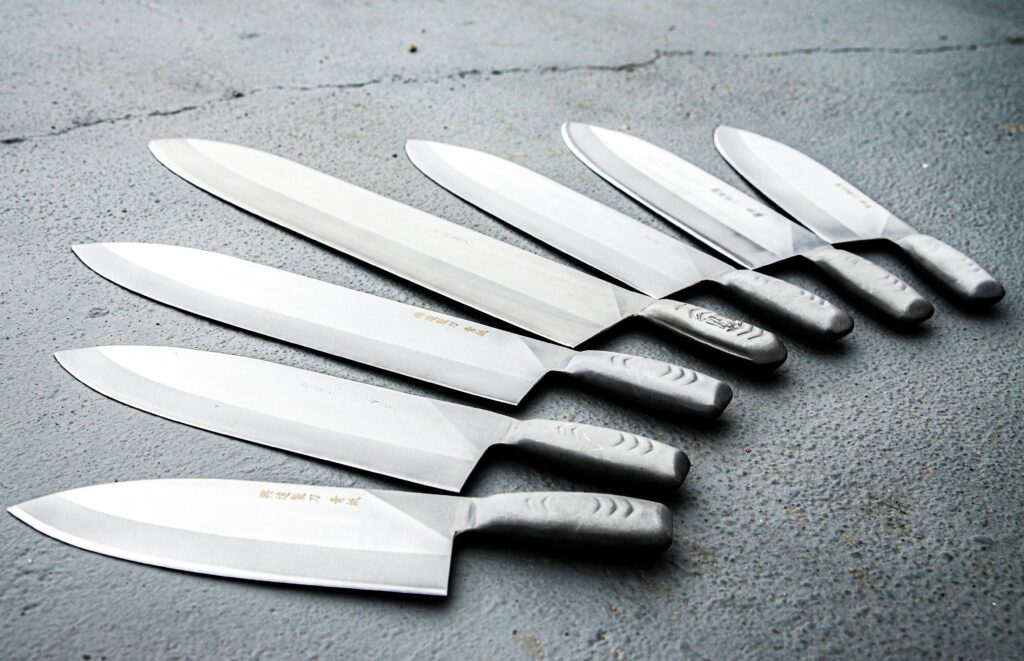
Somewhat thicker and meant to be cutting closer to the bones (a tuna fish can have bones as thick as those on a pig) is the deba, 出刃, which looks more like a knife used in Western cuisine, although with a straight edge.
The Global brand of knives have changed the Japanese kitchens too.
Beyond Tradition: Modern Knives in Japanese Kitchens
Western-style knives have gradually crept into the Japanese kitchen, especially smaller knives like vegetable paring knives. Nowadays, these are often ceramic rather than made from steel, but that does not mean they are not sharp. Although it does mean they can not be sharpened as easily as a steel knife. Make sure to get one made in Japan, and not a Chinese imitation – sometimes even made from plastic.
The mind of the chef is as important as the knife.
To make sure the knife is made in Japan is a condition for making a good purchase. While there are Chinese copies that can be perfectly useful in the kitchen, the Yamanote Spirit of a true Japanese knife gives it something extra — at least in the mind of the chef.
There is a huge variety of specialised versions of the yanagiba and deba, so be careful to select one that is generic, unless you are specifically looking for a knife to gut eels or cut vegetable decorations. Otherwise, you may end up bringing home a specialised octopus knife, or one used to prepare puffer fish.
The main food in Edo-era Japan was rice and vegetables, at least among working people. Protein was a luxury topping. So it should come as no surprise that vegetable knives, while not as glorious as the yanagiba, are legion in the Japanese kitchen. And that many dishes actually do become better when prepared with a really sharp knife — even such a humble dish as the simple shredded carrot.
The humble vegetables also requires a specialized knife.
This is thanks to cutting rather than shredding the vegetables. The vegetable knife usually looks like a deba, but shorter.
Other vegetable knives look completely different, however. The Chinese-style cleaver is very common in the Japanese kitchen, used for the preparation of hotpots Chinese style, but also for everyday cooking.
Special Udon Knife
There is another knife that looks similar to the Chinese-style cleaver, but with a longer and flatter blade. It has to be as sharp as the yanagiba, but it is not used to cut vegetables, fish, or meat, but noodles. Traditionally, udon, soba, and ramen are all prepared by making thin sheets of the dough, folding them, folding them again, and then cutting thin slices across the pile of sheets, forming the noodles. If the knife is not sharp, it will compress the noodles, compromising the taste.
Stay tuned for more exciting content like this! Follow us on our social media platforms and check out our blog regularly to stay updated on the latest news, trends, and insider stories from Japan. Don’t miss out on future updates — sign up for our newsletter for exclusive content delivered straight to your inbox!
Wisterian Watertree
Wisterian Watertree has been living in Tokyo and other Japanese cities for
the past 20 years, helping visitors get the best of Japan. He is the author of two
books, ”Take Your Toddlers To Tokyo” and ”Driving In Japan”, with more on the
way. You can read more on his website Japan Top 10, https://japan-top-10.com.