A thoughtful guide to Chichibu, Saitama, exploring its mountains, shrines, festivals, industrial history, food culture, and why it has long been one of Tokyo’s most intentional escapes.

A thoughtful guide to Chichibu, Saitama, exploring its mountains, shrines, festivals, industrial history, food culture, and why it has long been one of Tokyo’s most intentional escapes.
Tokyo has many exits, but few feel as deliberate as the one toward Chichibu. The trains don’t just take you somewhere else; they ease you out of the city in layers as you roll over the Kanto plain and into the depths of Saitama — concrete thinning into suburbs, suburbs dissolving into hills, and hills finally closing around you like a held breath. Chichibu sits in western Saitama Prefecture, roughly 80–100 kilometers from central Tokyo depending on the route, yet culturally it feels much farther. And that distance, carefully managed and easily bridged, is exactly why Chichibu has been a Tokyo escape for centuries.
In Japanese, Chichibu is often described as as 山と祭の町 ”yama to matsuri no machi” — a town of mountains and festivals. But Chichibu is also a place where premodern belief systems, early industrial history, and contemporary and traditional leisure tourism overlap.
One of Chichibu’s strengths is how intentionally it separates itself from Tokyo without making the journey difficult. From Ikebukuro, Seibu Railway’s Limited Express Laview reaches Seibu-Chichibu Station in about 80 minutes. This is a sightseeing route more than a commuter one, even though special morning and evening express trains are intended to take commuters as rapidly as possible from the countryside into the city.
The Laview train is designed for comfort, relaxation, and to capture the views from the train as the cityscape recedes.
Alternatively, the Seibu-Ikebukuro line offers a much slower alternative (but without the Laview surcharge). JR routes via Kumagaya or Hachioji offer even slower, more segmented journeys, historically associated with freight and regional travel. The existence of multiple access routes is important: Chichibu was never an isolated mountain village, but a node connecting interior regions to Edo (Tokyo). Japanese historical geography texts regularly note Chichibu’s role in supplying timber, silk, and limestone to the capital.
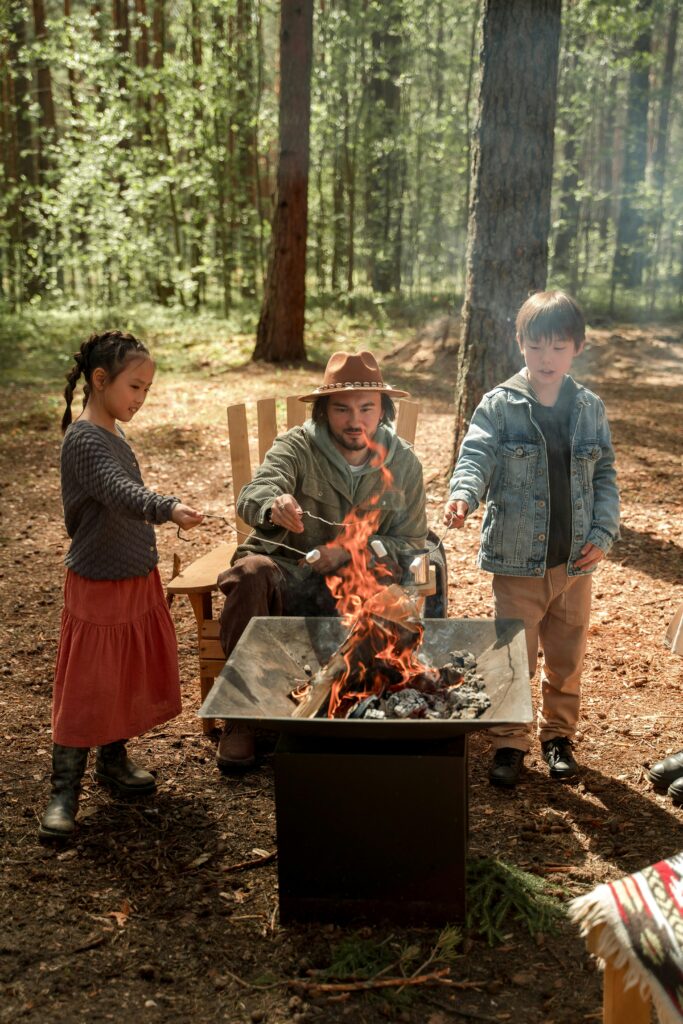
Chichibu is encircled by mountains, but they don’t overwhelm the town. Instead, they define its edges. The Chichibu Mountains—including Mount Bukō, Mount Ryōkami, and Mount Mitsumine — form a kind of protective amphitheater. The region is part of the Chichibu-Tama-Kai National Park, emphasizing biodiversity, forest preservation, and long-established hiking routes – as well as activities for city children often confronted with real forest for the first time.
Mount Bukō, with its stark, quarried face, is particularly striking. It embodies Chichibu’s industrial past, where limestone mining supported cement production crucial to Japan’s modernization. Japanese municipal histories are careful not to romanticize this entirely; the mountain is both a symbol of prosperity and environmental cost. Seeing Bukō from town is a reminder that Chichibu has always negotiated between use and reverence.
If Chichibu has a spiritual center, it is Mitsumine Shrine. Located deep in the mountains, the shrine is dedicated to deities associated with wolves, protectors against fire and misfortune. Japanese religious sources highlight Mitsumine’s unusual iconography and its historical role as a pilgrimage site connected to Shugendō mountain ascetic practices.
Reaching Mitsumine requires effort — bus plus a bit of walking (no wheelchair access), and that effort is part of the experience. Unlike urban shrines designed for casual visits, Mitsumine demands attention. The air is colder than on the plains, the forest denser, and the silence heavier. Many Japanese visitors describe the shrine as 気が強い, ”ki ga tsuyoi”, which means a power spot or place with strong spiritual energy.

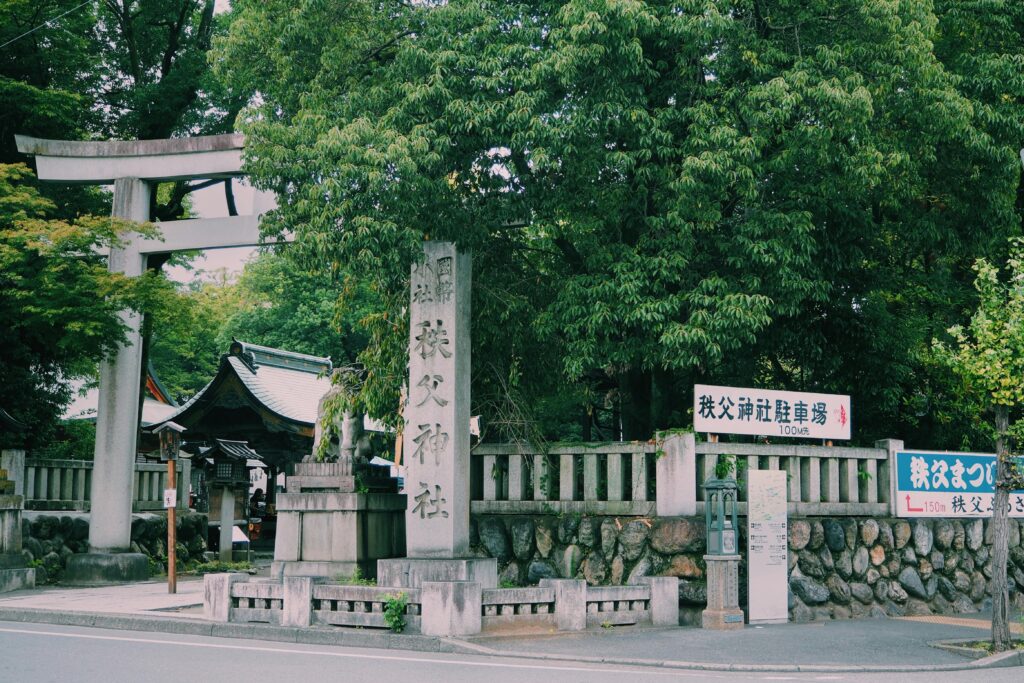
Closer to town, Chichibu Shrine anchors daily life in the town. Founded over 2,000 years ago according to shrine records, it is best known today for its Edo-period carvings, including playful motifs that contrast with the severity often associated with shrine architecture. Japanese cultural property listings emphasize these carvings as nationally significant.
The shrine is also the heart of the Chichibu Night Festival (Chichibu Yomatsuri), held every December. This festival is one of Japan’s three major float festivals and is registered as UNESCO Intangible Cultural Heritage. The event is both spectacular and resolutely local. Massive wheeled floats pulled through narrow streets, fireworks exploding in the cold mountain air, and neighborhoods working together in ways that feels increasingly rare in modern Japan. It would not be wrong to characterize the Chichibu Yomatsuri as a festival of the Yamato spirit.
Chichibu also hides its role in the early modernization of Japan, as a perhaps surprising industrial center. During the Meiji period, the region became a center of silk production, tying it into global trade networks. The Chichibu Silk Museum and related local histories document this era in detail, including the harsh labor conditions that accompanied industrialization.
The Chichibu Incident of 1884—a peasant uprising linked to economic hardship—is a key moment in Japanese social history and is frequently referenced in academic and local historical sources. While not foregrounded in tourism brochures, this event gives Chichibu a political depth that separates it from purely scenic destinations.
Chichibu’s natural attractions are abundant, but they rarely feel staged. Nagatoro Gorge, located slightly east of central Chichibu, is a designated scenic spot where layered rock formations line the Arakawa River as it starts the long route through the Saitama plains to Tokyo Bay. The gorge can be navigated with small boats, and riverboat rides have existed there since the early 20th century.

Chichibu’s culinary identity is modest but grounded. From the food perspective, this is a typical mountain town, the local specialities making the most of resources eked out from patchy fields and garnished from the extensive forests. Local specialties such as waraji katsu (oversized pork cutlet), pickled mountain herbs, and handmade soba appear consistently in regional food guides. Unusually, the emphasis is on portion size and comfort rather than refinement.
The region has also gained attention for craft alcohol production. Chichibu Distillery, founded in 2008, is frequently cited in Japanese and international whisky circles as one of Japan’s most respected small producers of high quality malt whiskies. While visits are limited, the distillery’s presence has quietly rebranded Chichibu as a place where tradition and modern craft intersect.
Chichibu, with its mountain location (that includes, as so often in Japan, onsen or hot springs). Accommodation ranges from small ryokan to guesthouses, many of which are family-run, greeting visitors like actual guests. Staying overnight changes the experience of the place. Day-trippers leave; the town exhales. Streets empty. The mountains feel closer.
Stay tuned for more exciting content like this! Follow us on our social media platforms and check out our blog regularly to stay updated on the latest news, trends, and insider stories from Japan. Don’t miss out on future updates — sign up for our newsletter for exclusive content delivered straight to your inbox!