If you are staying in a traditional Tokyo neighborhood, you may find yourself in the middle of a local festival. Can you join in? If you follow the rules. Read on to find out what they are.
Japanese neighborhood festivals, or ”matsuri”, are the heartbeat of Tokyo’s local communities. Unlike the massive, city-wide festivals (like the Sannō or Kanda Matsuri), neighborhood events are deeply localized, often centered around a district’s tutelary deity (”ujigami”) and the local shrine. They will be organized by the local neighborhood association (”chōnaikai”).
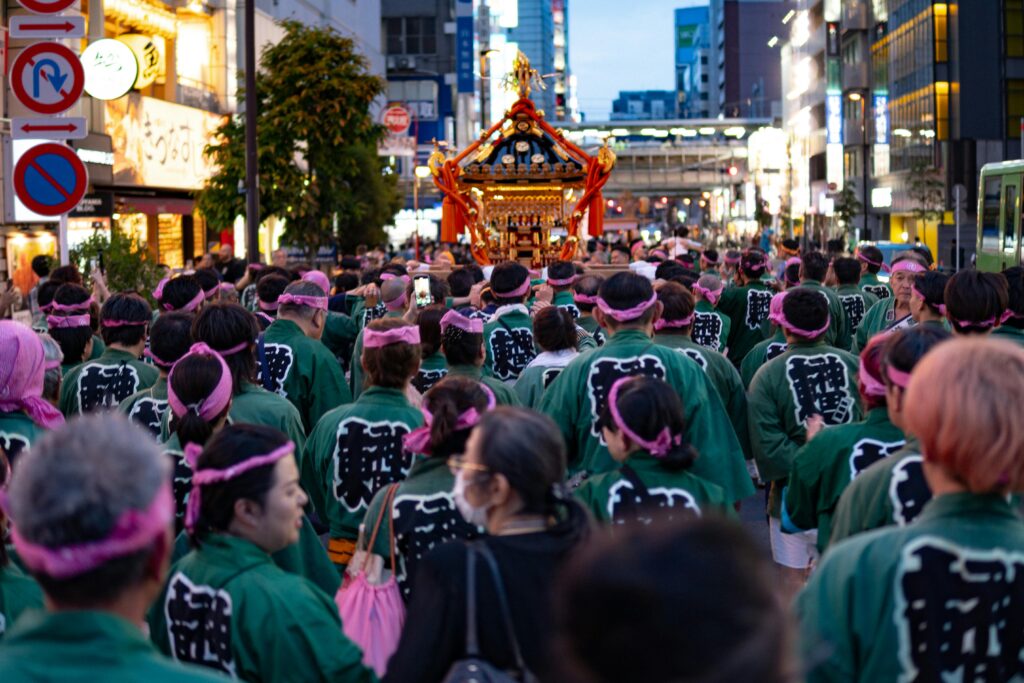
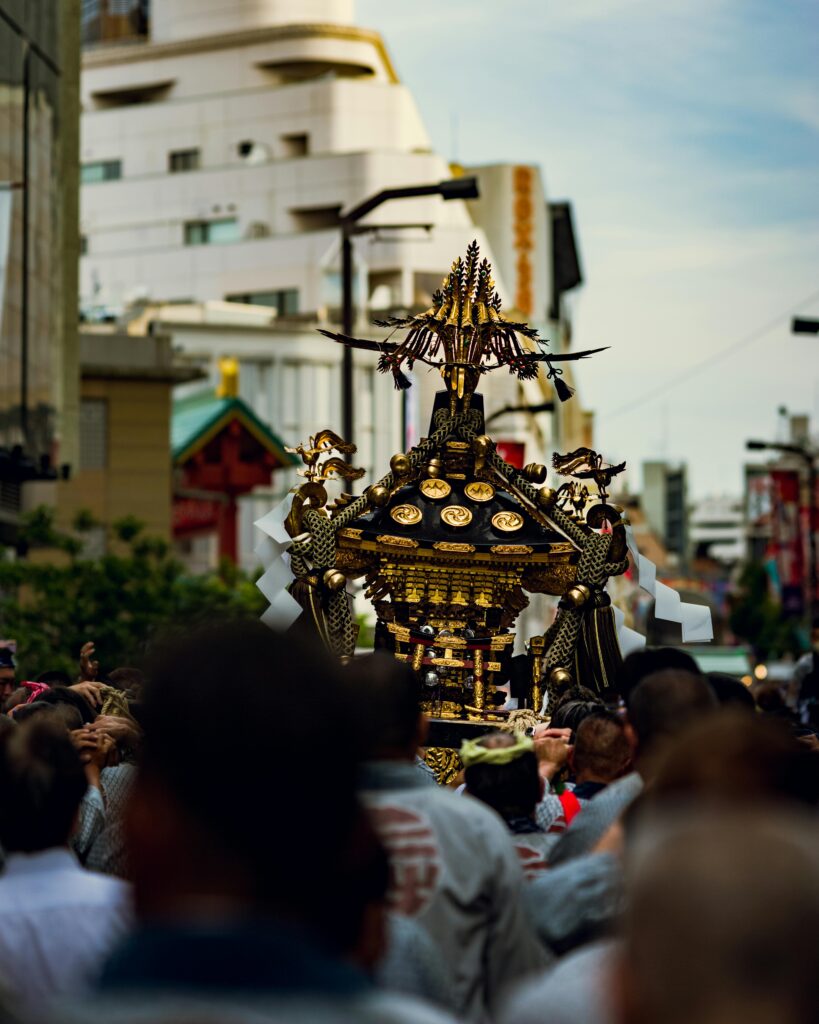
The spiritual centerpiece of a Tokyo neighborhood matsuri is the ”mikoshi”, a portable shrine. It is believed that the deity resides within the mikoshi during the festival to bless the local streets.
In Tokyo’s traditional “Shitamachi” (low-city) areas, carrying the mikoshi is a rigorous physical display of “Edo-ko” (child of Edo) spirit. It can weigh more than half a tonne, and the local strong (and usually young) men take turns carrying and chanting, until the rhythm becomes hypnotic. Participants wear ”happi” coats and ”tabi” shoes (split at the toe), chanting “wasshoi, wasshoi” to coordinate their rhythmic movements.
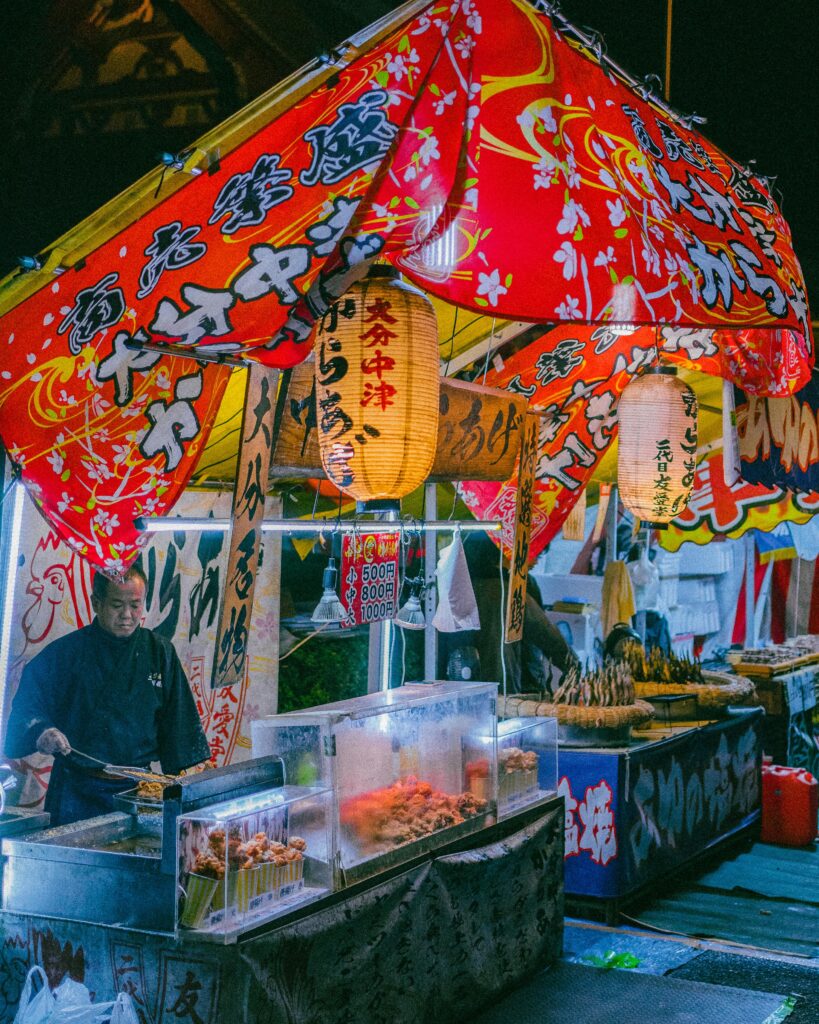
The night market atmosphere is an indispensable part of the matsuri.
Night market atmosphere
A neighborhood matsuri is inseparable from its ”ennichi” — the rows of temporary food and game stalls (yatai) that line the approach to the local shrine.
Common offerings include yakisoba (fried noodles), takoyaki (octopus balls), and choco-banana. A distinctive Tokyo favorite is monjayaki (a runny, savory pancake) that originated in Tsukishima and downtown.
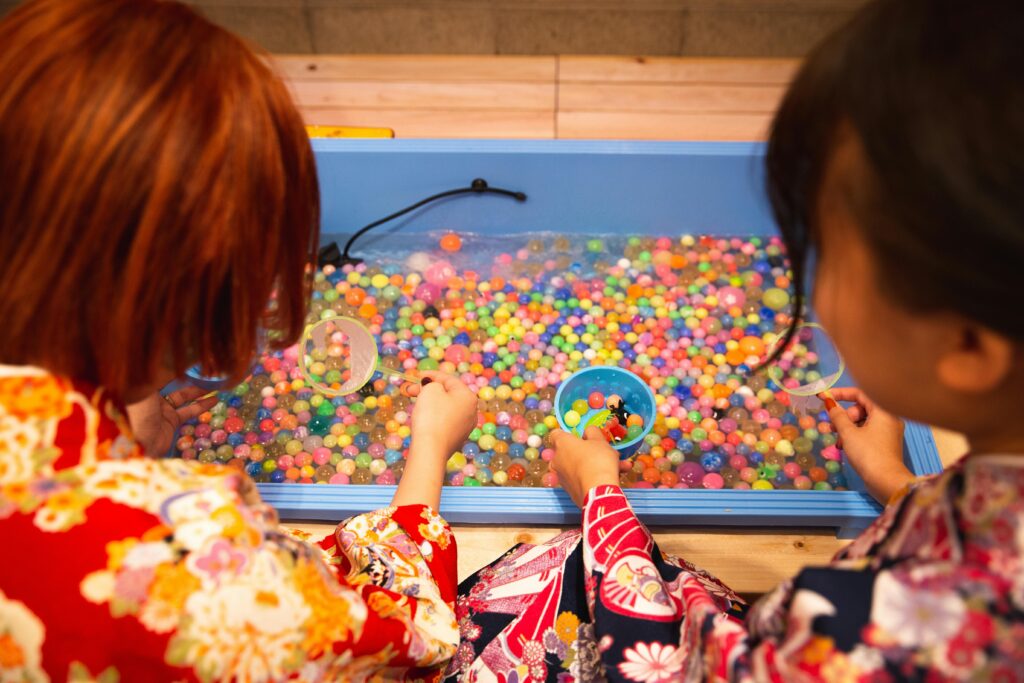
The night market stalls also include activities like ”kingyo-sukui” (goldfish scooping) and ”shateki” (cork gun shooting) that remain the primary entertainment for local children.
While the general structure of *matsuri* is similar, the “vibe” shifts significantly across Tokyo’s wards. In the east, the traditional lower-class and working neighborhoods are energetic and loud, focusing on the physical carrying of the mikoshi. In the western parts, the traditional Yamanote upper-class regions, the focus is on traditional dance and lanterns. In the western suburbs, closer to their agricultural roots, the focus is on the seasonal harvest.
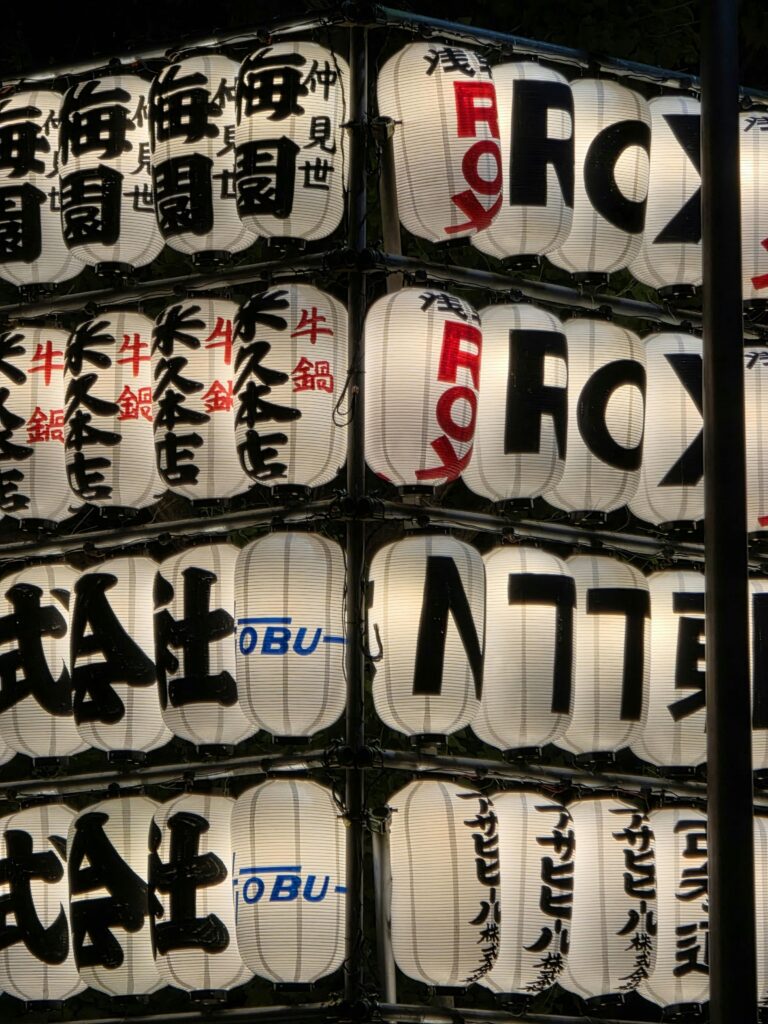
Sponsoring from local businesses is necessary for any matsuri.
Matsuri: Meticulously planned fun
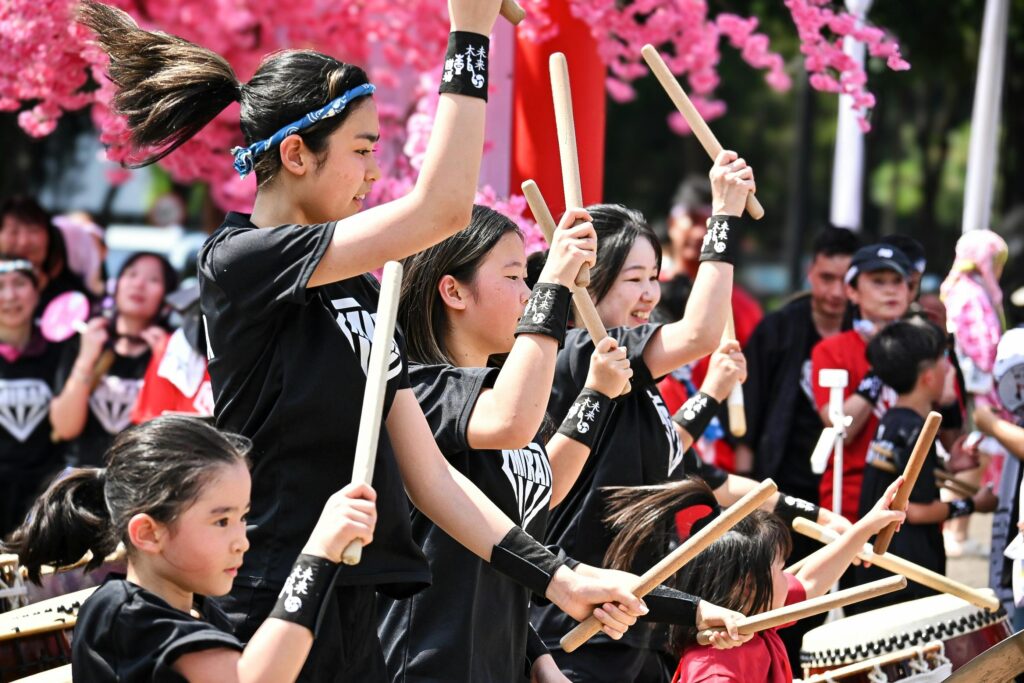
These festivals are not just spontaneous parties; they are meticulously planned by the ”chōnaikai” and ”hōsenkai” (shrine support groups) who often start planning for the next festival even before the current one is over. Rehearsals for the ”hayashi” (festival music) involving flutes and drums often begin months in advance at the local community center.
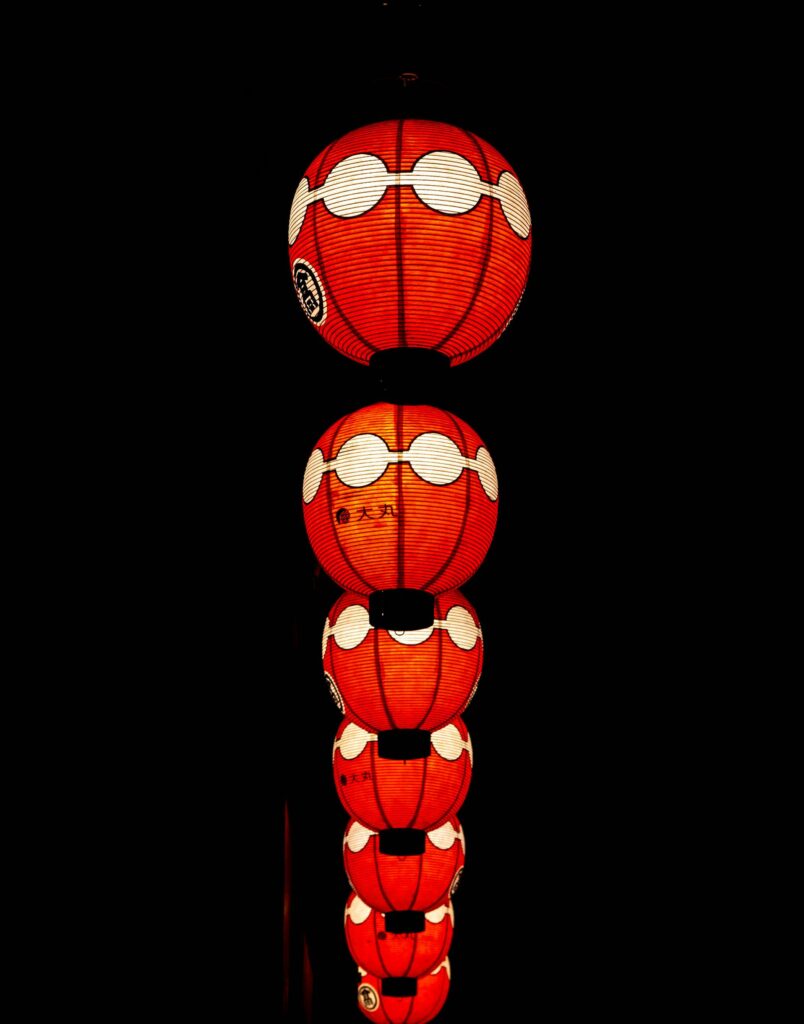
Expenses are covered by ”hōnō” (donations) from local businesses and residents. In return, the donor’s name is often displayed on a wooden plaque or paper lantern.
So if you find yourself in the middle of a festival, can you participate?
A matsuri is held for the people living in the host area and for the shrine’s ujiko (parishioners). Because the event is financed by the neighborhood association (jichikai) and the shrine, it is natural that those who contribute funds are the ones entitled to participate.
The participation in the matsuri is strictly coordinated.
Move to the Matsuri
The single most legitimate way to participate in a matsuri is to move into the neighborhood where it is held. Once you become a resident, you can take part openly. Those wishing to join the organizing side are often required to be residents as well. For outsiders, some neighborhoods stipulate that only town-association members, or only people who live or work in the area, may carry the mikoshi (portable shrine). Rules differ by association, so asking directly is essential.
If you do not know anyone connected to the association, approaching a stranger and saying “I want to carry the mikoshi” may be confusing, even if carriers are being recruited. Ideally, you should already have some kind of acquaintance — a shopkeeper who knows your face, or a regular at a neighborhood bar who can introduce you. Contacting the association as early as possible — at least a month before the festival — is advisable, since they need headcounts for hanten (festival coats) and refreshments (fostering community by eating together after the work is almost as important as the carrying of the mikoshi itself).
The aesthetics of the festival catch a different side of Japan.
Voluntary with Conditions
Formally, participation is voluntary. A neighborhood-association chairperson explained that, as a voluntary organization, attendance cannot be compelled unless the association’s own bylaws explicitly state otherwise. In practice, however, the social calculus is more nuanced. Many long-term residents think “it’s the festival, so it can’t be helped” and even take time off work to help, or feel obliged to donate. When turnout is insufficient, neighboring associations or silver human-resources centers are called in.
Becoming a volunteer to help at the local festival, is a great way to engage with the people in the neighborhood. It is a rare chance to get to know neighbors all at once and to make oneself known. And your nationality does not matter, as long as you know some basic Japanese. The association with the neighborhood overrides your foreignness.
A mikoshi is a religious object, to be treated accordingly.
Carrying a Religious Object
But remember: even if it is fun and exercise, the mikoshi is a portable shrine and a religious object. Before touching the mikoshi, participants must grasp its religious significance. The mikoshi is said to be the vehicle the deity of the shrine rides when leaving the shrine to travel through the ujiko district. As the deity parades through the neighborhood, it absorbs misfortune and protects the community.
One of the core rules taught to first-time carriers at Suga Shrine’s annual festival is: “Never forget that the deity is riding inside.” As one concrete example, watching the procession from a pedestrian overpass is strictly prohibited because it means looking down on the deity from above.
At Asakusa’s Sanja Matsuri, despite an explicit ban on climbing atop the mikoshi as an act of desecration, several young men once did so, causing a major incident that resulted in arrests and the cancellation of the following year’s procession. No matter how festive the atmosphere, failing to understand and follow the required rules can destroy an irreplaceable cultural tradition. Organizers’ instructions must be checked carefully before joining.
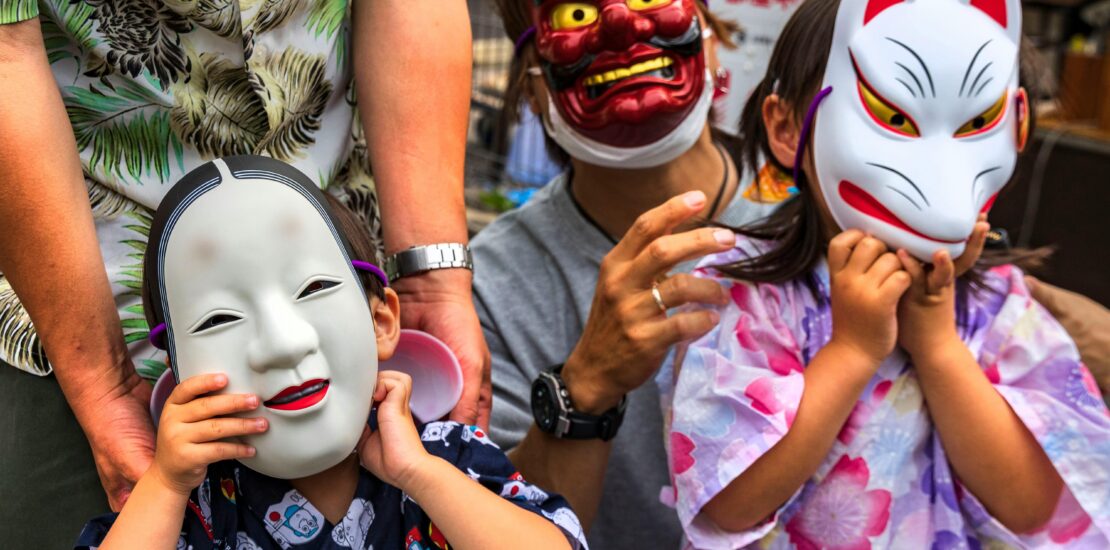
Dressing up is part of the matsuri participation.
Proper Matsuri attire
Proper festival attire is a social signal of belonging and respect. The standard outfit is a koikuchi shirt, momohiki (tight leggings), hara-kake (front apron), jika-tabi (split-toe shoes), and the group’s hanten (festival coat). Each recognized carrier group has its own designated hanten, and joining a group normally requires belonging to the organization and obtaining its specific coat. Clothing rules beyond the coat — color, pattern, accessories — vary by festival and must be confirmed in advance.
At some festivals, such as the Hamaorishisai in Shonan, carriers who are not affiliated with a shrine wear plain white from head to toe as formal dress. Always match local customs when choosing your outfit.
When the procession arrives at the omikishiro (the rest station where sake is offered), headgear — headbands, towels, caps — must be removed before the deity, so that carriers present themselves without discourtesy.
The traditional music may sound improvised but it is heavily rehearsed.
Rules for Carrying
Walking in and joining the mikoshi-carrying on a whim is basically not possible. If anyone could join freely at any moment, the mikoshi would lose all coordination. Once formally accepted, however:
When you want to take a turn, place your hand on the carrying pole and wait for your turn while protecting the current carriers — never shove people aside. Enter at a position whose height matches your own shoulder level.
If you grow tired, it is not shameful to step away and rest — it is the right thing to do, because showing exhaustion disrupts the whole group’s performance. Step out freely when tired.
Individual carriers must not carry however they please. Every festival has its own carrying rules, and seniors will teach newcomers. Because carrying is a team effort, group cohesion is paramount — doing things your own way can lead to accidents. After all, the mikoshi weighs as much as a small car.
Carriers are encouraged to shout (calls like “Soiya!”) to energize the procession. They should feel pride of ownership: “This mikoshi belongs to our community.”
The night market atmosphere includes kids’ games, like ball fishing.
Festival Ground Rules
Even after the carrying (and for those who do not participate), there are rules to conform to in the festival grounds. Start by not getting excessively drunk. Loud noise is inconsiderate to other participants and should be avoided. In particular, behaving quietly inside shrine precincts is important. If eating or drinking, trash must be disposed of in designated receptacles to keep the venue clean. If the one nearest you is full, find one that has space.
Knowing the rules and maintaining proper conduct is essential, but physical readiness also matters. Many festival activities — carrying the mikoshi, performing bon dancing — demand full-body stamina, and rougher events carry injury risk. A festival ruined by injury helps no one, and injury can even force cancellation of the event itself.
Stay tuned for more exciting content like this! Follow us on our social media platforms and check out our blog regularly to stay updated on the latest news, trends, and insider stories from Japan. Don’t miss out on future updates. Sign up for our newsletter for exclusive content delivered straight to your inbox!
Wisterian Watertree
Wisterian Watertree has been living in Tokyo and other Japanese cities for
the past 20 years, helping visitors get the best of Japan. He is the author of two
books, ”Take Your Toddlers To Tokyo” and ”Driving In Japan”, with more on the
way. You can read more on his website Japan Top 10, https://japan-top-10.com.