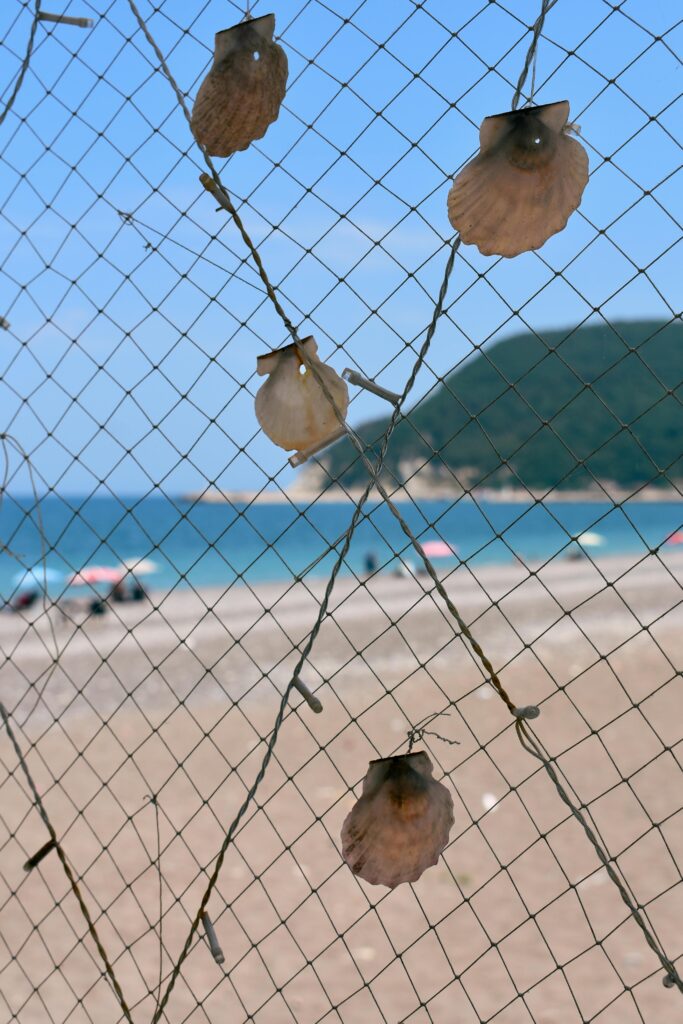
During the Tokyo 2020 Olympic Games in 2021, the surfing events were held on a mile-long stretch of sand. In the other direction, a 1000-year-old capital spills out over sandy beaches into a shallow warm sea. Both within easy train access from Tokyo. Read on to find out more.
Tokyo may be situated on a bay of the sea, but it does not have any beaches (maybe with one or two small exceptions). Even though it used to be possible to sail to what today is the east (Yaesu) exit of Tokyo Station, you would not try to go into the water there. Tokyo is largely built on mudflats, filled out until they could be used for building. The nice beaches are either in Kanagawa or Chiba prefectures. But there are a couple of Tokyo exceptions.
One important thing to realize is, however, that the beaches do not open until summer officially starts – which it only does in July, no matter how hot it is. And they will close in September.
Reminders When Planning Beach Trips
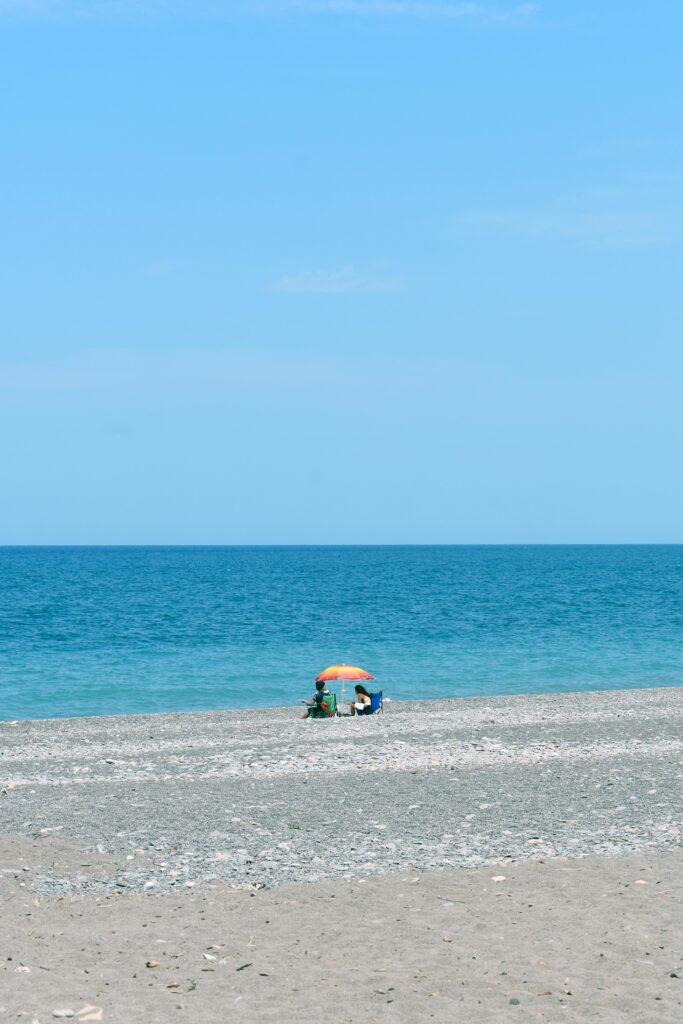
Swimming on beaches around Tokyo is at your own risk.
Swim At Your Own Risk
You can of course go swimming (or surfing) at other times of the year, but then it is strictly at your own risk. No lifeguards to pull you out of rip currents or tall waves, no jellyfish nets (the box jellyfish sting can be lethal), and on the Chiba coast, there can be ice floats in the water as late as April, and the water does not warm up until August anyway. Great for surfers, but not so good for families who want to enjoy some time playing in the sand.
There is also the weather to contend with. After the rainy season (when beaches are no fun) there will be typhoons, when it is positively dangerous to go out. July to September suddenly seems pretty sensible.
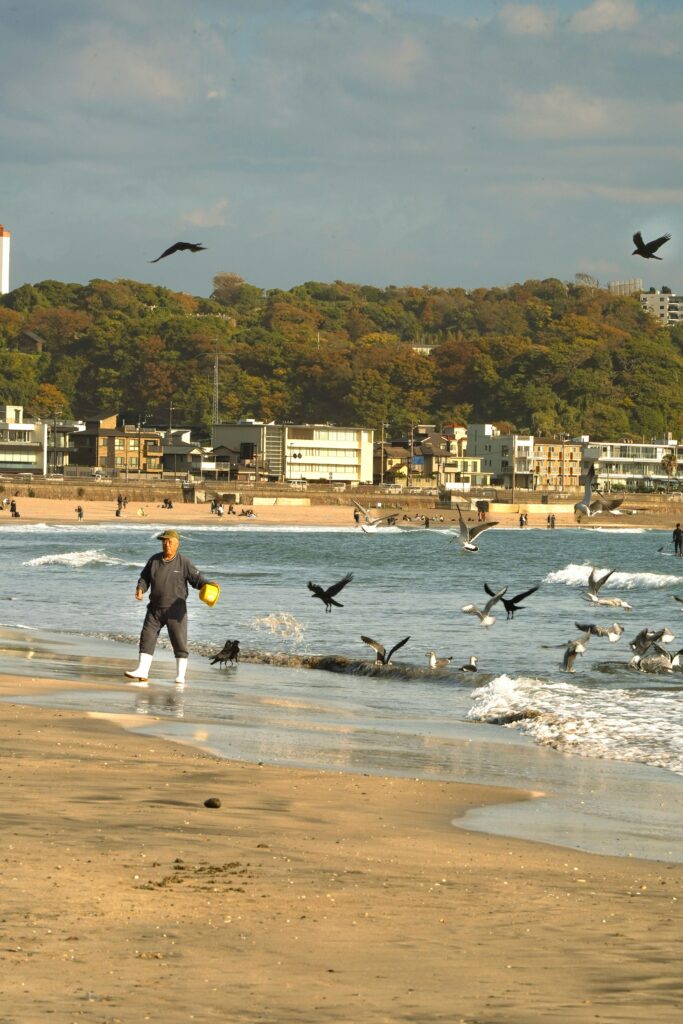
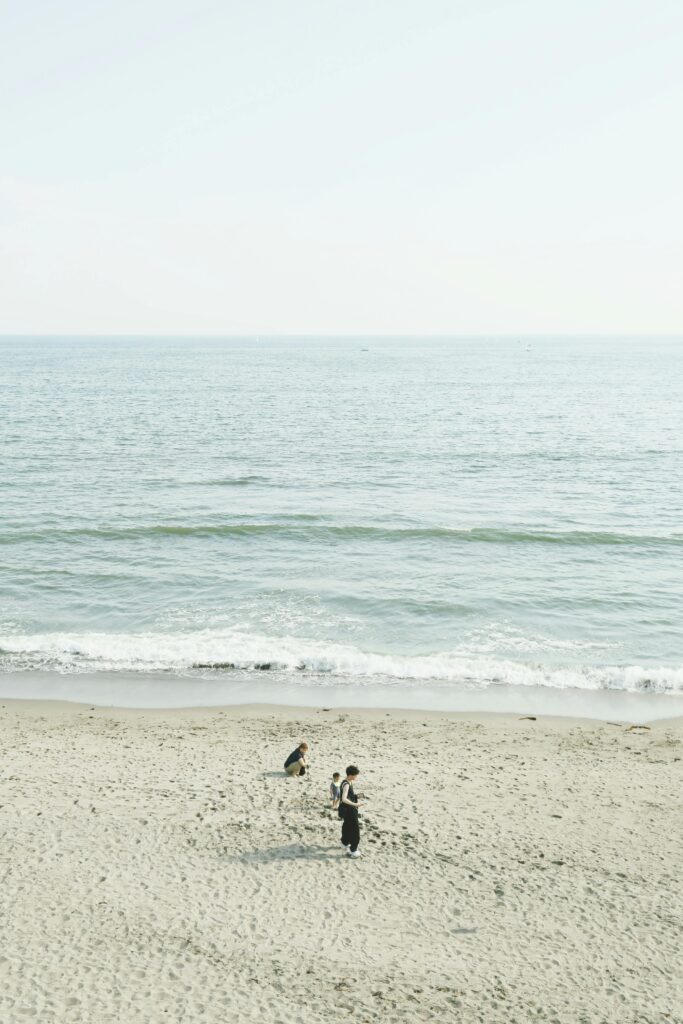
Beaches around Tokyo are often places where people – and birds – meet.
Exceptions To The Summer Rule
There are exceptions to this rule (like everywhere in Japan). The beaches on Tokyo Bay on the Chiba side open already in March (and close in June). The reason is not bathing, though, although many people take this as a chance to enjoy the day out. The reason is that those beaches, too, are mud flats. And the spring beachgoers are not relaxing in the sun. They are there to pick mussels. You have to pay by the pound at the park exit, and the catch is limited.
That said, there are several city beaches in or near Tokyo that are both accessible and offer at least a modicum of waterplay.
If you take the Keiyo line from Tokyo Station (the same line that takes you to the Tokyo Disney Resort a few stops away), you come to the Kasai Seaside Park. This is a general-purpose park built for the people of Tokyo to learn more about marine biology and especially the biology and marine life of Tokyo Bay. Which, once you get to see it this way, is pretty interesting.
Port City Seaside Park
In Yokohama, which is a port city and that was built on the seashore, the sea is omnipresent but rarely accessible. The exception is Umi-no-koen, a park somewhat south of the city center with excellent swimming and really good facilities. You can even have a barbecue (rental is available, as well as meat service).
Another plus is that the aquarium and water park Yokohama Hakkeijima Sea Paradise is less than 30 minutes away, with shows, exhibitions, and even better facilities.
At times you can have the gorgeous beaches around Kamakura to yourself.
Kamakura Beaches Dominate
The best beaches in the Tokyo area are clustered between the Miura and Izu peninsulas. This cluster of beaches on Sagami Bay in the Fujisawa–Kamakura–Hayama area, around the resort island of Enoshima, has direct train access, long beaches with beautiful sand that are walkable (literally for miles), and, of course, a very strong tourism infrastructure. It is only 1.5 hours by train from central Tokyo, yet you only have to walk down from the roadside to feel you are on a Pacific island. Which, come to think of it, you are.
This area not only has some of the best beaches in Japan, but it is also home to the historic capital city of Kamakura, which was the capital of the original shogun government in the 13th century. And, in addition but much later, it was the birthplace of both surfing in Japan and the Japanese film industry.
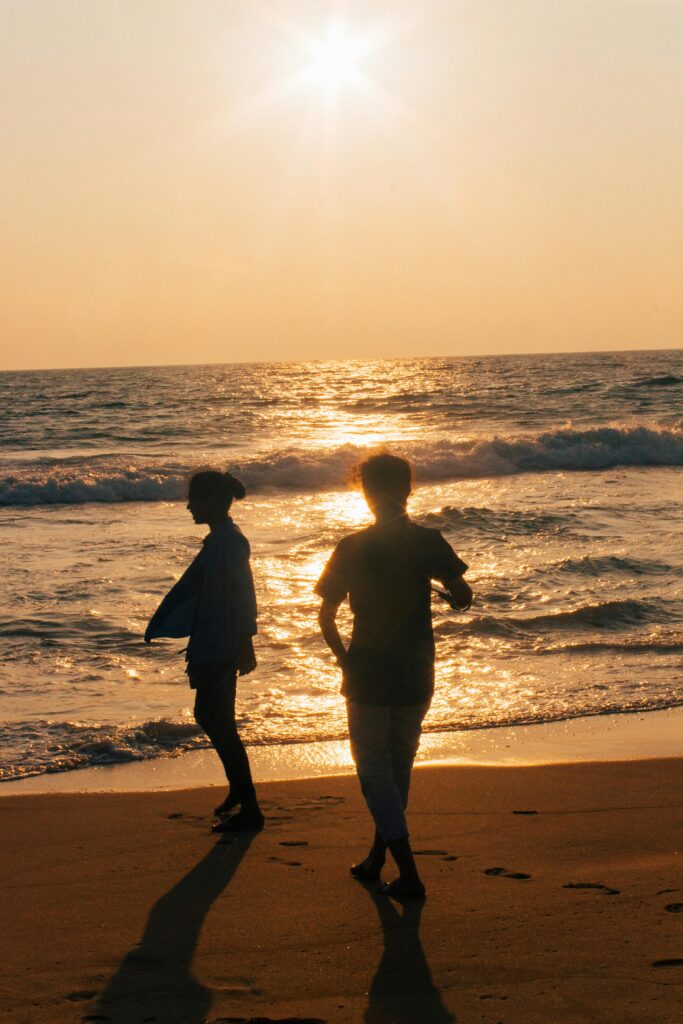
Playing on the beach is one of summer’s greatest pleasures.
Slam Dunk Beach
Kamakura has direct train access from Tokyo, although you need to take the local train to get to the beaches. On the way, it passes the train crossing from the opening scenes in the ”Slam Dunk” anime, nowadays a tourist attraction in itself. But Kamakura is also famous for more ancient attractions, in particular the Great Buddha, a bronze statue that has survived for more than 800 years; and the Hasedera temple. The city is now a tourist attraction even if several temples founded in the 13th century are still active.
The cluster of beaches around Kamakura is all worth visiting, but there are some worth pointing out.
Somewhat removed from Kamakura, closer to Enoshima, is one of the consistently highest-ranked beaches in Japan – and also one of the oldest open for public bathing. On top of it, it is very family-friendly. The Katase Higashihama beach is within a short walking distance from Katase-Enoshima Station. Another plus is the proximity to the Enoshima attractions.
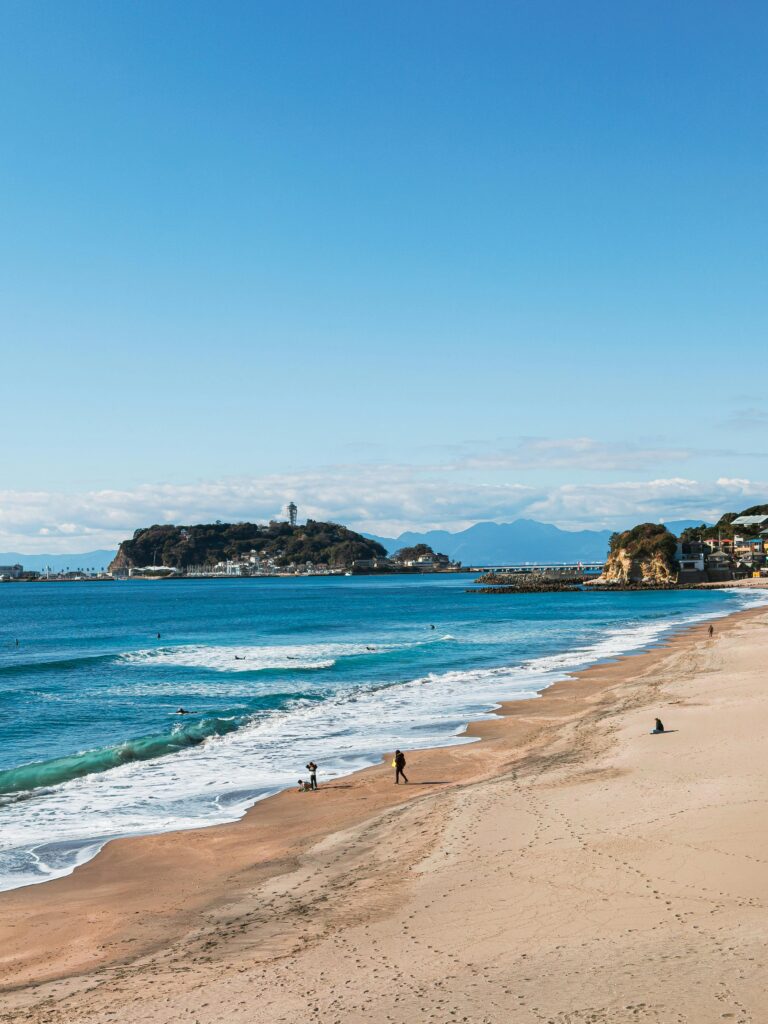
The pleasure island of Enoshima is the anchor of the Sagami Bay beaches.
Scenic View Surfing Beach
Nearby is the Koshigoe Beach, with scenic views, and also close to Enoshima. Access is a three-minute walk from Koshigoe Station. Next to it are Katase Nishihama and Kugenuma beaches. These beaches are known as party destinations and for surfing. Also close, but a little more to the west, is Tsujido Seaside Park with Tsujido Beach.
Continue west and you come to Southern Beach Chigasaki (サザンビーチちがさき), famous for the “Southern C” monument and its views of Eboshi-iwa Rock. It has a classic Shonan “cool” vibe. Close by is the Chigasaki City Museum of Art, located in a lush forest park near the coast.
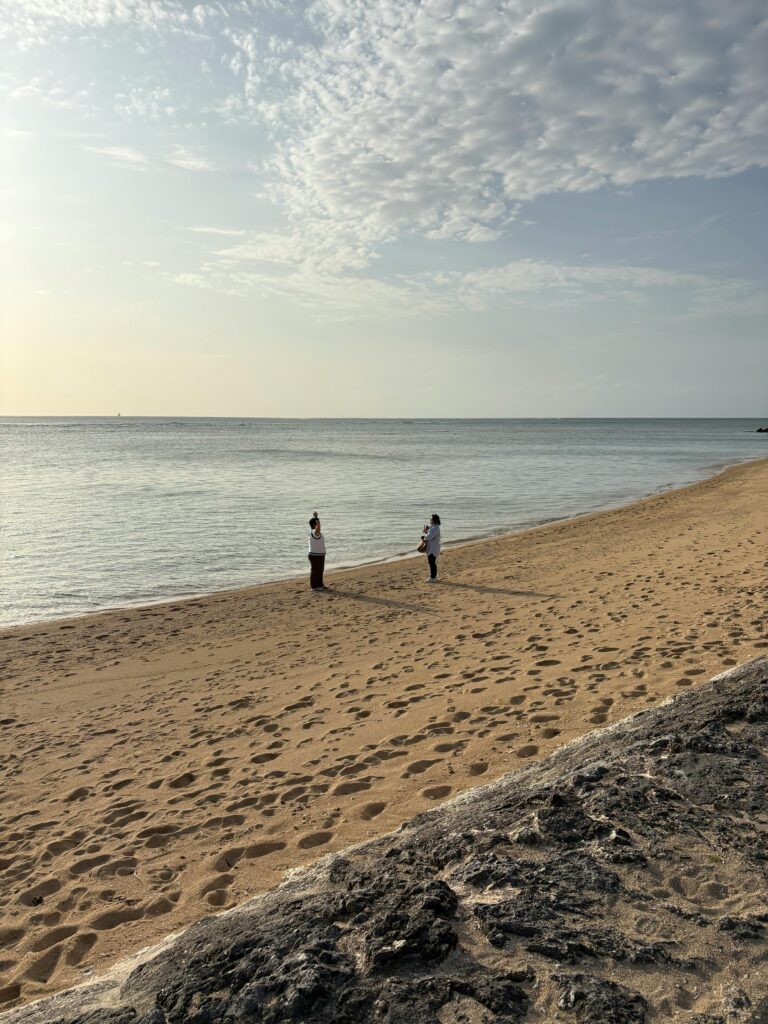
The beaches on Sagami Bay have great sunset views.
City Center Party Beach
Almost in the (old) center of Kamakura is Yuigahama Beach, one of the most famous in Japan for its golden soft sand (silver white when dry). As Kamakura is a small town, you can walk here through the quaint neighborhoods in less than 20 minutes from the JR station. The Kotoku-in (with the Great Buddha) and Hasedera are also 20 minutes walk away, but in the other direction.
Next to it, and often less crowded (especially in summer, when the party pavilions go up on Yuigahama Beach) is Zaimokusa Beach, essentially extending the long stretch of sand along Sagami Bay. The main difference is that from here, you can have a great view of mt Fuji in clear weather (which, alas, it rarely is is seldom).
Rocky Peninsula Beaches
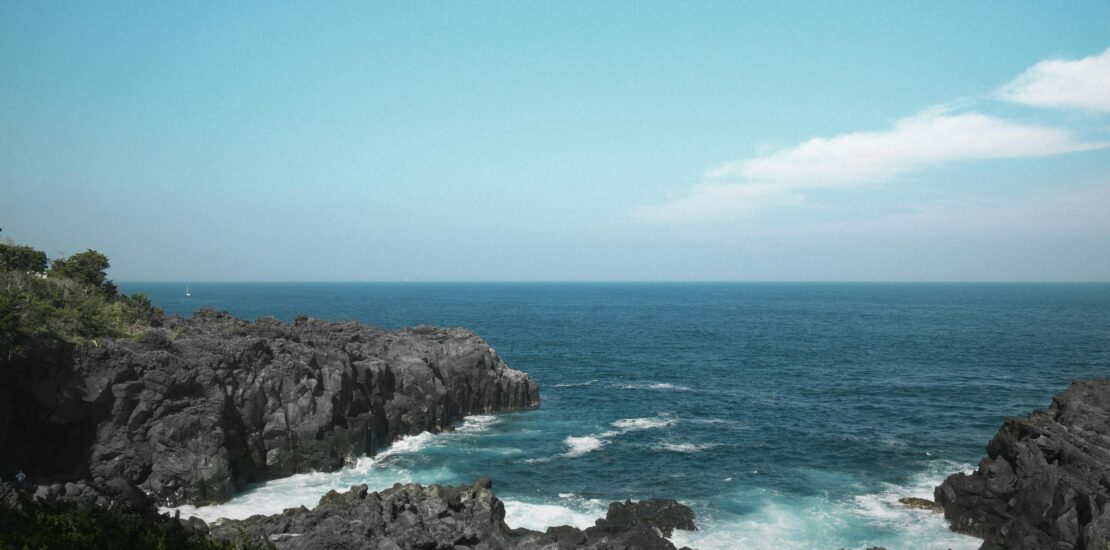
The Kamakura-Fujisawa beaches are bracketed by two rocky peninsulas, to the west the Izu Peninsula which is famous for its hot spring resorts; and to the east the Miura Peninsula, which has some magnificent ancient lava flows leading down to the ocean. But here, near the quiet resort town of Zushi and the Imperial Villa of Hayama (where the Emperor goes to take a break) is Isseki Beach (一色海水浴場). This beach has been selected as one of CNN’s “World’s 100 Best Beaches,” It is known for its calm waters and upscale, quiet atmosphere near the Hayama Imperial Villa. To get here, you have to take the train to Zushi station, and then ride a bus for 20 minutes. But as an added benefit, you can visit Hayama Shiosai Park, a beautiful Japanese garden featuring a museum of Emperor Showa’s marine biological specimens.
The city of Zushi itself has a beautiful beach, also known as the “Half Moon Bay,” which offers shallow waters perfect for families and beginners in marine sports like SUP. You can also get great views of mt Fuji from the observation deck of nearby Hiroyama Park.
The Miura Peninsula’s west side beaches have great sunsets.
More Famous For Tuna
The Miura peninsula is probably more famous for its seafood than its beach. Most Japan-caught tuna sold in Tokyo comes from here, and at Kaneda Fishing Port there is a popular morning market every Sunday featuring fresh local seafood.
However, if it is beaches you are after, go to Miura Kaigan Beach (三浦海岸海水浴場), one of the largest beaches in the Kanto region, praised for its vast sandy shore and accessibility.
Not far away is Araihama Beach (荒井浜海水浴場), in Aburatsubo. This is a hidden gem with crystal clear water and a peaceful environment, often used as a filming location. Close by is Aburatsubo Onsen, a hot spring facility with ocean views located within the nearby hotel complex.
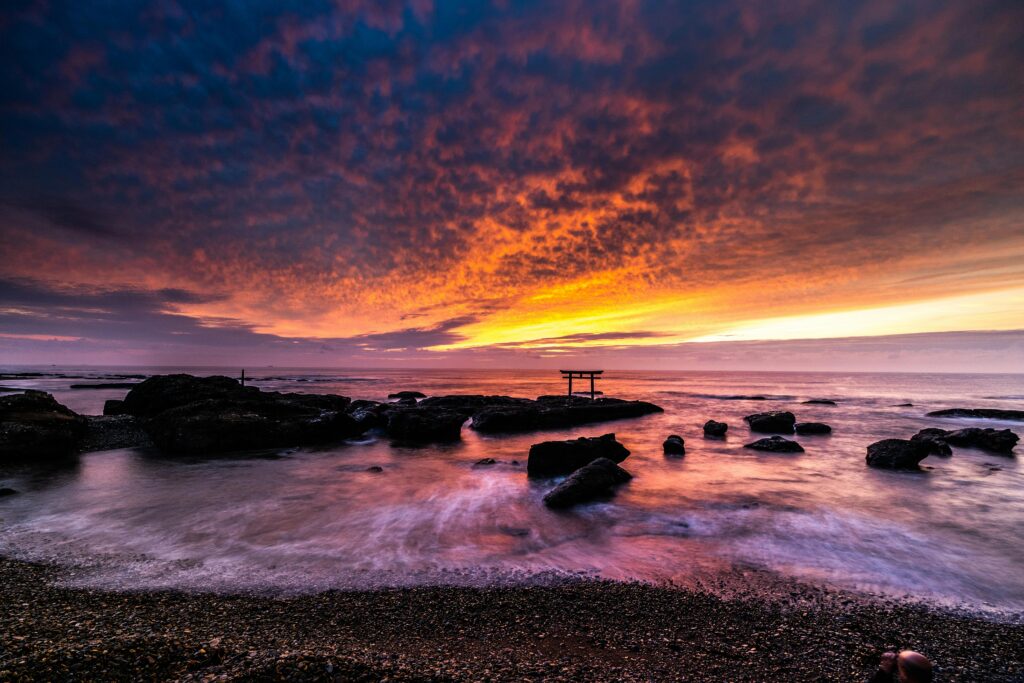
Oarai not only has a great beach, but it also has a fish market which is second only to that in Tokyo.
Wild Pacific Beaches
But not all the beaches around Tokyo are in Kamakura. For those who want something a little more wild, there are the Pacific coast beaches. This is where the surfing competitions were held during the 2020 Olympic Games in 2021.
At Moriya Beach (守谷海水浴場) in Katsuura, in the Chiba prefecture, there is a small island that can be reached on foot during low tide. Nearby is Katsuura Undersea Park, featuring an underwater observation tower to view local marine life.
Also in Chiba, Katakai Beach (片貝海水浴場) in Kujikuri is part of the Kujukuri-hama, it is Chiba’s premier surfing and swimming destination with a massive sandy coastline. And in Kamogawa, Shirosaki Beach (城崎海水浴場) has some of the highest transparency levels in the Boso Peninsula with beautiful white sand.
You can also go north to get to the beach around Tokyo. At Oarai Sun Beach (大洗サンビーチ) in Ibaraki, the low tide creates a “mirror beach” effect, perfect for photography.
Stay tuned for more exciting content like this! Follow us on our social media platforms and check out our blog regularly to stay updated on the latest news, trends, and insider stories from Japan. Don’t miss out on future updates. Sign up for our newsletter for exclusive content delivered straight to your inbox!
Wisterian Watertree
Wisterian Watertree has been living in Tokyo and other Japanese cities for
the past 20 years, helping visitors get the best of Japan. He is the author of two
books, ”Take Your Toddlers To Tokyo” and ”Driving In Japan”, with more on the
way. You can read more on his website Japan Top 10, https://japan-top-10.com.