You can tap your phone to pay for your ticket on the Tokyo trains and subways. But there are advantages to download the app which manages your transit cash. As well as getting a SUICA or Pasmo card, which lets you ride trains all over eastern Japan – even on the Shinkansen. Read on to find out more.
If Tokyo had a national sport, it wouldn’t be baseball—it would be tapping. Tap at the station gate, tap at the convenience store, tap at the vending machine, tap again because you forgot you already tapped. In the Tokyo area, that tap is usually Suica (owned by the railway company JR East) or PASMO (the private rail/subway side, originally). In daily use, they behave almost identically: both are rechargeable transport IC cards with e-money functions, and both work across a wide nationwide interoperability network.
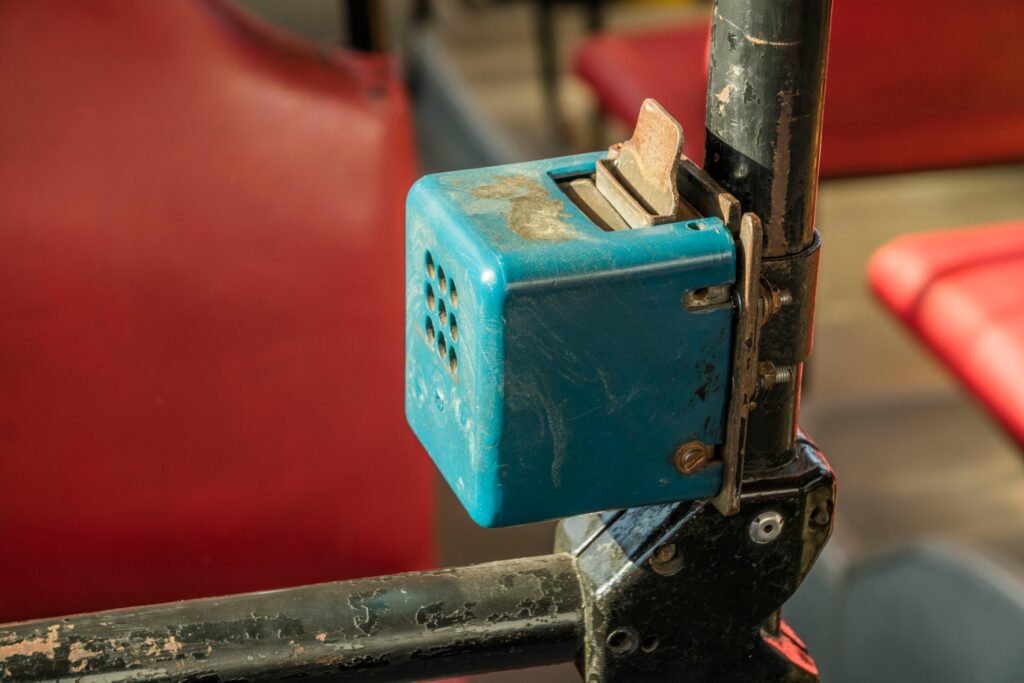
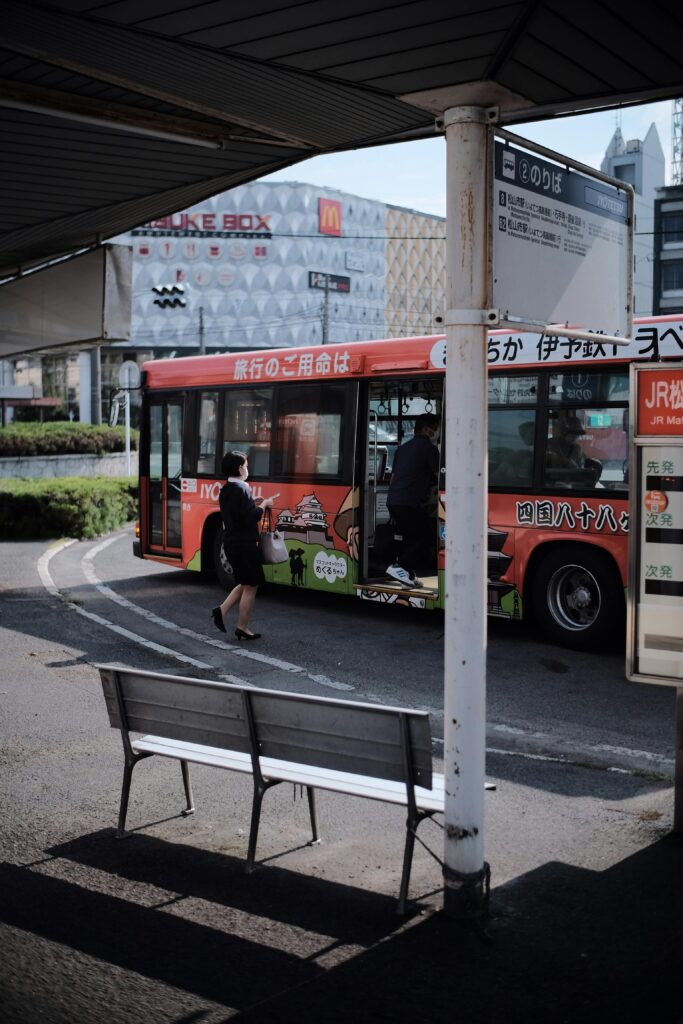
The days when you had to take a ticket when entering the bus are long gone.
The differences that matter today aren’t “Suica vs PASMO” so much as physical card vs mobile, and how they integrate with Apple Pay / Google Wallet.
Physical cards: what you pay and what you get back
A standard physical Suica card requires a ¥500 deposit, which you get back when you return the card. JR East notes that the deposit and remaining balance are refunded, but a ¥220 handling fee is deducted from the remaining balance at refund time. PASMO also uses a ¥500 deposit, refunded when you return the card. Refund rules can vary depending on where you refund and the specific card type.
Both SUICA and Pasmo come as applications as well as physical cards, although for a long time the chip shortage after the pandemic meant only the tourist SUICA were available. Meanwhile, the applications in the phone became more convenient. So why keep a physical card in 2026?
A physical SUICA card still make sense on Tokyo trains.
It’s simple, durable, and doesn’t depend on phone battery. It’s still the easiest choice for children (and for families who don’t want a device-based “single point of failure” during school runs). Children up to 12 years of age only pay half price on Japanese trains – but this is not available in the phone app. On the other hand, when you want to fill up the SUICA or Pasmo card, you have to use a physical machine and pay actual money into it. With a phone app, you can transfer a balance directly from your bank account.
iPhone Payment as a feature
On iPhone or Apple Watch, you can add Suica or PASMO to Apple Wallet and use it for transit and shopping with Apple Pay. Apple also confirms you can transfer an existing physical card into Apple Wallet; after transfer, the physical card stops working, and the deposit becomes part of the Wallet balance.
On Android, Suica and PASMO can be used via Google Wallet (and on supported smartwatches/devices in Japan). Google’s Japan help page lists Suica and PASMO among supported options for certain watches purchased in Japan.
JR East’s Mobile Suica page for Google Pay also highlights practical advantages like issuing Suica from Google Wallet, charging in 1-yen units, and linking to services such as JRE POINT and “Touch de Go! Shinkansen” (with the required registrations for those services).
The Family Advantage
The family advantage of mobile cards: a parent can manage top-ups quickly, check balances, and avoid the “who stole my Suica?” drama—at least for the adults.
You do not actually need the SUICA or Pasmo app, however. You can pay directly with your phone. So are there any advantages to the app?
People often say “Apple Pay” or “Google Pay” as if it’s one thing. In Japan, there are two different experiences. First, using Suica/PASMO inside Apple Wallet or Google Wallet is still Suica/PASMO—just digital.
On Apple devices, Express Mode is available for transit cards, so you can often tap through gates without unlocking your phone. On Apple Watch, JR East’s Mobile Suica FAQ notes you can still use Suica even when the paired iPhone isn’t nearby, and you can do key actions like top-up and balance checks on the watch.
In some places, you can also use a regular contactless bank card via Apple Pay / Google Pay. It is however not the same network or consistency as Suica/PASMO for transit.
So when is Suica/PASMO (the app or the card) “better” than Apple Pay / Google Pay?
When you talk about “generic payments,” Suica/PASMO is often more universally accepted in Japanese transit ecosystems than relying on whatever contactless credit card support exists at a given gate. When you mean “Suica/PASMO in Apple/Google Wallet,” it’s usually the best of both worlds: transit speed + phone convenience.
How much to pay for the PASMO/Suica card
The physical card costs for standard cards is a ¥500 deposit up front (which is refundable, except for the handling fee of ¥220. On your mobile, there is no need for a deposit, and you are maintaining a stored balance in your device wallet. You can top up as needed (and on Android Mobile Suica, JR East explicitly notes 1-yen unit charging).
The “Potentially You Profit” Part
Suica can connect into JR East’s points ecosystem. JR East’s Google Pay Suica page explicitly calls out that you can earn JRE POINT and also use services like Touch de Go Shinkansen (with registration steps).
Most people riding JR trains benefit from the generous points system.
In plain English: if you ride JR East lines frequently and you register correctly, Suica becomes not just a payment tool but a points tool. And in Japan, points are actually worth your while. You have to register to set up a point account, but it can be used as actual payment. Travel enough, and you can buy things – including SUICA merchandise, which is incredibly popular (the penguin in the brand has become one of the most well-known brands in Japan).
Where they work… and where they don’t
Suica and PASMO are designed for public transit: trains, subways, buses. But also a long list of everyday payments (convenience stores, vending machines, many shops). JR East’s Suica page frames it as a card for both travel and shopping. There are even shops inside the stations which do not accept cash, only credit cards and SUICA cards. The major IC cards became compatible nationwide in 2013, allowing one card to work across most big-city rail/subway/bus systems (although not all, and some local cards are not compatible).
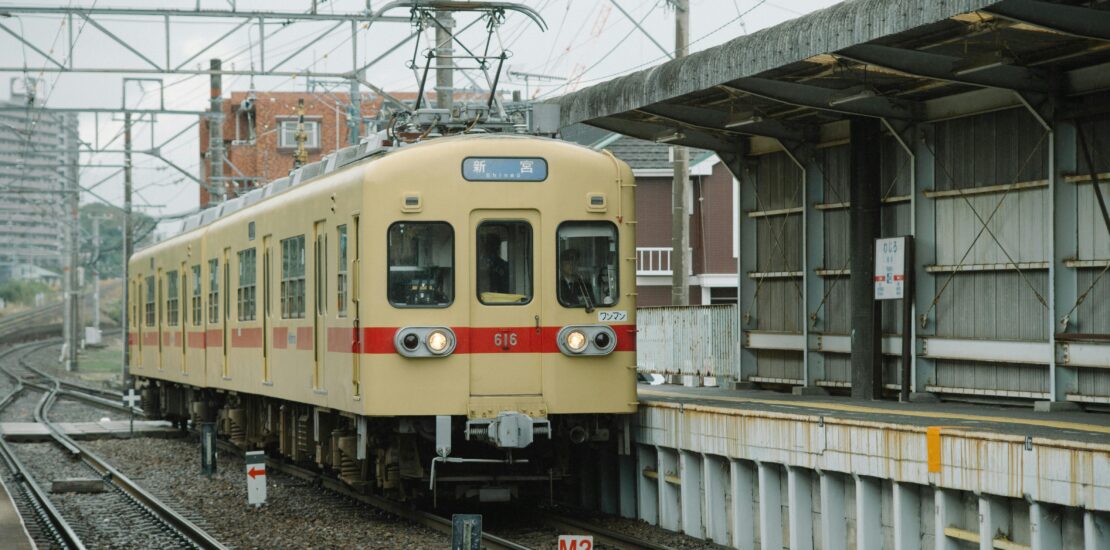
The Pasmo card was originally created for subway, private raiways – and buses.
Some smaller local buses or rural operators still do not accept the SUICA / Pasmo cards. Certain systems may support only a subset of the “mutual usage” cards (rare, but it happens). If you’re going into the deep countryside, carry a backup payment method and expect occasional “cash only.”
SUICA surprise uses
Over the years, the SUICA card has developed from being a transit card to something much more. For instance, on the Shinkansen trains.
JR East explains that with Touch de Go! Shinkansen, you can board non-reserved seats in the JR East Shinkansen area by tapping—no seat reservation needed in advance for that use case.
SmartEX (JR Central’s Shinkansen online system) has an English FAQ noting that some IC cards need to be “validated” by using them at a Suica/PASMO area gate before they can be used for boarding the Shinkansen, and otherwise you may need to pick up tickets.
Translation: IC cards can be part of your Shinkansen journey, but the rules depend on the specific service and how your IC card was issued/used.
The cards are also used to activate your chosen seat in the “green car” first-class car on ordinary trains. Before you sit down, tap the card and watch the light over the seat turn from red to green.
Which should you choose: Suica or PASMO?
For most people living in Tokyo: pick whichever is easiest to obtain and manage. Functionally they’re interchangeable for daily Tokyo life, and the nationwide interoperability means you’re not “stuck” in one brand universe.
If you ride JR East constantly and want to lean into JR East’s ecosystem (reservations, points, certain services), Suica has a natural gravity. If you’re mostly on Tokyo Metro/Toei/private railways or on the bus, PASMO is equally natural—especially as a physical card.
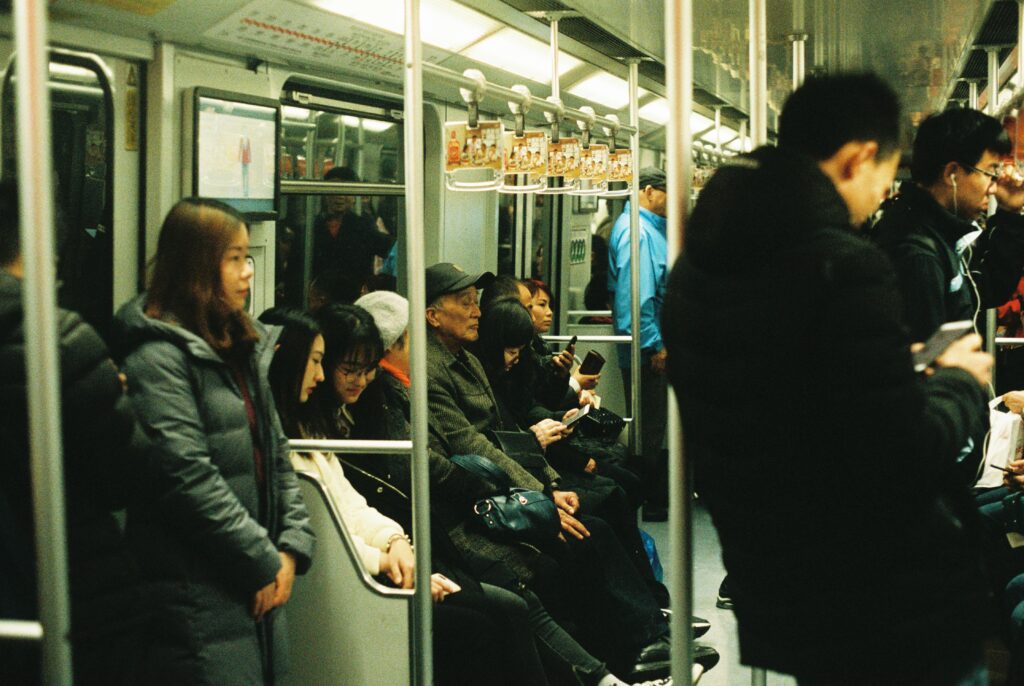
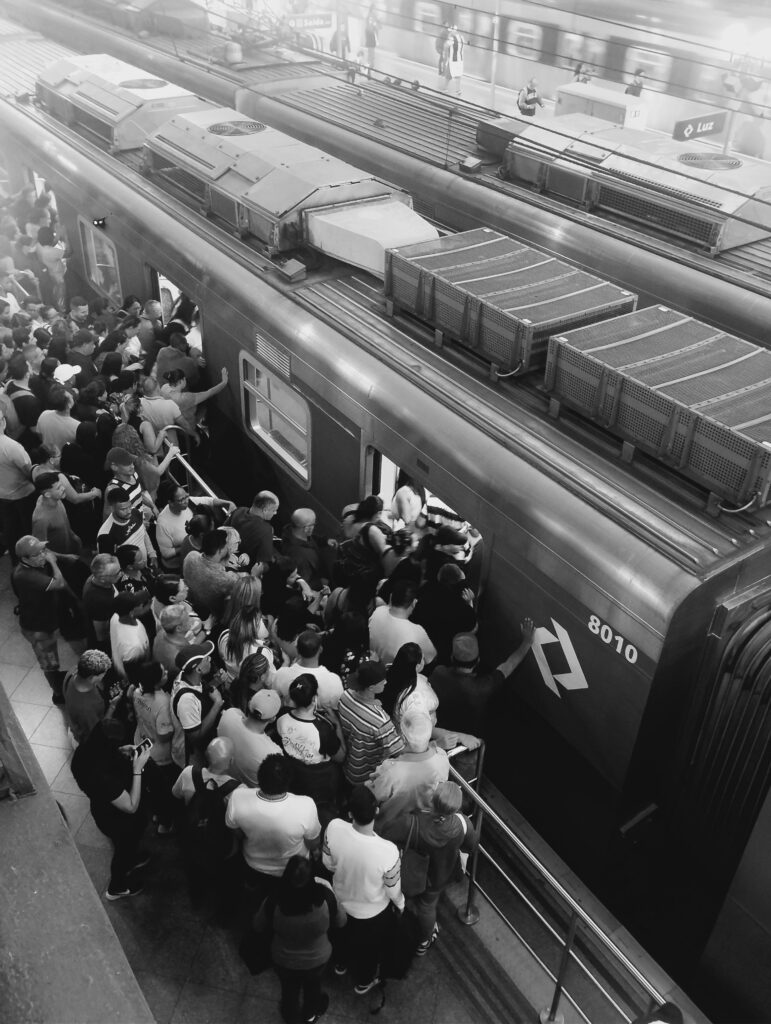
The morning crowds on Tokyo trains in the 70’s did not use SUICA.
The practical Tokyo advice (especially for families) is to use Mobile Suica/PASMO on Apple Wallet or Google Wallet for speed and easy top-ups for adults. For kids: consider physical cards for simplicity and fewer device arguments. And always keep a backup: one dead phone battery can turn “Tokyo efficiency” into “Tokyo chaos” very fast.
Stay tuned for more exciting content like this! Follow us on our social media platforms and check out our blog regularly to stay updated on the latest news, trends, and insider stories from Japan. Don’t miss out on future updates — sign up for our newsletter for exclusive content delivered straight to your inbox!
Wisterian Watertree
Wisterian Watertree has been living in Tokyo and other Japanese cities for
the past 20 years, helping visitors get the best of Japan. He is the author of two
books, ”Take Your Toddlers To Tokyo” and ”Driving In Japan”, with more on the
way. You can read more on his website Japan Top 10, https://japan-top-10.com.