Narita and Haneda: Two Gateways, Two Philosophies of Leaving Tokyo
Tokyo has not only one, but two international airports. With a completely different style, feeling and mix of traffic. And while one is there to get you out of or into Japan as fast as possible, the other is a tourist destination in its own right. Read on to find out more.
Tokyo has never had just one front door. Instead, it built two—and made them argue quietly for decades. Narita and Haneda airports are not simply transport hubs; they are expressions of how Japan has negotiated growth, geography, politics, and daily life. To understand how Tokyo connects to the world, you have to understand why these two airports exist, how they differ, and what it feels like to move through each of them.
They serve the same city, but they do not serve the same idea of travel.
The History of Two Airports
Haneda came first. Officially opened as a civil airport in 1931 on reclaimed land in Tokyo Bay, it was always meant to be close—close to the capital, close to government, close to everyday life. Japanese aviation histories describe early Haneda as a pragmatic facility, handling both domestic and limited international routes until postwar expansion strained its capacity.
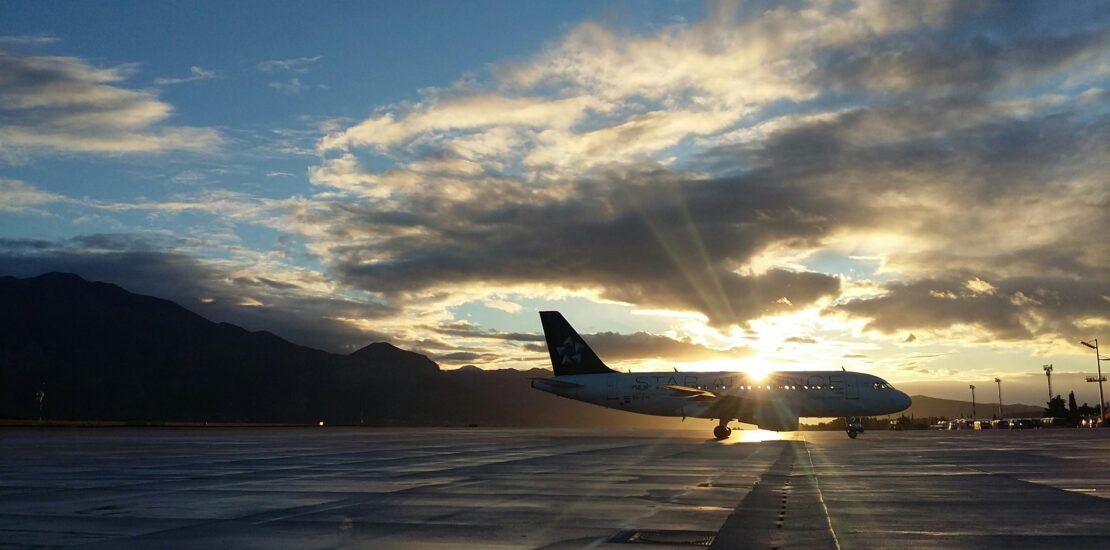
The two Tokyo airports offer different ways of leaving the city.
Narita, by contrast, was born from conflict. Planned in the 1960s to handle Japan’s explosive growth in international air travel, it was deliberately placed far from central Tokyo, in Chiba Prefecture. Japanese sources are blunt about why: land availability and political distance. The protests surrounding Narita’s construction shaped not only the airport itself but Japan’s entire approach to infrastructure consensus. It is only now that the Kast of the farmers has given up and sold his land, making it possible to straighten out the runways where airplanes previously had to make a wide turn taxiing.
The result is telling. Haneda feels like it grew organically with Tokyo. Narita feels like something Tokyo built at arm’s length.
Airports and Location
Haneda sits in Ōta-ku, barely 15 kilometers from Tokyo Station. Aircraft descend low over residential neighborhoods, riverbanks, and highways. Japanese urban planning materials often note how deeply integrated Haneda is with the metropolitan fabric. You arrive in Tokyo before you even leave the airport.
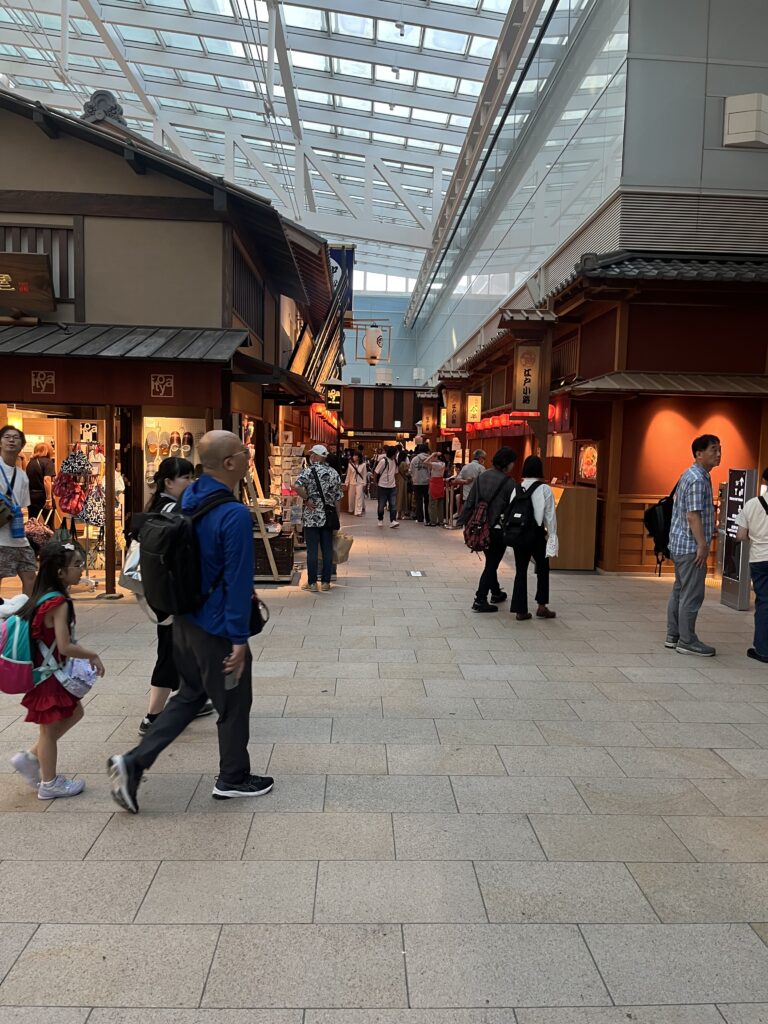
The Haneda shopping area is a replica of an old Tokyo shopping street.
Narita, on the other hand, is roughly 60 kilometers east of central Tokyo. Fields, forests, golf courses, and industrial zones surround it. Japanese travel guides frequently emphasize the sense of separation—Narita is a threshold, not an extension. When you land there, you are not yet in Tokyo; you are on the way to Tokyo.
Domestic vs. International Roles (and How That Changed)
For decades, the division was clear: Haneda handled domestic flights, Narita handled international ones. Japanese government aviation policy enforced this split strictly. But policy shifted in the 2010s, and today the roles overlap.
Haneda now operates a significant number of international long-haul flights, particularly to Asia, North America, and Europe. Japanese Ministry of Land, Infrastructure, Transport and Tourism (MLIT) documents describe this expansion as a strategic move to increase Tokyo’s global competitiveness. It is equally true that the availability of reclaimed land to build an additional runway helped.
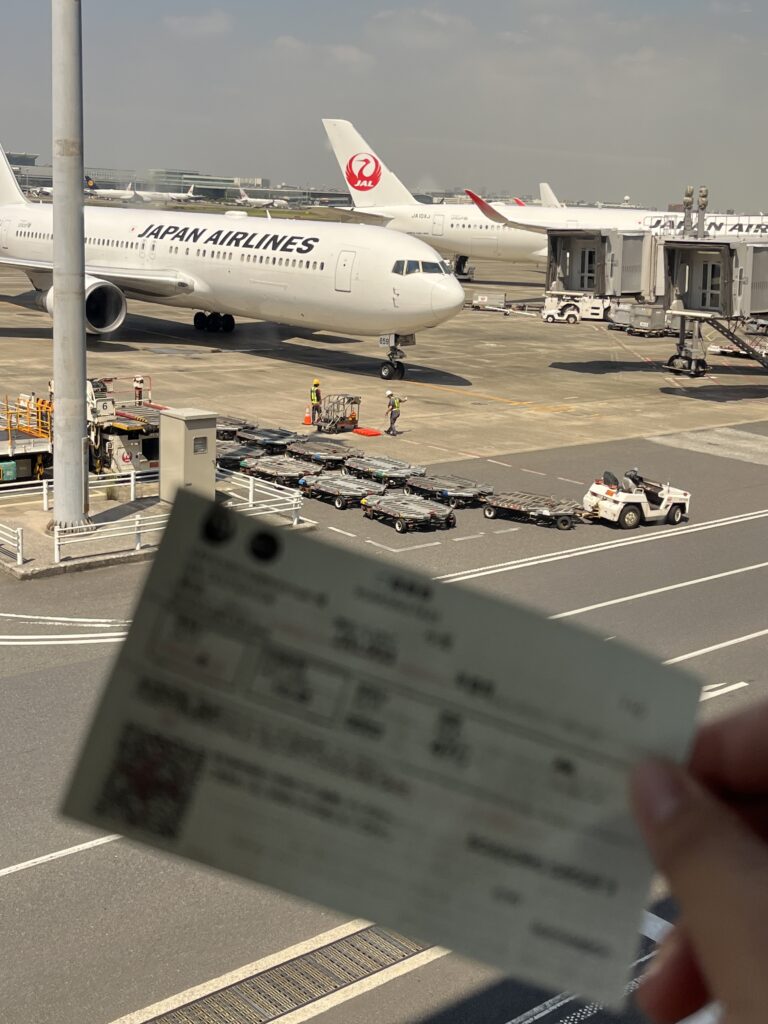
The third terminal at Narita serves budget airlines – known as LCC, or low cost carriers, in Japanese.
But in the years since Narita opened, something else has happened: air freight has exploded. Not only electronics components, but also fresh Atlantic salmon take the route through Narita.
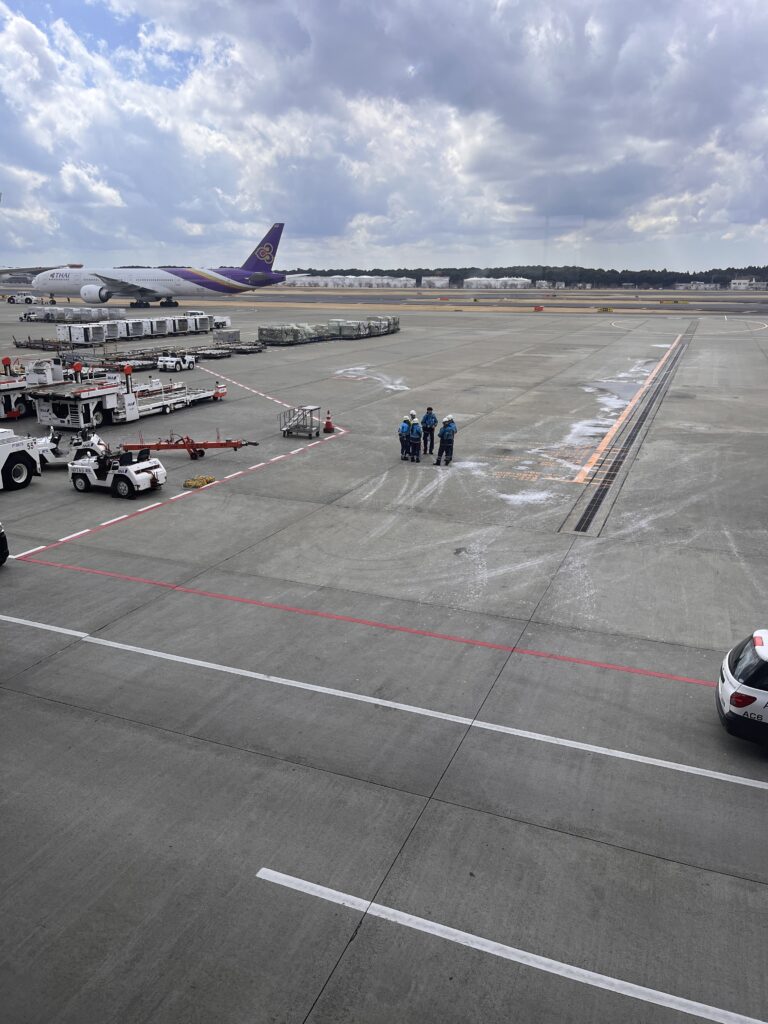
Narita is an airport that keeps itself busy.
Narita remains Japan’s largest international gateway by total overseas capacity and cargo volume, with three terminals and a reputation for handling complex long-haul and low-cost carrier operations. Japanese airport statistics consistently show Narita leading in international passenger diversity, while Haneda dominates domestic volume.
In practice: Haneda feels efficient and businesslike. Narita feels expansive and international.
Getting There: Speed vs. Structure
Reaching Haneda is almost trivial by Tokyo standards. The Tokyo Monorail from Hamamatsucho takes about 13 minutes. The Keikyū Line connects directly from Shinagawa and beyond. Japanese transit guides emphasize that Haneda can be reached without planning—an unusual luxury in a city where planning is often everything.
Narita requires intention.
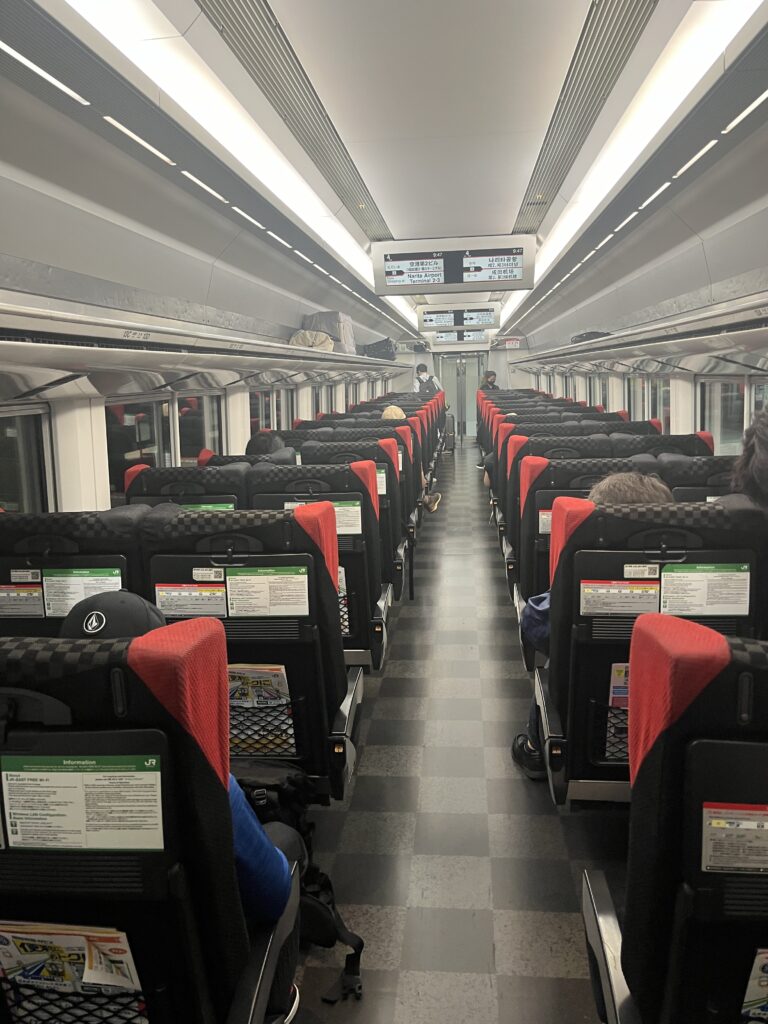
The Narita Express trains are a comfortable, but boring, experience.
The Narita Express (N’EX) links major stations like Tokyo, Shinjuku, Shibuya, and Yokohama in roughly 60–90 minutes, with occasional trains going to Odawara and Omiya. Problematically however if you are not going to central Tokyo from Narita is that all Narita Express trains still pass through Chiba City, a detour that automatically adds 15 minutes to your trip.
Keisei’s Skyliner offers a faster route from Ueno and Nippori, often under 45 minutes to the airport. It is only when it leaves the urban areas that it is able to get up to Shinkansen speeds, however.
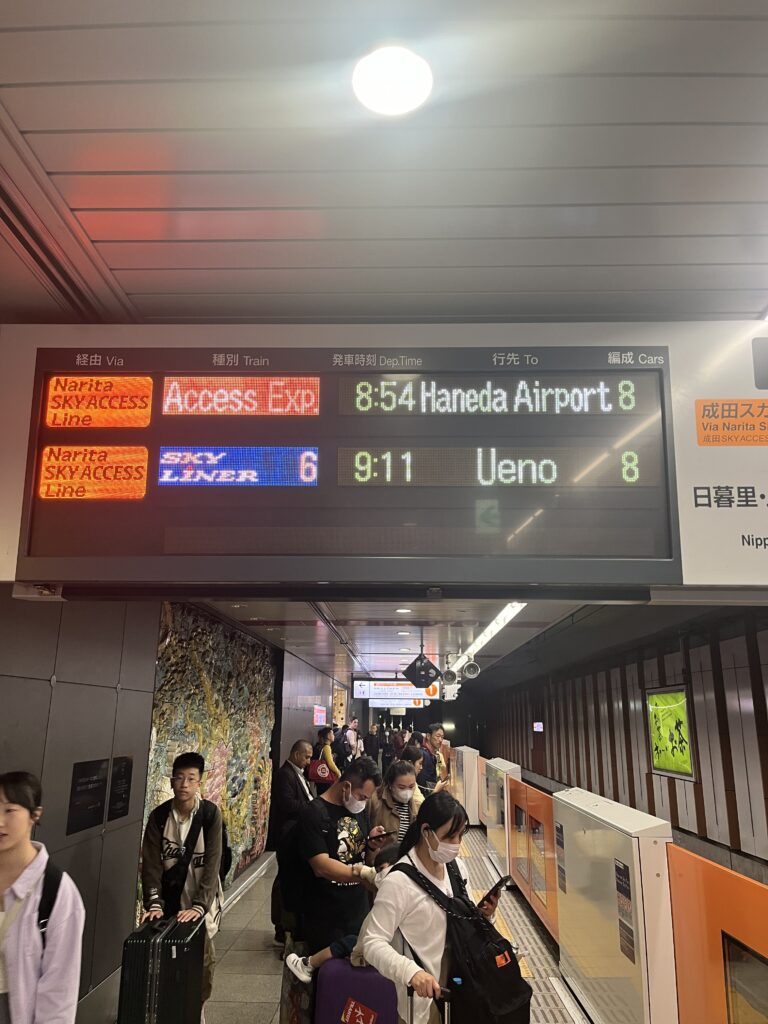
There are direct trains between Narita and Haneda airports.
But then, once you get there, you still have to traverse the city. Getting around in Tokyo is still an issue. Trying to negotiate the Yamanote line, or get down into the subway stations with even only one large suitcase is when you discover the convenience of the ”takkyubin” service that brings suitcases to the airport, or from the airport to your hotel.
Moving Between the Two Airports
Transferring between Narita and Haneda is entirely possible, it used to be complicated and expensive, but with the Keikyu and Keisei lines combining their offerings, you can now ride directly between the two airports, passing directly under Tokyo City as you do.
What Japanese sources consistently stress is margin. You do not cut it close when changing airports. Even locals treat Narita–Haneda transfers with respect. The distance is not just physical; it’s systemic.
Inside the Terminals: Mood Matters
Haneda’s terminals are compact, modern, and designed for flow. Japanese architectural commentary often praises Haneda for minimizing walking distances and maximizing clarity. Even its international terminal incorporates Edo-style shopping streets as a nod to cultural continuity—an attempt to say “this is Tokyo” without spectacle.
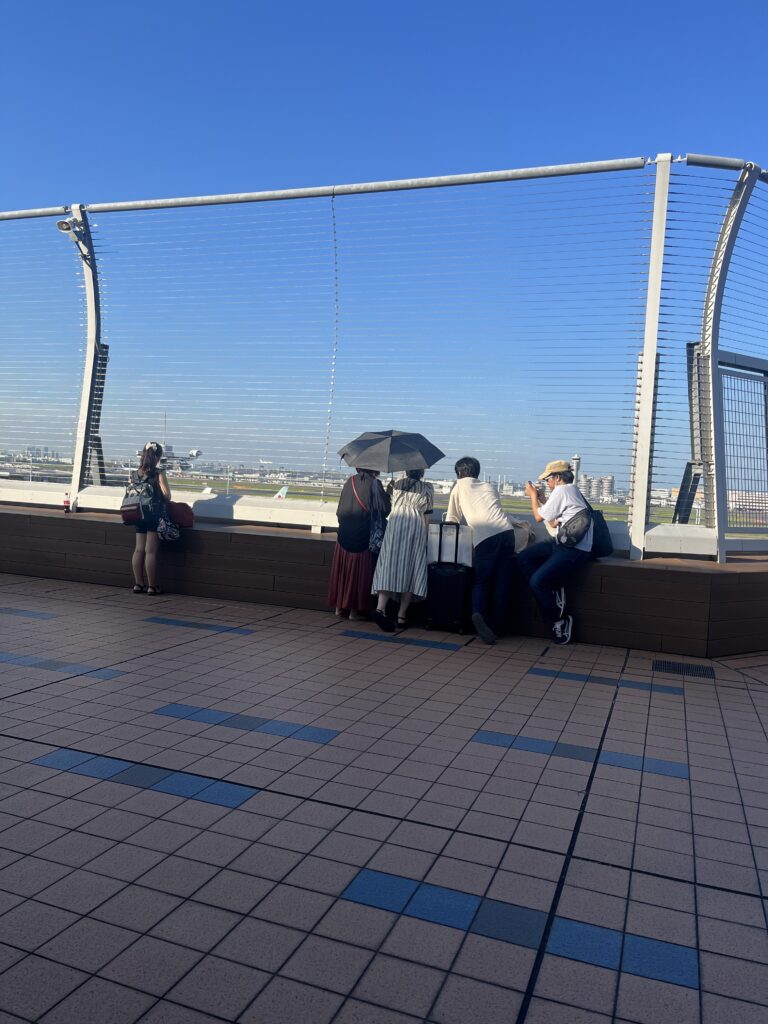
Even the observation platform of Haneda is fashionable.
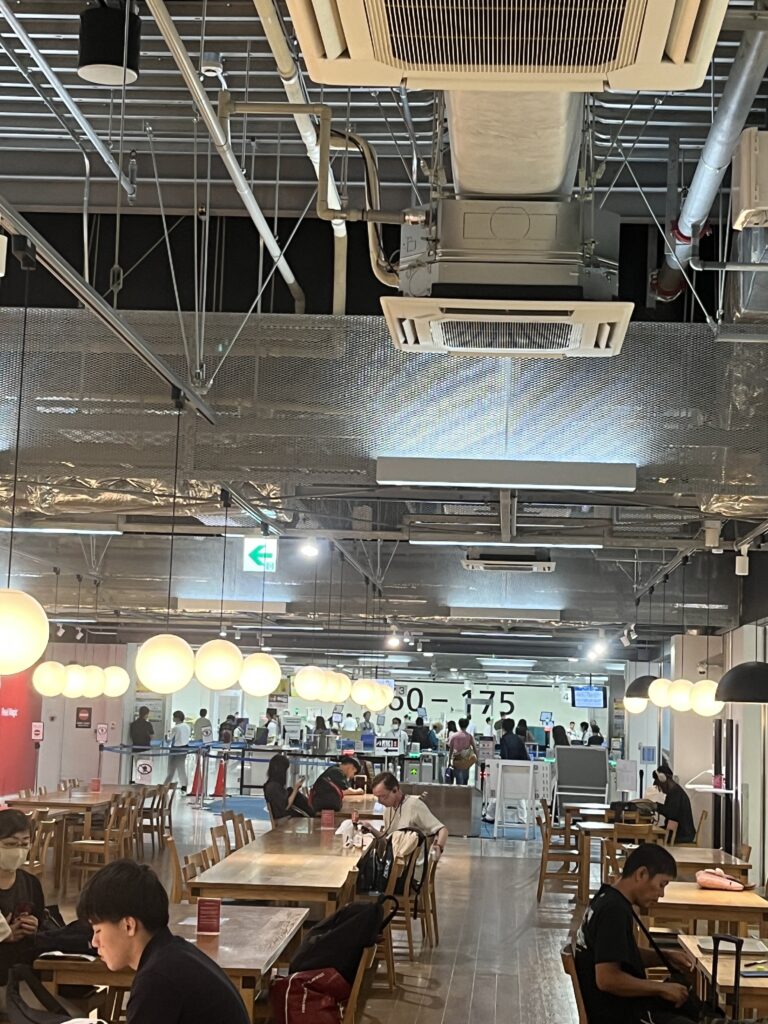
Narita’s terminals are larger and more segmented. They reflect decades of expansion layered onto one another. Japanese airport reviews frequently describe Narita as functional rather than charming, but also more globally familiar. If you have flown through large international hubs elsewhere, Narita feels legible.
Which Airport Should You Use?
Japanese travel advice is surprisingly straightforward:
If you are flying domestically or arriving late at night: Haneda.
If you are flying internationally on a budget airline or unusual routing: Narita.
If you value speed into central Tokyo: Haneda.
If you value flight options over convenience: Narita.
Neither is “better.” They are tools designed for different priorities.
The Airports’ Symbolism and the Future
Haneda represents proximity—Tokyo reaching outward without stepping away from itself. Narita represents negotiation—the compromises required when growth collides with land, history, and resistance.
Japanese policy documents suggest both will continue to coexist, not compete directly. Tokyo does not want a single mega-airport; it wants redundancy, flexibility, and resilience.
Stay tuned for more exciting content like this! Follow us on our social media platforms and check out our blog regularly to stay updated on the latest news, trends, and insider stories from Japan. Don’t miss out on future updates — sign up for our newsletter for exclusive content delivered straight to your inbox!
Wisterian Watertree
Wisterian Watertree has been living in Tokyo and other Japanese cities for
the past 20 years, helping visitors get the best of Japan. He is the author of two
books, ”Take Your Toddlers To Tokyo” and ”Driving In Japan”, with more on the
way. You can read more on his website Japan Top 10, https://japan-top-10.com.