The Early Bloomers of Japan’s Spring
In Japan, cherry blossom season is the climax of spring. When the pink clouds descend on the trees, you already know that the warmth of spring and the rainy season are waiting around the corner.
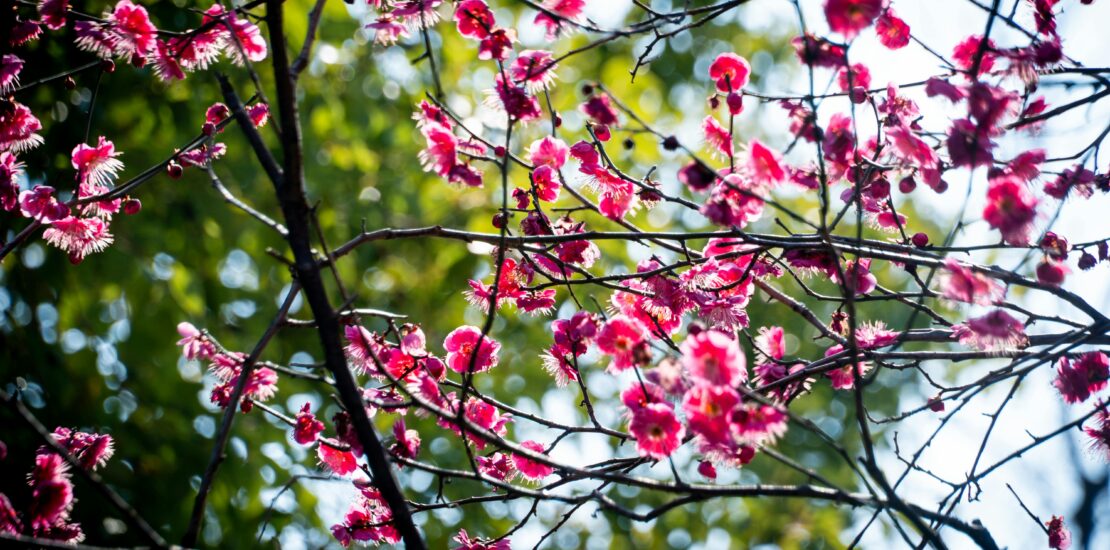
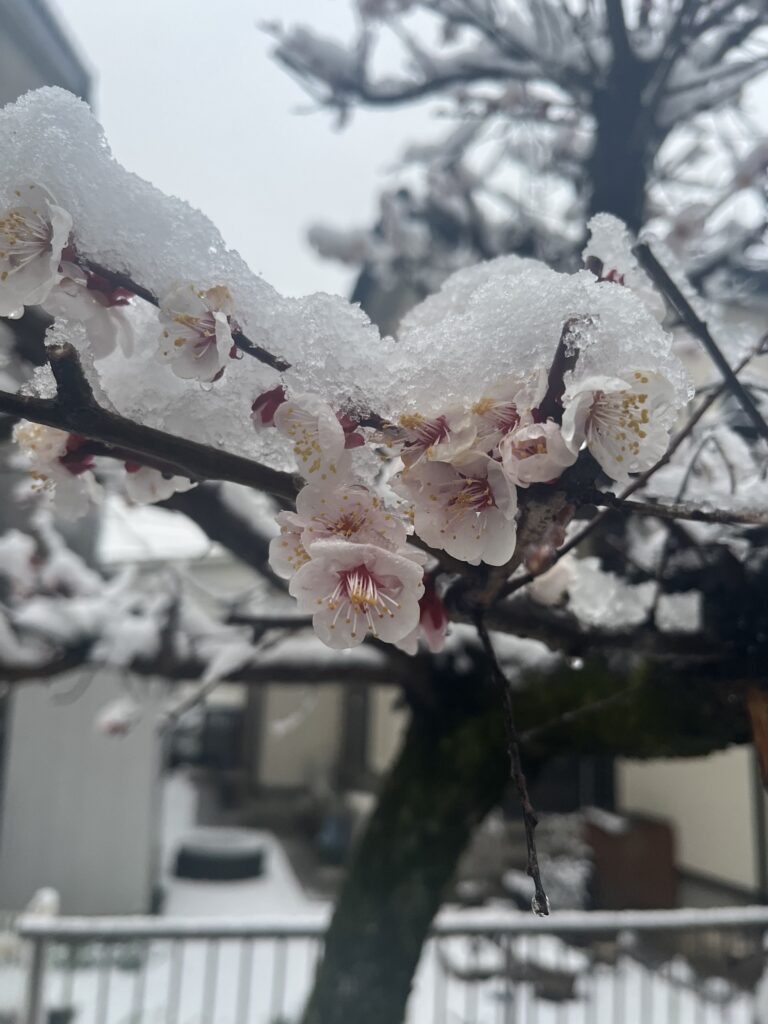
But there is one other kind of flower which is as eagerly awaited. And you can eat the fruits, which you can not do with the cherry (at least not the kind grown for their blossoms). That is the ume, or Chinese apricot.
Peaches, apricots, cherries (both the kind you eat and the kind you appreciate for its flowers), and apricots are all part of the same family of plants as the plum and the ume. They all have a fruit that surrounds a single pit, which is encased in a hard inner shell. They all have similar flowers (although there are subtle differences). And they all flower on bare branches — before the leaves have appeared. This, of course, makes the flowers more visible and easier to appreciate.
Ume in Japanese History and Garden Design
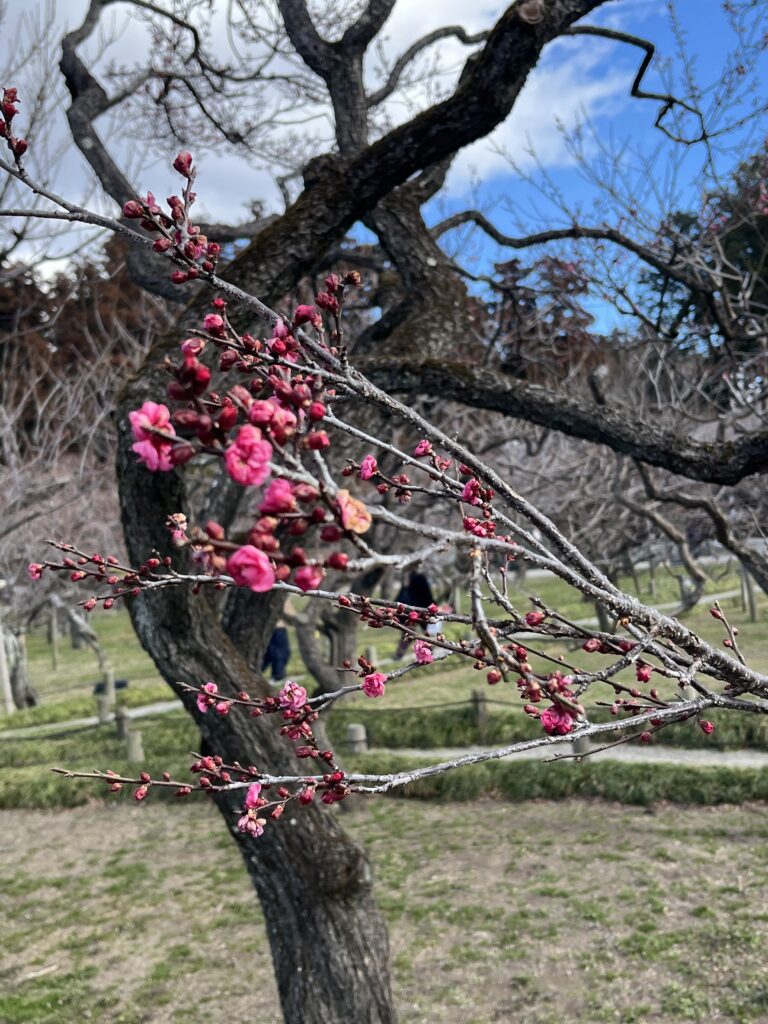
The ume is the one that flowers first, usually already in February. Since the trees are not indigenous to Japan, they try to flower when spring comes to southern China. That they are imports also shows in the way they grow — as ume trees age, the trunk rots, and while there can be sap channels in the bark keeping the tree alive, the trunk tends to fall and curl along the ground like a dragon.
Ume trees can become quite old, and their way of growth encourages this by association with dragons. This made them especially popular among garden designers in the Edo era, who not only designed their gardens to be beautiful in different seasons, but also to impart power by geomantic associations — what is known today as feng shui. Having a dragon to draw celestial power into your garden could not hurt.
The ume trees even took a place ahead of the cherry trees in some noble families. The cadet branch of the Tokugawas, who ruled what today is Ibaraki province, for instance, not only planted ume trees in their palace garden (what today is the Korakuen garden in Suidobashi). They also planted a huge garden of ume trees, more than 3000 in total, around their palace in Mito, the capital of Ibaraki prefecture.
The Best Ume Blossom Spots in Tokyo
In Tokyo, Koshikawa of Korakuen remains a favorite spot for ume blossom viewing. It is supremely accessible by train and subway, and it has many other beautiful features in all seasons.
A completely different garden, with equally strong Tokugawa associations, is the Hama-Rikyu Garden. Today, it is overshadowed by the Shiodome skyscraper district. It is a short walk away from the Shiodome station on the Yurikamome line, and has the unique distinction of being the only garden in Tokyo accessible from the boat lines (the ”water bus” that runs around Tokyo Bay on a regular schedule).
The ume trees in the Hama-Rikyu garden are spread out throughout the garden, and since this is a water garden built around several tidal pools, the views of ume trees reflected in the water provide a different view of the ume trees than you will find elsewhere.
A little to the south is the Kyu-Shiba-Rikyu Garden, another of the gardens created for the entertainment of the shogun. This garden is different, and the ume trees are spread out in the terrain in a way that enhances their beauty.
Ume Beyond the City Center: Parks and Shrines to Explore
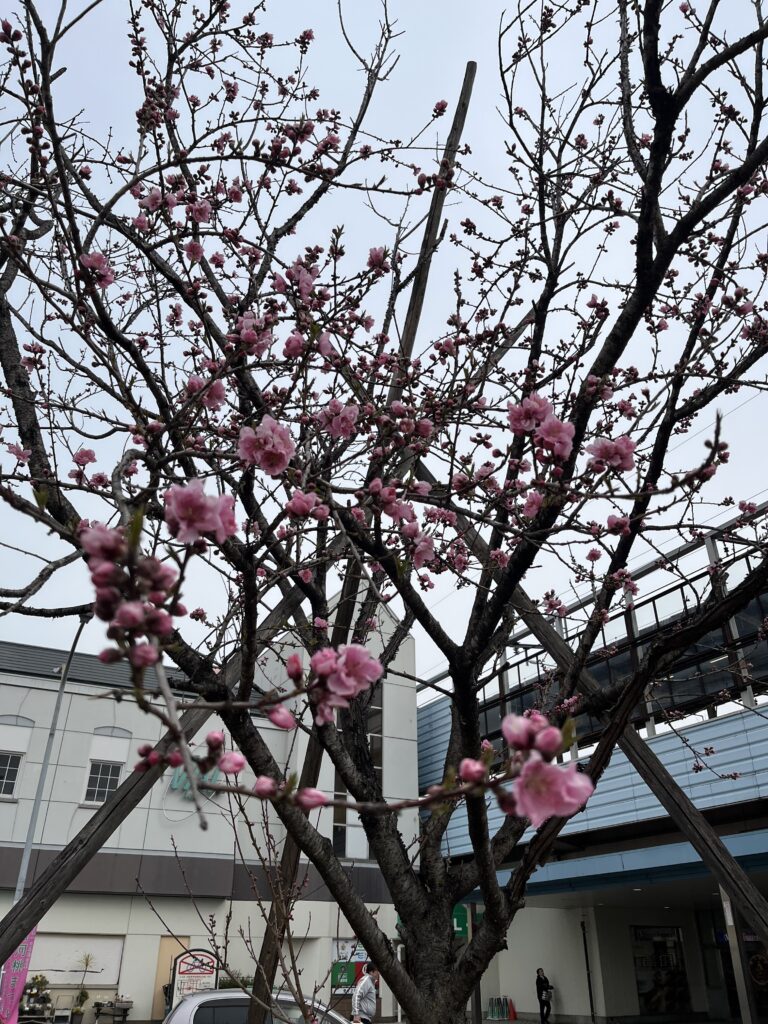
Neither of these has the most ume trees in Tokyo, however. That honor goes to the Hanegi Park in Setagaya Ward, which has more than 700 ume trees. The park is a few hundred meters north of the Umegaoka station on the Odakyu Odawara line. At times when the station is likely to be crowded, try the Higashi-Matsubara station on the Keio-Inokashira line, which is located north of the north end of the park.
The plum garden is located in the western part of the park, near a couple of traditional tea houses where you can participate in an outdoor tea ceremony or listen to traditional Japanese music during the ume festival, usually held from the end of February to March.
More centrally located is the Yushima Tenjin Shrine, a Shinto shrine located a little to the west of Ueno Park. The shrine grounds are full of ume trees, which were the favorite of the Heian-age scholar and poet Sugawara no Michizane, who became the god of learning and is the main reason so many students come to the shrine to pray in ume blossom season — which is just after the final day of the university entrance exams, and just before the results are made public, deciding which students will make it into the prestigious universities. As good a time as any to pray that your test was successful.
If you visit the shrine, do not miss patting the guardian cows. Cows were holy in Edo-era Buddhism, and these cows will take on your sickness and suffering if you pat them in places where you have problems. Including the head, where patting them supposedly will increase your intelligence.
A sixth famous place to see ume blossoms is, perhaps surprisingly, located in Ota-ku, otherwise more famous as the home of Haneda Airport. The Ikegami Plum Garden is located next to a Buddhist temple, but it is a public park today, although there is a low entrance fee.
The garden is built on a series of low hills, making for a varied terrain that has been leveraged to expose the ume trees at their best. It actually features other kinds of flowers as well, but right now the ume are what is important. The trees are illuminated in season, which makes for a spectacular and different experience.
Taking the Keio line toward Tachikawa will take you to another famous ume garden, this one with about 500 ume trees arranged around a small hill. Some of the trees are more than 300 years old, as this used to be a temple garden. The little hill in Mogusaen is tall enough to give a nice view of the surrounding area while also showing off the flowers at their best.
Stay tuned for more exciting content like this! Follow us on our social media platforms and check out our blog regularly to stay updated on the latest news, trends, and insider stories from Japan. Don’t miss out on future updates — sign up for our newsletter for exclusive content delivered straight to your inbox!